
The $110 Billion Giant: Inside Skydance’s Acquisition of Warner Bros. Discovery and the Political Firestorm Surrounding the Ellison Dynasty
WASHINGTON — In what marks one of the most seismic shifts in the modern history of media, entertainment, and telecommunications, Skydance’s monumental $110 billion acquisition of Warner Bros. Discovery (WBD) officially crossed the finish line on Tuesday. The massive transaction brings together sprawling film studios, prestige television production, a vast library of intellectual property, and major news networks under a single corporate umbrella.
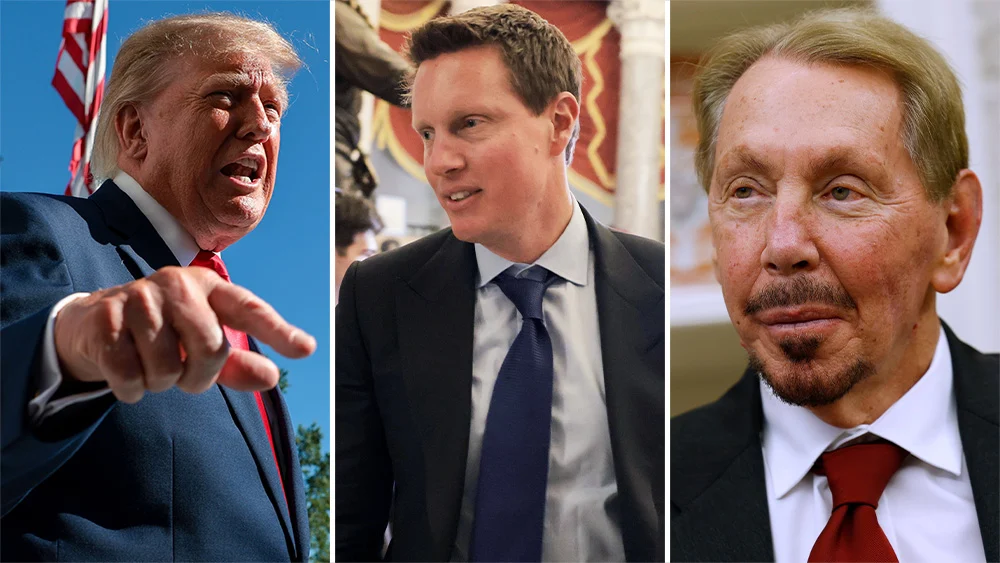
Yet, even as industry analysts crunch the numbers on the newly formed conglomerate, the deal has ignited a firestorm of political controversy, regulatory scrutiny, and intense public debate. At the epicenter of this storm are the Ellison family—tech titan Larry Ellison and his media-mogul son, David Ellison—whose deep-rooted ties to the White House and President Donald Trump have drawn sharp criticism from political opponents, watchdogs, and free-press advocates alike.
As the dust settles on the transaction, the media landscape faces a delicate balancing act. Leadership insists that editorial independence remains absolute, even as lawmakers question the federal government’s rapid greenlighting of the merger and the complex web of political alliances that smoothed its path to completion.
Main Facts
The completion of the $110 billion merger on Tuesday unites Skydance’s production prowess with the storied legacy of Warner Bros. Discovery. The consolidated corporate entity now commands a dominant position across multiple entertainment sectors, spanning theatrical film distribution, streaming architecture, premium cable, and global news broadcasting.
Central to the public and political discourse surrounding the acquisition are the long-standing relationships between the Ellison family and President Donald Trump. Speaking to reporters shortly after the deal closed, President Trump offered a glowing assessment of the new enterprise and its leadership.
“It’s going to be a great company,” Trump told reporters when asked about the multi-billion-dollar combination. “They’re terrific people, and it’s going to be a great company.”
These public accolades highlight a close relationship that has evolved over several years across both business and political spheres. Larry Ellison, the co-founder of software giant Oracle, has maintained a long-standing alliance with Trump, culminating in his appointment in March to the President’s Council of Advisors on Science and Technology. That elite advisory panel also features prominent tech executives such as Meta founder and CEO Mark Zuckerberg, venture capitalist Marc Andreessen, and Nvidia CEO Jensen Huang.
Meanwhile, David Ellison has cultivated his own direct lines to Washington’s political elite. The Skydance CEO recently attended the president’s State of the Union address as the personal guest of Senator Lindsey Graham (R-SC). In the lead-up to last spring’s White House Correspondents’ Dinner, David Ellison hosted an exclusive dinner honoring the Trump White House and network correspondents. Furthermore, he was invited as a high-profile guest to the White House State Dinner for China’s President Xi Jinping.
These intertwined personal and professional networks formed a persistent point of interest—and concern—throughout the high-stakes regulatory saga that preceded Tuesday’s final close.
Chronology: The Path to the Mega-Merger
The journey toward the $110 billion Skydance-WBD consolidation was a protracted, high-wire act involving intense corporate bidding wars, regulatory friction, and shifting political posturing.
- Late 2024 to Early 2025: Rumors of industry consolidation ramp up as traditional Hollywood studios face mounting pressures from streaming losses and shifting consumer habits. Skydance emerges as a primary contender to reshape the media landscape, engaging in a high-stakes chess match against rival bidders, including Netflix and Paramount.
- Mid-2025: As bidding intensifies, regulatory implications come to the forefront. At various points during the preliminary review process, President Trump publicly asserts that he would personally involve himself in the Department of Justice’s regulatory approval process, before later walking back those statements and indicating he would maintain a hands-off approach.
- Late 2025: The financial terms of the $110 billion mega-merger are finalized, setting off a rigorous multi-agency antitrust review led by the Justice Department and various state attorneys general.
- Early 2026: Political opposition hardens. Democratic lawmakers voice concerns that the DOJ’s ultimate greenlight of the merger was politically motivated. Concurrently, legal challenges are mounted by state attorneys general, focusing on market concentration and potential impacts on major newsrooms.
- March 2026: Larry Ellison is officially named to the President’s Council of Advisors on Science and Technology, cementing his advisory role within the administration.
- Spring 2026: David Ellison steps up his visibility in Washington, attending the State of the Union with Sen. Lindsey Graham, hosting pre-Correspondents’ Dinner events, and attending the White House State Dinner for China’s President Xi Jinping.
- Tuesday, Closing Day: The $110 billion merger officially closes. In his first day at the helm, David Ellison addresses a company-wide town hall, pledging unwavering editorial independence for CNN and holding a candid conversation with anchor Anderson Cooper to reassure nervous newsroom staff.
Supporting Data & Regulatory Hurdles
The massive valuation of the Skydance-WBD transaction places it among the largest corporate mergers in media history. However, the sheer size of the combined entity triggered immediate scrutiny from antitrust regulators and state-level enforcers.
A critical turning point in the regulatory approval process involved a legal challenge brought by a coalition of state attorneys general. To secure the final clearance necessary to complete the acquisition, Skydance agreed to a formal legal settlement. Under the terms of this agreement, the newly formed parent company is legally required to establish an independent review board.
This oversight body is specifically tasked with monitoring the journalistic integrity and operational output of both CNN and CBS News. Furthermore, the board is mandated to codify and enforce a rigorous set of professional standards and foundational principles to insulate the newsrooms from corporate or external pressures.
Despite these structural safeguards, the regulatory greenlight has faced intense blowback. Critics and industry analysts continue to analyze the speed and conditions under which federal antitrust regulators cleared the path for the Ellisons, especially given the backdrop of ongoing political debates surrounding media consolidation and partisan bias.
Official Responses & Leadership Pledges
Faced with mounting anxiety from newsroom employees, media watchdogs, and the public regarding potential political interference, Skydance leadership moved swiftly on Tuesday to project stability and reaffirm journalistic independence.
During a company-wide town hall held on the very first day of the new corporate era, David Ellison sought to directly address concerns about the future direction of the networks under his family’s stewardship. Ellison explicitly stated that CNN would operate with “complete editorial independence.”
In a subsequent, highly publicized conversation with CNN anchor Anderson Cooper, Ellison went a step further. He pledged that leadership would actively shield the network from any outside interference or political criticism originating from the White House or elsewhere. In a notable nod to past tensions between the network and the executive branch, Ellison also voiced his vocal support for CNN’s previous legal challenges against White House press credential bans.
“Our commitment is to the truth, to rigorous reporting, and to the unwavering independence of our journalists,” Ellison emphasized during his address to staff. “The strength of this company lies in its credibility, and we are dedicated to protecting that above all else.”
On the political front, defenders of the administration and congressional allies have dismissed allegations of political favoritism in the DOJ’s review. They argue that the merger represents a vital economic stabilization of legacy media assets against foreign and digital-native competitors, pointing to the strict independent review board mandated by the state settlement as proof of robust regulatory oversight.
Implications for the Future of Media and Politics
The completion of Skydance’s acquisition of Warner Bros. Discovery is far more than a routine corporate restructuring; it is a watershed moment that will reverberate across the American media and political ecosystems for years to come.
First, the integration of such vast entertainment and news assets under the Ellison banner raises fundamental questions about the future of traditional journalism in an era of hyper-consolidation. While leadership has codified strict editorial firewalls—such as the court-mandated independent review board for CNN and CBS News—skeptics remain wary. The intersection of massive wealth, high-tech conglomerates, and political proximity creates a complex dynamic that media watchdogs will monitor with unblinking scrutiny.
Second, the political fallout from the merger highlights the deepening polarization surrounding regulatory independence. The accusations leveled by Democratic lawmakers regarding the DOJ’s handling of the antitrust review point to a growing erosion of public trust in federal oversight bodies. As technology and media billionaires increasingly embed themselves within government advisory councils and Washington social circles, the boundary between public regulation and private influence becomes increasingly blurred.
Finally, for the employees and creators within the newly minted giant, the immediate priority is navigating a massive cultural and operational integration. As streaming wars intensify, advertising models evolve, and global audiences demand ever-increasing content output, Skydance must prove that its massive $110 billion bet can deliver both financial profitability and uncompromising journalistic integrity.
Whether the Ellison family can successfully navigate this high-wire act—satisfying Wall Street investors, appeasing anxious newsrooms, and withstanding the relentless glare of political scrutiny—will ultimately define the legacy of one of the most powerful media empires of the 21st century.
