
The Anatomy of Modern Television Writing: Character vs. Plot in the Post-Baby Reindeer Era

In the ever-evolving landscape of modern media, creators face a perpetual creative crucible: Is it possible to craft a masterwork relying solely on exceptional character creation, or exclusively on a meticulously engineered plot? Or does true narrative greatness demand an intricate, seamless marriage of both?
This age-old screenwriting dilemma has been thrust back into the global spotlight following the massive success of Richard Gadd’s breakout phenomenon, Baby Reindeer. As audiences and critics parse the boundaries of what makes prestige television work, the debate over plot versus character has become the defining conversation of the current streaming season.
Main Facts: Box Office Rebounds and the Richard Gadd Enigma
The current entertainment ecosystem is yielding fascinating data points across both film and television. On the cinematic front, industry analysts are marveling at the performance of The Devil Wears Prada 2, which recently raked in an impressive $77 million box office haul. Operating at a budget roughly one-third the size of tentpole sci-fi adventures, the sequel’s financial return matches projections for the upcoming Star Wars entry, proving a massive win for cost-efficient, targeted filmmaking.
Media observers have noted a refreshing shift in Hollywood’s strategic calculus. For several years, major studios attempted to manufacture universal appeal by engineering content designed to make female demographics gravitate toward traditionally male-oriented properties—such as action franchises, standard-issue comedies, and legacy revivals like Ghostbusters.
The recent resurgence of female-skewing cultural touchstones—including Wicked, Wuthering Heights, The Housemaid, It Ends With Us, and the aforementioned Devil Wears Prada sequel—signals a return to demographic pragmatism. Studio executives are realizing that tailoring distinct genres to distinct audiences is not a design flaw, but a sound economic model.
Yet, away from the box office, the most intriguing low-key narrative in Hollywood remains the creative trajectory of Richard Gadd. Having achieved a rare, explosive breakout in a hyper-fragmented media landscape with the autobiographical triumph Baby Reindeer, Gadd faced the ultimate industry test: creating an entirely new television series without the safety net of direct, lived experience.
Chronology: From Lived Trauma to the Creative Void
To understand Gadd’s current creative standing, one must trace the timeline of his ascent.
- The Autobiographical Era (Baby Reindeer): Gadd built his breakout masterwork directly out of the raw material of his own life. Writing fiction is notoriously difficult because early drafts are often populated by generic placeholders rather than breathing human beings. Autobiographical storytelling bypasses much of this grueling developmental friction. Because Gadd had personally experienced the psychological labyrinth of stalking, the narrative’s wild narrative detours—including sensitive and complex explorations of trans identity—felt entirely organic. Even the cryptic title, Baby Reindeer, was a literal artifact drawn from his real-life stalker’s vocabulary.
- The Creative Transition (Half Man): Having exhausted the "this happened to me" playbook, Gadd’s subsequent project, Half Man, arrived as a stark departure. Starring Jamie Bell alongside Gadd, the series represents a leap into pure fiction. For television critics and screenwriting purists, the project served as an immediate litmus test: Could a writer celebrated for visceral autobiography construct a compelling narrative entirely out of thin air?
Supporting Data: Examining the Mechanics of Half Man
Half Man introduces viewers to Niall, a mild-mannered man on the verge of getting married. At his wedding reception, his complicated friend-cum-brother figure, Ruben, pulls him into a private room and subjects him to a brutal physical beating.
The narrative immediately flashes back twenty years. Teenage Ruben moves into Niall’s apartment because their mothers are engaged in a secret romantic affair. Ruben quickly integrates into Niall’s high school, violently driving away the bullies who routinely targeted Niall. However, this protection carries a heavy toll. Ruben is a volatile, physically explosive ticking time bomb, burdened by deep-seated psychological and sexual deviancy. Because they share a bedroom, Niall is forced into a perpetual state of hyper-vigilance.
From a structural perspective, the episodic plot is remarkably threadbare. If the series possesses a driving story engine in its pilot, it is merely that Ruben’s academic incompetence threatens to get him expelled, leaving Niall responsible for keeping him afloat.
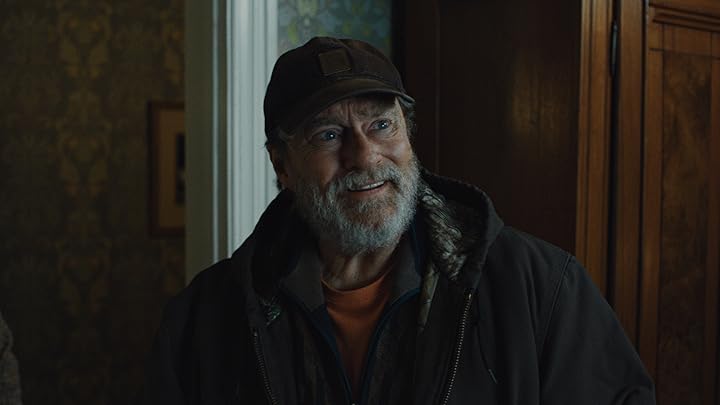
The Conflict Between Character and Story
Midway through the pilot episode, critical analysis of the narrative reveals a glaring structural void: Where is the overarching story?
While the intense friction between two half-brothers provides rich character work, character conflict alone does not constitute a complete plot. To contextualize this, consider contemporary genre-rivals like Apple TV’s buzzy supernatural series Widow’s Bay. That series deploys a classic, robust narrative engine: a remote island town is invaded by ghosts and supernatural entities, forcing a skeptical mayor into a desperate cover-up to protect the local tourist economy. That is a concrete story.
Without an external plot to push the narrative forward, the dramatic weight falls entirely on character interactions. In an eight-episode season averaging 25 scenes per episode, a show must sustain roughly 200 scenes. Relying solely on repetitive dynamics—such as brothers locked in continuous conflict—strains the narrative framework to its breaking point.
Official Responses and Industry Insights
Screenwriting analysts and creators have long debated the necessity of balancing plot against character. The prevailing industry consensus posits that the art of great storytelling demands a symbiotic marriage of both elements.
Proponents of character-driven narratives argue that emotional resonance trumps plot mechanics. In this regard, Gadd demonstrates an undeniable, masterclass ability to evoke visceral discomfort. Every frame of Half Man radiates palpable tension. While this acute anxiety may not always translate to comfortable entertainment, it stands in stark contrast to the vast sea of predictable, sanitized content that leaves audiences feeling entirely indifferent. Eliciting genuine emotional engagement remains the hallmark of effective writing.
A prime example within the Half Man pilot occurs when Niall is asleep in his room. Ruben brings a romantic partner home, initiating an intimate encounter in the bed immediately adjacent to Niall’s. Sensing Niall’s wakefulness, Ruben orchestrates a scenario where the partner straddles him, ultimately engineering Niall’s awkward, unsettling first sexual experience. The sequence is a masterclass in psychological discomfort, echoing the raw, boundary-pushing brilliance that defined Baby Reindeer.
However, industry veterans maintain that plot remains a non-negotiable anchor. When a script lacks a broader overarching story, the emotional peaks feel isolated. Viewers may tolerate hours of mounting tension for the sake of one brilliant scene per episode, but sustaining long-form engagement without narrative momentum becomes an uphill battle.
Implications for Future Television Development
The reception of Half Man and the ongoing dissection of Richard Gadd’s career carry significant implications for the future of television development.
- The Trap of the Autobiographical Crutch: As networks increasingly hunt for "authentic" voices, creators who break out with trauma-based or purely autobiographical memoirs may find themselves creatively cornered when tasked with inventing high-concept fiction from scratch. The transition from memoirist to traditional dramatist requires a distinct set of structural muscles.
- The Re-evaluation of Pacing: Modern streaming platforms have often favored sprawling, character studies masquerading as television series. However, audience fatigue regarding "plotless" or slow-burn narratives is rising. Creators are being reminded that internal character work must be anchored by external stakes to maintain momentum across multi-episode arcs.
- The Triumph of Specificity: Ultimately, Gadd’s career path underscores the enduring power of specific, unvarnished human truth. Whether drawing from real-life trauma or building a fictional world, the writers who leave the deepest cultural footprint are those who mine authentic emotional equivalents rather than leaning on recycled Hollywood tropes.
As Hollywood continues to weigh the scales between character-driven intimacy and plot-driven propulsion, the industry watches closely to see how creators like Gadd adapt to the demands of a medium that ultimately requires both elements to achieve true greatness.
