
Behind the Illusion: Exploring the Legacy of Kim Novak and the New Documentary ‘Kim Novak’s Vertigo’
By Alex Billington
October 2, 2026
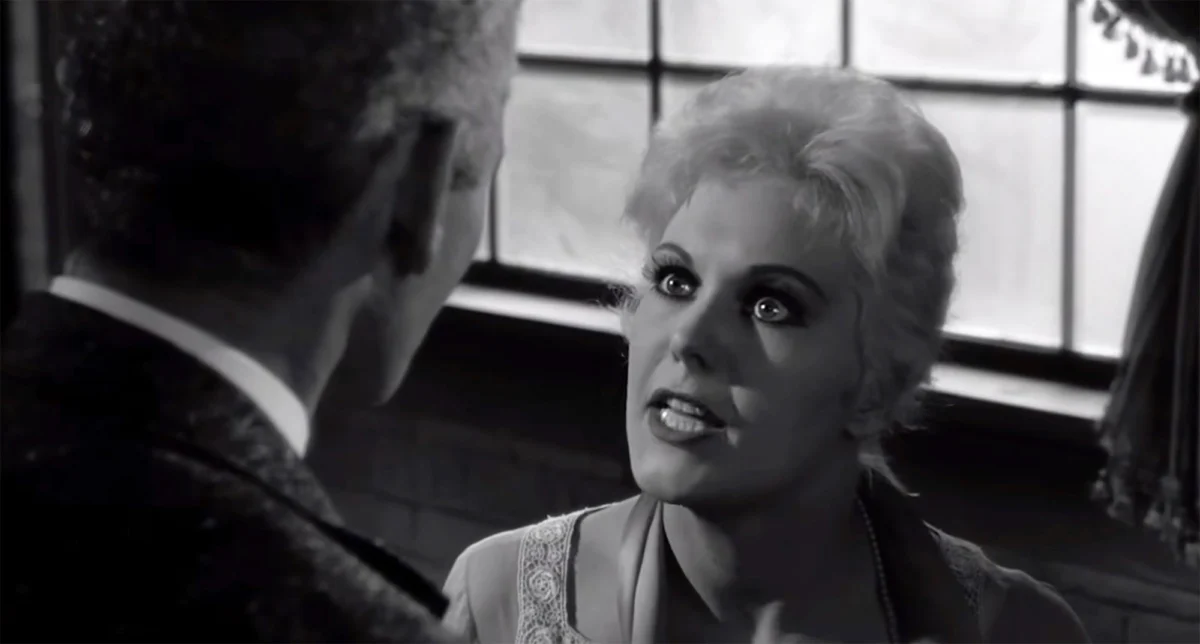
In the annals of cinematic history, few collaborations have achieved the haunting, ethereal resonance of Alfred Hitchcock’s 1958 masterpiece, Vertigo. At the center of that film’s dizzying obsession stood Kim Novak, a star whose performance as the dual-natured Madeleine Elster/Judy Barton remains one of the most debated and analyzed portrayals in Hollywood history. Now, nearly seven decades later, acclaimed documentarian Alexandre O. Philippe is pulling back the curtain on the woman behind the icon.
His latest documentary, Kim Novak’s Vertigo, arrives this October via Kino Lorber, offering an intimate, unflinching look at the actress’s life, her complex relationship with the medium, and the price of being immortalized in a role that effectively eclipsed her own identity.
The Genesis of a Cinematic Icon: The Main Facts
Kim Novak’s Vertigo is not a standard "making-of" documentary. While it pays homage to the technical brilliance of Hitchcock’s film, its true focus is the woman who brought its titular instability to life. The film functions as an oral history and a character study, stripping away the glamorous artifice of 1950s stardom to reveal the person who walked away from the limelight to preserve her own sanity.
The documentary is scheduled for a direct-to-VOD and DVD release on October 13, 2026. Eschewing a traditional theatrical run, Kino Lorber is positioning the film as a essential archival piece for cinephiles—a permanent record of Novak’s perspective on her own legacy. As the film’s trailer poignantly notes, "You start to lose who you are," a theme that serves as the backbone for the entire narrative.
A Life in Focus: Chronology and Context
To understand the weight of Philippe’s new project, one must look at the trajectory of Kim Novak’s career and the subsequent cultural obsession with Vertigo.
The Rise and the Retreat
Kim Novak rose to prominence in the mid-1950s, quickly becoming one of Columbia Pictures’ biggest box-office draws. However, the industry’s rigid expectations often clashed with her desire for personal agency. Following her work on Vertigo, Novak continued to act, but she famously stepped away from the intense pressures of the studio system long before her peers, opting for a quiet life in Oregon, away from the prying eyes of the tabloid press.

The Critical Reappraisal
For years, Vertigo was considered a lesser Hitchcock film. It wasn’t until the 1980s that critics and scholars began to recognize its profound psychological depths. As the film climbed the ranks of the Sight & Sound greatest-films polls, the focus shifted to Novak’s performance. For decades, the actress remained a somewhat elusive figure in this discourse, rarely engaging with the academic deconstruction of her work. Philippe’s film marks a rare and welcome departure from that silence.
The Filmmaker’s Lens: Alexandre O. Philippe’s Body of Work
Alexandre O. Philippe has established himself as the premier documentarian of "film-about-film." With a career dedicated to dissecting the DNA of cinema, he has tackled subjects ranging from the cultural impact of Star Wars (The People vs. George Lucas) to the specific, terrifying mechanics of the Psycho shower scene (78/52).
His approach is one of deep excavation. Philippe doesn’t just interview subjects; he creates a "space of radical honesty." His previous works, such as Memory: Origins of Alien and Lynch/Oz, demonstrate a unique ability to bridge the gap between high-level film theory and the human stories that underpin those creative triumphs. With Kim Novak’s Vertigo, he turns his focus toward the psychological cost of iconicity, treating Novak not as a relic of the studio era, but as a living, breathing participant in her own history.
Radical Honesty: Official Responses and Commentary
The production process was characterized by a rare level of intimacy between the director and his subject. According to Philippe, the film was designed to guide audiences through the "attic of her life."
"Working with Kim meant stepping into a space of radical honesty," Philippe remarked during the film’s press junket. "Her voice—unfiltered, wise, funny, defiant—guides us through the attic of her life: old costumes, fire-scarred scripts, early traumas, and enduring Hollywood ghosts. What I discovered, and what I hope audiences will realize, is that Kim is so much more than a movie star."
The documentary, which first premiered at the 2025 Venice Film Festival, has been lauded for its empathetic approach. By allowing Novak to discuss her career on her own terms, the film succeeds where previous biographies have failed: it restores agency to the woman who was once molded and managed by the rigid structures of the studio system.
Implications: The Legacy of Identity
What does Kim Novak’s Vertigo mean for the future of film criticism and biography?

The Subjectivity of Truth
The documentary challenges the idea of the "objective" history of a film. By placing Novak’s lived experience alongside the scholarly analysis of Vertigo, Philippe argues that the "truth" of a film is not just in its lighting, editing, or directing, but in the psychological imprint it leaves on the people who created it.
Beyond the Star System
The documentary serves as a cautionary tale about the dehumanizing nature of the Hollywood star system. For many, Novak was a canvas upon which Hitchcock painted his own obsessions. Philippe’s film reclaims that canvas. It highlights the resilience of an artist who understood early on that to survive the industry, one must protect one’s identity from being fully consumed by it.
A Resource for Future Generations
For film students and historians, this documentary provides a primary source that is irreplaceable. The inclusion of Novak’s personal artifacts—scripts, journals, and photographs—adds a tactile dimension to the narrative that no amount of historical research could replicate. It is an essential watch for any cinephile interested in the intersection of art, trauma, and identity.
Conclusion: Why You Should Watch
In an era where digital content is often disposable, Kim Novak’s Vertigo stands out as a permanent contribution to the history of cinema. It is an invitation to look beyond the surface of a classic film and see the person who made the illusion possible.
As Kino Lorber prepares for the October 13th release, the anticipation among the film community is palpable. This is not merely a film about a movie; it is a film about the reclamation of self. Whether you are a lifelong devotee of Hitchcock or a newcomer to the classic era of Hollywood, Philippe’s documentary offers a haunting, resilient, and ultimately empowering portrait of one of the 20th century’s most enigmatic figures.
Kim Novak is no longer just the woman in the grey suit, the blonde wig, or the dizzying halls of the San Juan Bautista Mission. She is the storyteller of her own life, and for the first time, she is telling it without the filter of a director’s lens or a studio’s mandate.
Kim Novak’s Vertigo arrives on VOD and DVD this fall. It is, quite simply, an essential addition to the library of any serious lover of film.
