
The Digital Panopticon and the Celluloid Ghost: Why Found Footage Horror Still Reigns Supreme in the Age of AI
Main Facts: The Enduring Appeal and Existential Threat of Found Footage
What is scarier than an omnipresent technological grid recording every waking second of human existence? It is horror cinema that treats that exact nightmare as unvarnished truth.

As global adoption of generative artificial intelligence accelerates, the cinematic landscape faces an unprecedented existential pivot. Very soon, distinguishing between traditional "found footage" movies shot on consumer-grade cameras and hyper-realistic synthetic video instantly conjured by algorithms will become nearly impossible. For now, however, horror enthusiasts can still look back at the foundational artifacts of the subgenre without worrying that entire filmographies will morph into digital info-rot overnight.

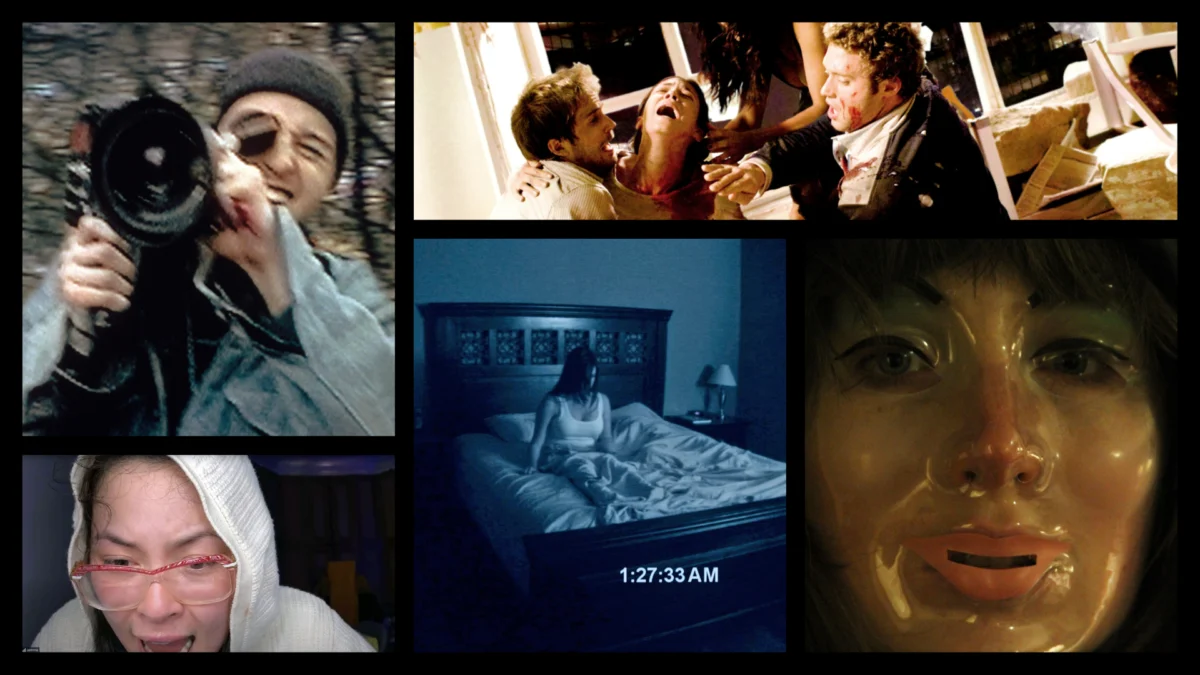
The found footage subgenre—ranging from the frantic multi-perspective shocks of the V/H/S franchise to the claustrophobic, pandemic-era Zoom panic of Rob Savage’s Host—remains a cornerstone of modern horror. Yet, the genre stands at a fascinating crossroads. Driven by shifting technological paradigms, grassroots funding initiatives, and high-profile directorial debuts, found footage is undergoing both a creative renaissance and a technical reckoning.

Industry mainstays and critics alike note that the format, which relies on the illusion of "recovered evidence" from crime scenes, disaster zones, and endless surveillance feeds, preys upon deep-seated anxieties about digital permanence. As the line between fabricated media and authenticated reality blurs, the cinema of fear must push harder than ever to convince audiences that what they are watching is tangible proof of hell on Earth.

Chronology: Three Decades of Terror and the 2025 Renaissance
To understand the current state of found footage, one must trace its evolution from an underground novelty into a dominant cinematic language.

The Genesis and Evolution (1999–2020s)
- 1999: The Blair Witch Project fundamentally rewrites the rules of marketing and distribution, proving that shaky 16mm and Hi8 footage could convince mainstream audiences of supernatural reality. It establishes the modern template for viral horror.
- The 2000s and 2010s: The subgenre matures through global variations. Shockumentary roots (Cannibal Holocaust) give way to high-concept studio blockbusters (Cloverfield) and micro-budget phenomena that print money at the box office (Paranormal Activity). Simultaneously, international and underground titles like Australia’s Lake Mungo and The Tunnel explore grief and institutional cover-ups through mockumentary lenses.
- 2020: The COVID-19 pandemic births a micro-trend of screenlife horror, most notably exemplified by Host, which weaponizes video-conferencing software to trap viewers in real-time isolation.
The 2025 Landscape
- Summer 2025: Filmmakers Peter S. Hall and Paul Gandersman debut Man Finds Tape on the festival circuit, a polarizing entry that Magnet Releasing later acquires, signaling continued commercial viability for mid-tier found footage indies.
- Fall 2025: Duplass Brothers Productions joins forces with the Transgender Film Center to launch a dedicated production fund supporting trans artists working within the found footage format, injecting fresh perspectives into a historically homogenous subgenre.
- October 24, 2025: YouTuber-turned-critic Chris Stuckmann makes his feature-length directorial debut with Neon’s Shelby Oaks, a paranormal missing-persons mystery that utilizes the stylistic conventions of recovered media.
Supporting Data: The Found Footage Canon and Shifting Metrics
The viability of found footage is measured not just by box office returns, but by its adaptability. Editorial teams tracking the genre—including contributions from veteran critics Tambay Obenson, Eric Kohn, Kate Erbland, Ryan Lattanzio, and Wilson Chapman—have routinely updated cinematic rankings to reflect the genre’s expansion.

The updated canonical list of the 25 best found footage movies ever made bridges two distinct worlds:

- The Standard-Bearers: High-impact commercial successes that defined their respective eras, including Ruggero Deodato’s controversial Cannibal Holocaust (1980), Matt Reeves and J.J. Abrams’ monster-disaster epic Cloverfield (2008), and Oren Peli’s micro-budget suburban haunting Paranormal Activity (2007).
- The Under-Seen Low-Budget Wonders: Cult favorites that prioritize atmospheric dread and psychological realism over jump scares, such as Joel Anderson’s grief-stricken mockumentary Lake Mungo (2008), Carlo Ledesma’s subterranean thriller The Tunnel (2011), Adrian Țofei’s psychological experiment Be My Cat: A Film for Anne (2015), and the haunting, fictional historical archive Savageland (2015).
Market data over the past decade indicates that while traditional studio horror leans heavily on glossy CGI and polished cinematography, low-budget found footage films consistently yield the highest return on investment (ROI) in the industry. By simulating amateur aesthetics, these films bypass high production costs while tapping directly into the psychological vulnerability of the viewer.

Official Responses and Industry Initiatives
The structural shift within found footage is increasingly supported by institutional backing and filmmaker advocacy. The partnership between Duplass Brothers Productions and the Transgender Film Center marks a vital milestone in diversifying the voices behind the camera in a subgenre traditionally dominated by cisgender male filmmakers.

In a joint statement regarding the initiative, organizers emphasized the democratization of horror filmmaking. Because found footage inherently mimics consumer technology—handheld cameras, security feeds, smartphone video, and webcams—it remains one of the most accessible and cost-effective cinematic formats for underrepresented creators.

Meanwhile, traditional distribution houses are adapting to the changing appetites of horror fans. Independent distributors like Neon and Magnet Releasing have recognized that modern audiences are fatigued by conventional jump-scare assembly-line horror. By acquiring hybrid projects like Chris Stuckmann’s Shelby Oaks and festival experiments like Man Finds Tape, distributors are actively betting that audiences still crave the intimate, voyeuristic terror of media that feels dangerous, illicit, and unedited.

Implications: The Death of Authenticity in the Age of Synthetic Media
As we look toward the horizon of 2026 and beyond, the implications of AI integration extend far beyond the technical challenges of filmmaking. They strike at the very heart of why found footage works.

Found footage horror relies entirely on an unwritten social contract between the filmmaker and the audience: This really happened. This is the tape they left behind.

For decades, the horror came from the grain of the film, the blur of the digital sensor, and the shaky framing of a terrified protagonist running for their life. These imperfections were proof of humanity. They signaled that a real person stood behind the lens, bearing witness to horrors beyond comprehension.

What happens to that fear when AI can generate a hyper-realistic video of a paranormal event in three seconds? When every pixel on a screen can be synthesized, manipulated, or conjured out of thin air, the concept of "found footage" undergoes a profound mutation. It ceases to be evidence of a past tragedy and becomes just another digital artifact—weightless, untrustworthy, and ephemeral.

Yet, this very crisis may ultimately save the subgenre. As audiences grow increasingly cynical toward synthetic media and deepfakes populating their daily news feeds, the desire for authentic, tactile storytelling—even if it is explicitly fictionalized—will only intensify. Independent horror has always thrived on resourcefulness, subverting the dominant technological paradigms of its time.

Whether through a recovered VHS tape, a chaotic live-stream, or a desperate Zoom call, found footage endures because it forces us to confront our own technological hubris. It whispers a dark truth into the ear of the modern viewer: we built the cameras to watch the world, but we cannot control what looks back at us from the dark.
