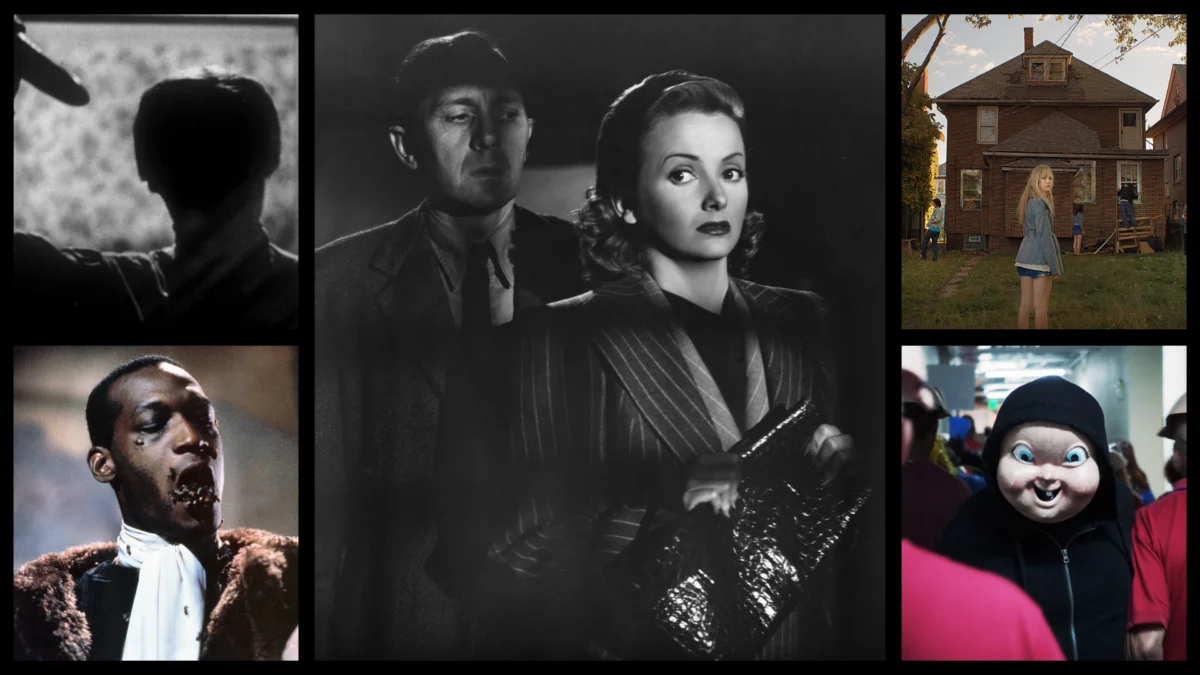
Deconstructing the Blade: Why the Slasher Film Remains Horror’s Most Enduring—and Controversial—Subgenre
Originally published in October 2022 and updated with new entries, this comprehensive retrospective examines the evolution, cultural impact, and psychological allure of the silver screen’s most notorious stalkers.
To the casual observer, the slasher film can appear deceptively simple: a masked or hidden assailant, armed with a sharp implement, systematically hunts down and dispatches a group of largely defenseless, frequently hedonistic youths—usually culminating in a final, hard-fought showdown with a resourceful survivor known as the "Final Girl."
Yet, beneath this formulaic veneer lies one of the most complex, enduring, and critically scrutinized subgenres in cinematic history. Slasher films occupy a peculiar space in popular culture. They sit at the precarious intersection of high-art auteurism, prurient voyeurism, and true-crime sensationalism. Far from being mindless exercises in bloodshed, the finest slasher films are deeply idea-oriented works of art. They challenge audiences to examine their own complicity, posing a deeply unsettling question: Where is the line between passively watching a horrific act unfold on screen, and finally looking away?
Historically, the subgenre has weathered accusations of deep-seated misogyny. Critics have long pointed out how these films frequently punish young women for expressing their sexuality, catering primarily to the male gaze while simultaneously condemning female desire—with the sole exception of the virginal protagonist who outlives her peers through purity and vigilance.
However, cultural theorists argue that this very tension is what makes slashers so compelling. By mirroring society’s morbid fascination with beastly criminality, slasher films often reveal as much about the psychological appetites of the audience as they do about the intent of the filmmakers behind the camera.
Chronology: From Silent Stalkers to Meta-Slashers
The lineage of the slasher film is a rich, transnational tapestry that stretches back decades before the term "slasher" entered the common cinematic lexicon. Understanding the genre requires tracing a path from early psychological thrillers to the gritty, independent shockers of the 1970s and the self-aware blockbusters of the 1990s.
1. The Roots: The 1940s and the Concept of the Lurker
Long before Michael Myers donned a bleached William Shatner mask, foundational films were laying the groundwork for suspense and stalking. Masterpieces from the 1940s—such as Alfred Hitchcock’s The Lodger and Val Lewton-produced psychological thrillers like The Leopard Man (1943)—introduced the terrifying cinematic concept of the unseen predator moving stealthily through the shadows, watching and waiting.
2. The Giallo Wave: Italy’s Bloody Blueprint
During the late 1960s and 1970s, Italian cinema experienced a massive boom in giallo films—stylish murder mysteries directed by maestros like Mario Bava (Blood and Black Lace) and Dario Argento (Deep Red, Suspiria). These films served as the direct aesthetic blueprint for the modern slasher. Characterized by stylish cinematography, black leather gloves, sharp blades, and elaborate, highly choreographed murder set-pieces, giallo proved that stylized violence could be treated as high-art provocation.
3. The American Awakening: The Mid-1970s
The modern American slasher was born out of the gritty, disillusioned socio-political landscape of post-Watergate and post-Vietnam America. In 1974, Tobe Hooper terrified audiences with the sun-drenched, visceral documentary realism of The Texas Chainsaw Massacre. Four years later, in 1978, independent filmmaker John Carpenter redefined the cinematic landscape with Halloween. Operating on a micro-budget, Carpenter’s suburban nightmare introduced the unstoppable, supernatural-adjacent force of evil (Michael Myers) and solidified the rhythmic, POV-camera style that defined a generation of imitators.
4. The 1980s Boom and Franchise Fatigue
Following the massive commercial success of Halloween and Sean S. Cunningham’s Friday the 13th (1980), Hollywood entered a gold rush of teen-slasher production. The decade birthed some of horror’s most recognizable icons, including Wes Craven’s dream-stalking Freddy Krueger in A Nightmare on Elm Street (1984) and Don Mancini’s killer doll in Child’s Play (1988). However, the market soon oversaturated itself, descending into formulaic sequels, diminishing box office returns, and campy self-parody.
5. Meta-Horror and Modern Revival: The 1990s to the Present
By the mid-1990s, the genre was on life support until screenwriter Kevin Williamson and director Wes Craven breathed new life into it with Scream (1996). Injecting a healthy dose of irony, self-referential humor, and post-modern horror-movie trivia, Scream proved that a slasher could simultaneously poke fun at its own tropes while delivering genuine suspense.
Today, while contemporary horror discourse is frequently dominated by "elevated" horror—such as Ari Aster’s Hereditary or Jennifer Kent’s The Babadook—the slasher remains the ultimate gateway genre. It is the kinetic spark capable of transforming a hesitant horror skeptic into a lifelong, devoted fan.
Supporting Data: The Box Office and Cultural Footprint
To evaluate the staying power of the slasher film, one must look at the data governing its commercial and cultural footprint:
Box Office Dominance: While individual independent slasher films often launch on modest budgets—such as the original Halloween, which grossed $70 million worldwide on a $300,000 budget—modern franchises have grown into multi-billion-dollar global enterprises.
Franchise Longevity: The Halloween franchise spans 13 films, grossing over $800 million globally. Similarly, the Friday the 13th, A Nightmare on Elm Street, and Scream franchises have collectively pulled in billions of dollars at the worldwide box office across multiple decades.
Critical Reassessment: Once dismissed by mainstream critics as lowbrow trash, classic slashers have seen a massive critical reassessment. Publications, archives, and academic institutions routinely study films like The Texas Chainsaw Massacre for their brilliant use of sound design, socio-political subtext, and framing.
Audience Demographics: According to theatrical exhibition data, horror films—and slashers in particular—enjoy some of the youngest and most diverse audiences in cinema, with teenagers and young adults driving viral social media engagement during the "spooky season" (autumn/Halloween period).
Official Responses and Industry Perspectives
Prominent filmmakers, critics, and cultural historians have long debated the value, morality, and artistic merits of the slasher subgenre.
When John Carpenter released Halloween in 1978, film critics were initially split. Many condemned the picture for its relentless terror directed at young babysitters. However, Carpenter famously defended his work as an exercise in pure cinematic tension rather than malice:
"I wanted to make a movie that gave you the feeling of a roller coaster ride. It’s about building suspense, playing with the audience’s expectations, and letting them experience fear in a safe, controlled environment."
Wes Craven, the visionary behind both A Nightmare on Elm Street and Scream, frequently spoke about the psychological utility of horror films in society. In various interviews throughout his career, Craven argued that horror movies do not create fear or violence; rather, they provide a safe societal outlet for it:
"Horror films don’t create fear. They release it. By confronting our darkest anxieties and monsters on screen, we process the very real terrors of the everyday world in a communal space."
Contemporary critics and editorial contributors—including film scholars at IndieWire—continue to emphasize that slashers serve as vital cultural barometers. As cultural tastes shift toward greater inclusivity, modern slashers have subverted the traditional "Final Girl" and "moral purity" tropes, featuring diverse casts, LGBTQ+ protagonists, and nuanced explorations of trauma, proving that the subgenre is capable of infinite reinvention.
What do the enduring popularity and continuous evolution of the slasher film mean for the future of cinema?
First, it signals that audiences retain an insatiable appetite for visceral, collective cinematic experiences. In an era increasingly dominated by sanitized, algorithm-driven franchise blockbusters, the slasher film—often rooted in independent spirit, practical special effects, and high-stakes survival—remains a deliciously rebellious art form.
Second, the subgenre’s willingness to critique itself ensures its survival. By embracing meta-commentary, social satire, and progressive storytelling, modern slashers have proven that they are no longer just about teenagers making poor decisions in the woods. They are complex mirrors reflecting cultural anxieties about surveillance, mortality, gender politics, and the relentless march of technological and societal change.
As filmmakers continue to tinker with the formula—blending slashers with sci-fi, time loops, and social commentary—one thing remains certain: the masked killer is not going away anytime soon. The knife is sharp, the shadows are deep, and audiences will keep coming back for the thrill of the chase.