
Lost Scores Rediscovered: Caldera Records Unearths David Shire’s Hidden Gems
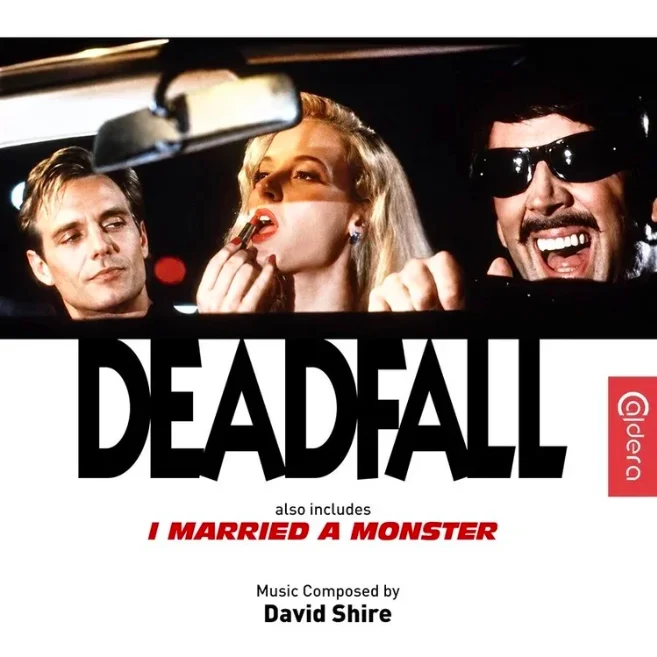
In a significant development for film music preservationists and aficionados of mid-career David Shire, the boutique label Caldera Records has announced the world premiere release of two previously unreleased scores from the legendary composer. This double-feature album represents a deep dive into the archives of a master craftsman, bringing to light music that has remained largely unheard for decades. The release couples Shire’s unused score for the 1993 neo-noir Deadfall with his atmospheric work for the 1998 television thriller I Married a Monster.
For enthusiasts of Shire—a composer whose resume spans the cerebral tension of The Conversation to the procedural dread of Zodiac—this release offers a rare glimpse into his creative process during the 1990s, a period where his work was often overshadowed by high-profile studio projects.
The Master of Tension: David Shire’s Legacy
To understand the significance of this release, one must first appreciate the stature of David Shire. A titan of the New Hollywood era, Shire defined the sonic landscape of the 1970s. His work on Francis Ford Coppola’s The Conversation is widely considered one of the greatest psychological scores ever recorded, utilizing a modified piano to create an intimate, claustrophobic atmosphere that mirrored Harry Caul’s descent into paranoia.
Shire’s ability to weave complex, jazz-inflected melodies into the fabric of suspenseful narratives has made him a favorite among film scholars. From the relentless, percussive drive of The Taking of Pelham One Two Three to the historical gravity of All the President’s Men, Shire’s music never merely accompanies a film; it functions as an essential narrative engine. This latest release from Caldera Records provides a poignant look at how Shire navigated the specific demands of crime dramas and genre television, even when those scores were relegated to the archives.
Chronology of the Lost Scores
The Deadfall Enigma (1993)
Directed by Christopher Coppola, Deadfall was a gritty, star-studded crime drama that became something of a cult curiosity, featuring an ensemble cast including Michael Biehn, Nicolas Cage, James Coburn, and Charlie Sheen. Despite the pedigree of the cast and the director, the film underwent significant post-production shifts.
Shire was originally commissioned to provide the score, but in a move common in the volatile studio environment of the early 90s, his work was ultimately replaced by a score from Jim Fox. For over thirty years, Shire’s compositions for the film existed only in private archives. The music—characterized by the brooding, low-register tones and shifting rhythms Shire perfected in his previous crime dramas—captures the nihilistic tone of the screenplay. It is a score that breathes with the humidity and grime of the film’s setting, offering a sophisticated counterpoint to the chaotic energy of the on-screen performances.
I Married a Monster (1998)
Five years later, Shire was tapped to score the Nancy Malone-directed television movie I Married a Monster, a remake of the 1958 sci-fi classic. Starring Richard Burgi and Susan Walters, the film allowed Shire to pivot from the hard-boiled crime aesthetic of Deadfall into the realm of supernatural tension and domestic horror.
In this score, Shire employs a more melodic, slightly ominous approach, balancing the romantic tropes of the "domestic thriller" with the underlying dread of the science-fiction premise. It is a masterclass in economy, demonstrating how a composer can heighten the stakes of a made-for-TV production through subtle shifts in orchestration and motif development.
The Caldera Records Initiative
Caldera Records has built its reputation on rescuing soundtracks from obscurity, prioritizing the preservation of music that might otherwise be lost to time. By pairing these two distinct projects, the label has created a compelling narrative arc, showcasing Shire’s versatility across the decade.
"We believe that every score has a story to tell," a representative for Caldera Records noted in their press release. "Even when a score is replaced, the music composed for that film remains a vital piece of the artist’s history. With Deadfall and I Married a Monster, we aren’t just releasing a CD; we are filling a gap in the discography of a true American master."
The label has provided high-fidelity audio samples on their website, allowing listeners to experience the textures of Shire’s arrangements before purchasing. The physical release is accompanied by detailed liner notes that contextualize the production challenges of the 1993 Deadfall shoot and the subsequent creative choices Shire made for the 1998 television thriller.
Technical Specifications and Track Analysis
The track listing for the album reveals a meticulous curation of the surviving tapes. The Deadfall portion of the release (tracks 1–10) captures the essential "sting" and "boudoir" sequences that defined the film’s tension. The transition from the "Main Title" to the "End Credits" provides a cohesive listening experience that demonstrates the structural integrity of Shire’s vision, even without the final film edit.
The Deadfall Suite (Highlights)
- "Main Title" (2:54): A haunting, atmospheric introduction that immediately establishes the neo-noir tone.
- "Second Sting/Reappearance of Mike" (6:36): The centerpiece of the score, showing Shire’s mastery of building suspense over a long duration.
- "End Credits" (4:04): A melancholic resolution that serves as a testament to the emotional depth Shire brought to the project.
The I Married a Monster Suite (Highlights)
- "The Chase" (5:53): A visceral, fast-paced sequence that highlights Shire’s ability to handle action-oriented writing for the small screen.
- "Finale" (0:56) and "End Title" (1:26): These tracks provide a concise, effective closure, emphasizing the eerie, lingering nature of the film’s conclusion.
Implications for Film Music Preservation
The release of these scores raises broader questions about the ethics and practices of film music archiving. In the modern streaming era, "unused" scores are often treated as disposable artifacts. However, as organizations like the Academy Film Archive and boutique labels like Caldera continue to push for the recovery of these works, the industry is forced to reckon with the value of the "rejected" draft.
For David Shire, this release is a moment of professional vindication. It reminds the audience that a composer’s contribution is never truly wasted. Whether the music appeared in the final cut or not, the craft, the melody, and the harmonic language remain a part of the cinematic record.
Furthermore, this release invites a re-evaluation of Deadfall itself. By decoupling Shire’s music from the film’s troubled production history, listeners can judge the score on its own merits. It is likely that many will find that Shire’s music possessed the very qualities the final film struggled to articulate—cohesion, atmosphere, and psychological depth.
Accessing the Music
The album is currently available through major specialty soundtrack retailers and the official Caldera Records website. For those interested in the visual context, Deadfall is available via Video on Demand (VOD) and DVD platforms, though the experience of watching the film while listening to the original, discarded score is a unique opportunity for film buffs to conduct their own "re-edit" in their minds.
As the film industry continues to move toward digital distribution, the physical release of such niche projects remains a vital anchor for collectors. The preservation of these tapes, and their subsequent mastering for CD, ensures that David Shire’s contributions to the crime and thriller genres remain accessible to future generations of composers and fans.
This release stands as a reminder that the history of film is as much about the music that was chosen as it is about the music that was left behind. David Shire, through a career spanning half a century, continues to prove that his influence—and his archives—are worth the effort of digging deeper.
