
The Banality of Collaboration: Emmanuel Marre’s ‘A Man of His Time’ Confronts the Machinery of Fascism at the New York Film Festival
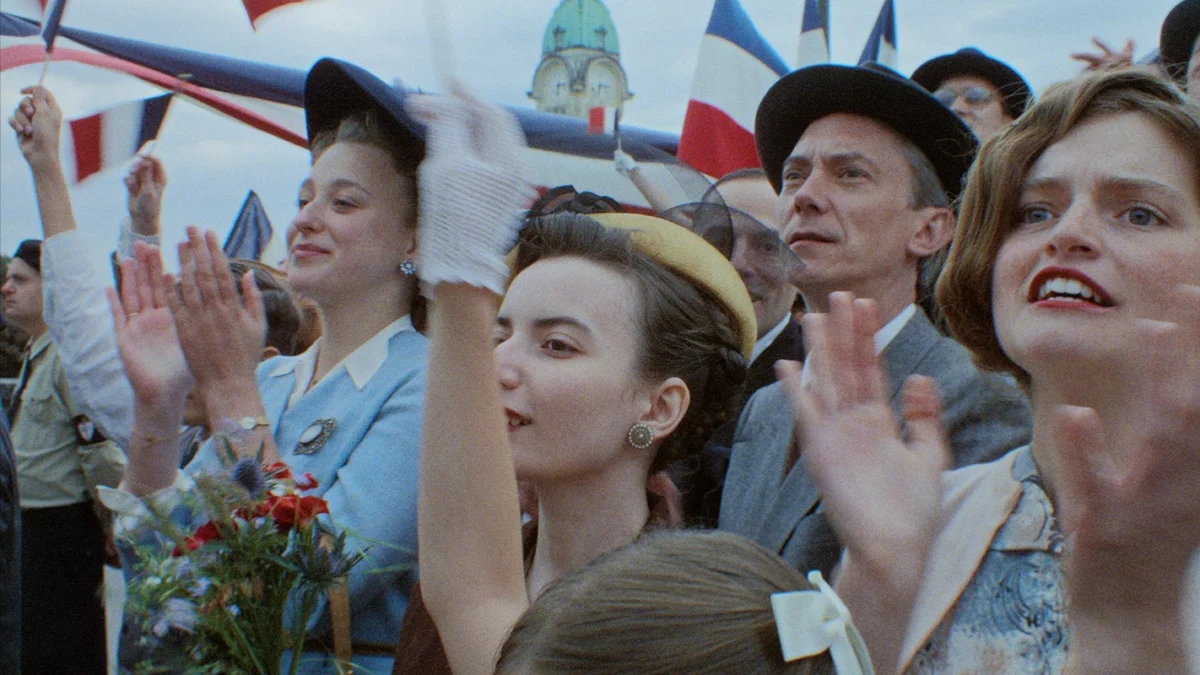
NEW YORK — Despite the ubiquitous deployment of the word "fascism" in contemporary political discourse over the past decade, modern cinema has struggled to produce compelling, nuanced explorations of authoritarianism. While audiences are frequently treated to high-concept satires and live-action historical cartoons—films that marry totalitarian iconography with contemporary political talking points to pander to liberal sensibilities—genuine, piercing visions of what it actually feels like to exist under the yoke of an authoritarian state remain rare.
Enter Emmanuel Marre’s A Man of His Time, which premiered at the 64th New York Film Festival to polarized critical discussion. Eschewing the easy moralizing and narrative fireworks of mainstream cinematic treatments of the Second World War, Marre’s nearly three-hour feature offers a sobering, clinical dissection of complicity. Based closely on the life of the director’s own great-grandfather, the film strips away the cinematic gloss of resistance and heroic martyrdom to examine the gray, unglamorous underbelly of the Vichy regime.
Distributed by 1-2 Special, the film challenges audiences not to comfortably condemn a monster, but to actively interrogate how ordinary individuals adapt to, rationalize, and perpetuate corrupt social environments.
Main Facts: Deconstructing the Ordinary Bureaucrat
At the center of A Man of His Time is Henri Marre, brought to chilling, deadpan life by César Award-winning actor Swann Arlaud. Henri is neither a foaming-at-the-mouth ideologue nor a cowering victim of circumstance; he is an exceptionally unexceptional bureaucrat who successfully weasels his way into a position of minor importance within the collaborationist Vichy government of France.
Rather than tracing a traditional dramatic arc of rise, moral corruption, and inevitable cinematic downfall, the film focuses on Henri’s banal day-to-day existence. He is merely one more functional gear in the vast, horrific machinery of Nazism. Early scenes depict Henri attempting to impress government ministers with a self-penned, sycophantic treatise extolling the virtues of Marshal Philippe Pétain. Yet, he possesses no grand vision. Instead, he is a consummate stooge, adept at smoothing over moral compromises while fiercely clinging to a delusion of personal integrity.
The film’s most repellent sequence highlights this chilling disconnection. Henri penalizes a subordinate staff member for the perceived infraction of purchasing basic toiletries for a trainload of Jewish deportees bound for concentration camps. Delivered with an icy stare and a serpentine smile—the standard, polite mannerisms of any mid-level corporate manager—Henri’s reprimand is void of personal animus. He makes it clear that he does not necessarily disagree with the subordinate’s humanitarian impulse, nor does he harbor personal malice toward Jewish people; rather, "it’s just the way things are." In Henri’s world, the system must function, the paperwork must clear, and individual conscience is an inefficient luxury.
Chronology: From Cocktail Parties to the Corridors of Power
The narrative structure of A Man of His Time mirrors the slow, creeping encroachment of bureaucratic evil.
The Opening Act: Background Noise
The film opens abruptly at a bustling high-society party. Emmanuel Marre employs a constantly roving, documentary-style handheld camera that captures history unfolding in real-time, placing the viewer directly inside the crowded room. Henri is introduced not as a dramatic focal point, but as an unimportant background player lost in a sea of French socialites.
The camera pans fluidly across groups, catching fragmented conversations without a clear dramatic anchor. Henri hovers awkwardly over shoulders, lingering while others pontificate about the political future of France. He goes largely unnoticed, attempting at times to insert himself into conversations only to be swiftly dressed down for voicing opinions that are deemed overly trite and sycophantic.
The Middle Period: Wandering and Bureaucracy
Following the party, the narrative deliberately decelerates. There are no sudden dramatic revelations or high-stakes turning points. Instead, the film follows Henri through mundane stretches of life: wandering the streets of Vichy-controlled France, lingering lazily in bed, and aggressively peddling his obscure political book to anyone unfortunate enough to give him an audience.
This deliberate pacing forces the audience into a state of curious introspection. Viewers are left to wrestle with fundamental questions: Who is this man? What historical and personal forces molded this specific brand of spinelessness? What, ultimately, motivates a person to attach themselves to a genocidal regime with such pedestrian enthusiasm?
The Climax: A Relentless Routine
As Henri secures his minor bureaucratic post, his life settles into a gray, unbroken rhythm. The narrative refuses to grant him the catharsis of punishment or the tragedy of a dramatic reckoning. His career moves forward in lockstep with the regime’s atrocities, punctuated only by institutional meetings, quiet memorandums, and the occasional administrative cruelty executed with a pleasant smile.
Supporting Data and Aesthetic Choices: Aesthetic Realism Meets Temporal Dislocation
To capture the suffocating weight of history, Marre relies heavily on a documentary aesthetic reminiscent of Peter Watkins’ pioneering docu-fiction simulations. The cinematography achieves a startling realism, making the historical setting feel immediate, tangible, and uncomfortably close.
However, Marre continuously subverts this realism with calculated layers of artistic artifice. Most notably, the director inserts jarring bursts of 1980s synth-pop music at critical junctures—such as during a period-appropriate dance sequence and over a rapid montage tracking Henri’s career progression. This bold stylistic choice introduces a temporal juxtaposition, forcing a dialogue between Henri’s mid-century reality and the echoes of the recent past, while implicitly challenging the modern viewer to recognize these behavioral patterns closer to home.
The film’s title itself functions as a thematic anchor. A Man of His Time simultaneously identifies Henri as a product of a specific, damned historical epoch and prompts a broader philosophical inquiry: What does it mean to truly belong to a time and place? How does an era shape the moral framework of the individuals who inhabit it?
Official Responses and Critical Reception
Since its high-profile screening at the 64th New York Film Festival, A Man of His Time has sparked robust debates among film critics, historians, and industry insiders regarding its artistic merits and limitations.
- Praise for Realism and Performance: Critics have universally lauded Swann Arlaud’s restrained performance, noting that avoiding theatrical villainy makes Henri far more terrifying. Film theorists have praised Marre’s commitment to avoiding Hollywood tropes, arguing that the film successfully resurrects Hannah Arendt’s philosophical concept of the "banality of evil" for a modern cinematic landscape.
- Critique of Pacing and Depth: Conversely, several reviewers have pointed to the film’s nearly three-hour runtime as a structural liability. Critics have noted that Marre’s dedication to monotony occasionally results in a flat viewing experience. The thematic concepts established in the opening acts rarely evolve into deeper or more nuanced explorations, leading some to argue that while the film brilliantly illustrates a state of being, it ultimately offers little new critical insight beyond the now-familiar notion that systemic evil is often administered by unremarkable, polite bureaucrats.
Implications: What A Man of His Time Means for Modern Cinema
The release of A Man of His Time by 1-2 Special arrives at a critical cultural juncture. As contemporary societies grapple with the subtle erosion of democratic norms, the rise of populist nationalisms, and the digitization of bureaucratic compliance, Marre’s film serves as an uncomfortable mirror.
By refusing to offer comforting narratives of clear-cut resistance—the cinematic equivalent of easy comfort food for politically conscious audiences—A Man of His Time reclaims historical cinema as a site of rigorous intellectual discomfort. It suggests that the true danger of authoritarianism does not always announce itself with marching boots and grand spectacles; more often, it arrives quietly, wearing a tailored suit, smiling politely, and asking us simply to accept that "this is just the way things are."
Whether the film will achieve lasting cultural resonance or fade into the vast maw of historical memory remains to be seen. Yet, by demanding that viewers sit face-to-face with the unheroic face of collaboration, Emmanuel Marre has delivered a cinematic artifact that refuses to let its audience off the hook easily.
