
Beyond the Veil of Convention: How Katelyn Douglass’s Spanked by a Ghost Redefines Genre Horror
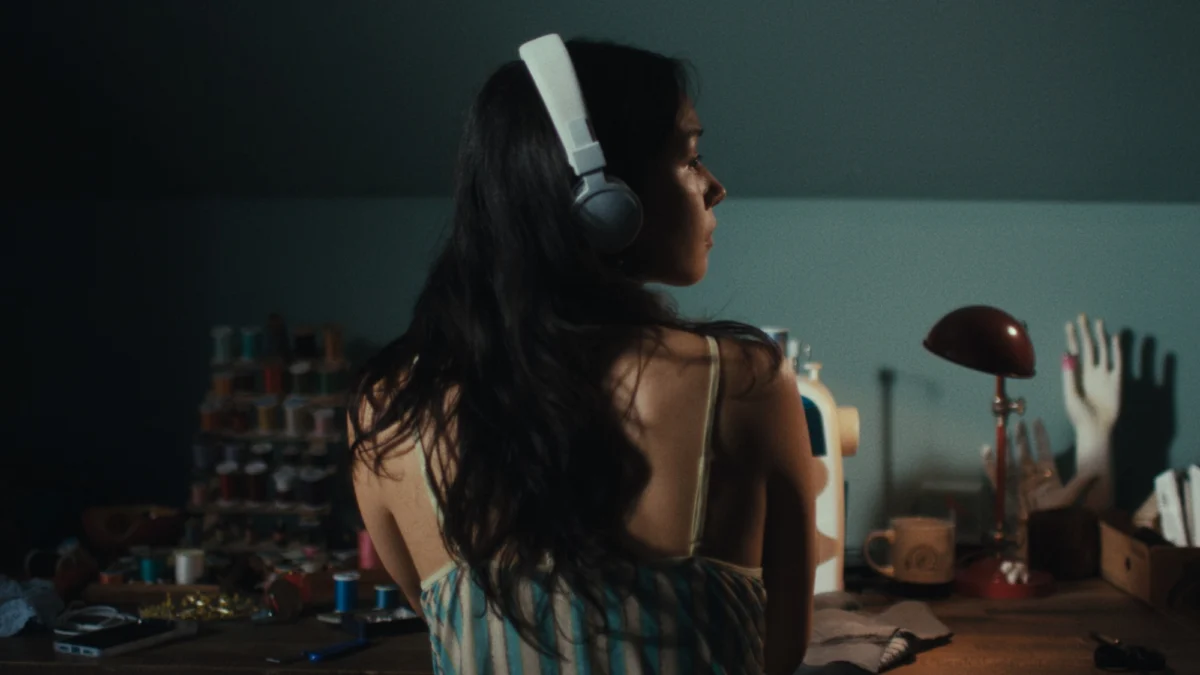
In the crowded landscape of independent short-form cinema, few films manage to capture the elusive lightning of genuine subversion. Katelyn Douglass’s Spanked by a Ghost is one such outlier. On the surface, the premise feels like a riff on domestic supernatural thrillers: a seamstress, alone in her home, occupies herself with the tactile, intimate labor of sewing garments that explore her own femininity. Yet, as the film unfolds, the familiar boundaries of the “haunted house” narrative are dismantled, replaced by a provocative, sensual, and deeply human exploration of desire.
What begins as a study of solitude quickly shifts into a voyeuristic examination of a burgeoning, otherworldly intimacy. When the protagonist is suddenly—and unexpectedly—spanked by an unseen force, the film pivots. It abandons the cold dread typically associated with ghosts in favor of a playful, flirtatious investigation of the supernatural. It is not merely a horror film; it is a genre-bending manifesto on the nature of attraction, intimacy, and the strange, spectral comforts we seek in the dark.
The Genesis of an Unconventional Haunting: Main Facts and Premise
The core of Spanked by a Ghost lies in its defiance of traditional genre expectations. Horror, as a cinematic medium, generally relies on the binary of the predator and the prey. A ghost is, by definition, a threat—an intrusion of the dead into the living world that demands expulsion or exorcism. Douglass flips this binary on its head.
"Everyone knows what happens when you discover your house is haunted by a dangerous, scary entity," Douglass explains, articulating the philosophy behind her directorial choices. "What happens when it’s haunted by something you want to keep around?"
This question serves as the film’s narrative engine. The protagonist, portrayed with remarkable vulnerability by newcomer Lindsy Li, does not flee from the paranormal; she leans into it. By choosing to stay, she transforms her home—a space of creative expression—into a laboratory for a new, transgressive sexual preference. The film invites the audience to become spectators to this private evolution, maintaining a "fly-on-the-wall" perspective that strips away the judgment usually attached to such taboos. The result is a viewing experience that is as liberating as it is unsettling, leaving the audience to grapple with the realization that, in this instance, they are rooting for the ghost.
A Chronology of Creation: From Chicago Living Room to Festival Circuit
The production of Spanked by a Ghost serves as a masterclass in resourcefulness. Filmed entirely within the confines of Douglass’s own home, the project was a testament to the power of a tight-knit creative circle.
The Production Phase
Produced by a core group of four friends in Chicago, the film was built on the foundation of shared vision and extreme efficiency. Without the luxury of a massive budget, the creative team relied on the synergy between the script and the technical execution.
- Cinematography: Drew Angle’s lens work creates a haunting, provocative atmosphere that transforms a domestic space into a stage of shadows and suggestion.
- Production Design: Kaylyn Carter’s meticulous design choices ensure that the environment feels lived-in and tactile, providing a grounded reality that makes the spectral elements feel all the more visceral.
- Casting: The selection of Lindsy Li was a serendipitous gamble. Despite it being her first professional acting role, Li delivers a performance that feels grounded, intimate, and entirely devoid of the affectation often found in amateur shorts.
The Festival Run
Following its completion, Spanked by a Ghost embarked on a highly successful festival tour. It garnered attention from prestigious genre circuits, signaling that its unconventional approach had struck a chord with both critics and audiences. The film’s presence at Fantastic Fest, Beyond Fest, the Overlook Film Festival, Rooftop Films, and the Brooklyn Horror Film Festival solidified its status as a must-see short. These screenings served as a platform for the film to spark discussions about the evolution of the "ghost story" and the increasing appetite for experimental, queer-coded, and erotically charged horror.
Supporting Data: The Mechanics of the "Surprise Hit"
To understand why Spanked by a Ghost resonated so deeply, one must look at the technical mechanics that underpin its success. The film utilizes a blend of classic horror tropes—the creaking floorboard, the flickering light, the sudden touch—but repurposes them as instruments of seduction rather than terror.
Practical Effects vs. Digital Overload
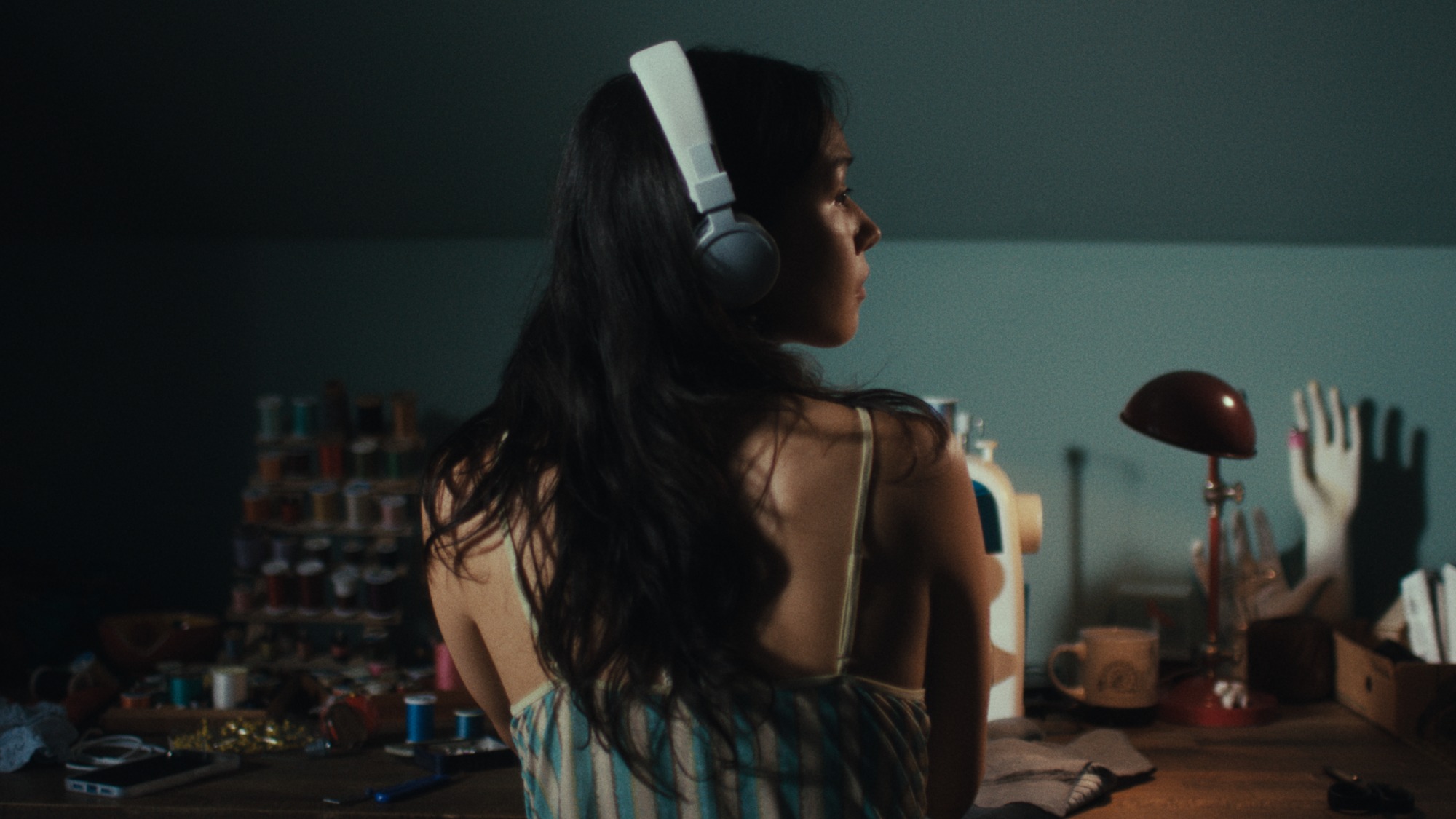
In an era dominated by CGI, Douglass’s commitment to well-timed practical effects provides a tangible quality to the ghost’s presence. The "spanking" itself is a triumph of timing and sound design. By keeping the entity invisible, the film forces the audience to project their own imagination onto the screen. This is a classic psychological horror technique, but by applying it to a sexual context, Douglass heightens the tension, making the viewer a participant in the fantasy.
The "Voyeuristic" Lens
The camera work intentionally avoids the "shaky cam" tropes of found-footage horror. Instead, the steady, patient framing allows the audience to settle into the room. We are not watching a chase sequence; we are watching a scene of intimacy. This deliberate pace is what makes the final product so memorable. It forces the viewer to reconcile their instinctual fear of the supernatural with the protagonist’s growing desire.
Official Responses and Creative Evolution
The critical reception of Spanked by a Ghost has been overwhelmingly positive, with reviewers praising its audacity and the director’s refusal to conform to the standard "rules" of the haunting sub-genre. Critics have highlighted the film’s ability to turn the domestic sphere into a site of empowerment rather than entrapment.
A Look Ahead: Katelyn Douglass’s Future
The success of Spanked by a Ghost has served as a launchpad for Douglass’s burgeoning career. Currently, she is in post-production on a new short film titled SUCKER. This project promises to continue her exploration of provocative, bite-sized narratives.
SUCKER has already secured a high-profile platform, slated for a premiere on Tubi this Halloween season. As part of the Bite Sized Terror series—a collaboration with WorthenBrooks—this upcoming work suggests that Douglass is carving out a niche as a voice that can bridge the gap between niche independent art and accessible, platform-driven horror entertainment.
Implications: The New Wave of "Sensual Horror"
The impact of Spanked by a Ghost extends beyond its individual success; it represents a broader trend in modern genre filmmaking. We are witnessing a shift where directors are increasingly comfortable blending the "uncanny" with the "erotic."
Challenging Genre Boundaries
Historically, horror and erotica have shared a common ancestry in their ability to manipulate the viewer’s physiological responses. However, they have rarely been combined with the nuance seen in Douglass’s work. Spanked by a Ghost challenges the industry to rethink what a "scary" movie can be. It suggests that the most compelling ghosts are not necessarily those that want to kill us, but those that force us to confront the desires we hide even from ourselves.
The Democratization of Horror
Finally, the success of this project is a beacon for independent filmmakers. It reinforces the notion that the strength of a film lies not in the size of the budget, but in the specificity of the vision. By utilizing personal spaces and tapping into the talents of close-knit creative teams, Douglass has proven that the next generation of horror icons may emerge not from studio backlots, but from living rooms where friends gather to tell stories that are as strange as they are intimate.
As we look toward the future of the genre, Spanked by a Ghost stands as a reminder that the most haunting experiences are those that linger in the psyche long after the credits roll. Whether or not one is inclined to "put the Ouija board away," as the film’s internal logic suggests, there is no denying that Katelyn Douglass has left an indelible mark on the landscape of contemporary horror. The ghost, it seems, has arrived to stay.
