
The Architecture of Anxiety: Reassessing David Fincher’s The Game at the Intersection of Control and Crisis
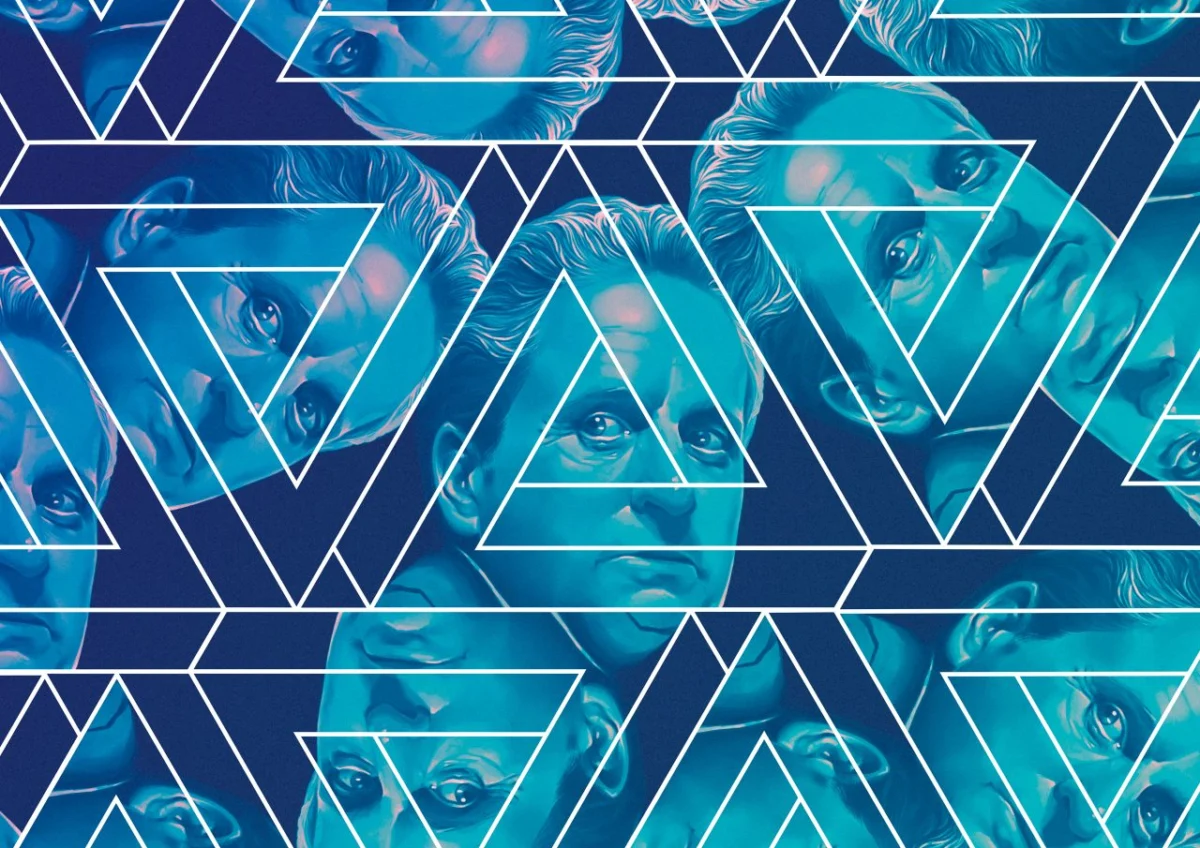
Introduction: The Cognitive Response System
Before we proceed with an analysis of David Fincher’s 1997 psychological thriller The Game, we must address the nature of participation. Consider the following assessment: I am a middle-aged man. I lost my father young. I hate celebrating birthdays. If you found yourself instinctively checking "True" or "False," you have already been assimilated into the logic of the film.
The Game is not merely a piece of cinema; it is an immersive, systemic interrogation of the modern condition. Released in the shadow of the director’s previous success, Se7en (1995), The Game was initially met with critical hesitation and lukewarm box-office returns. Yet, nearly three decades later, its exploration of existential dread, the fragility of the self-made man, and the performative nature of corporate existence feels more prescient than ever.
Chronology: The Van Orton Descent
The film begins on October 11, a date that serves as a cyclical anchor for the protagonist, Nicholas Van Orton (Michael Douglas). The opening sequence is a masterclass in visual storytelling—a grainy, 16mm home-movie montage capturing a young Nicholas at his seventh birthday party. It is a moment of superficial joy that concludes with a traumatic shadow: his father, overwhelmed by an unseen burden, walks into the darkness and ultimately leaps to his death from the family mansion.
Decades later, on his 48th birthday—the exact age his father was at the time of his suicide—Nicholas exists as a sterile, detached investment banker in San Francisco. He is a man who has replaced human connection with balance sheets and architectural rigidity. His brother, Conrad (Sean Penn), acting as the catalyst for the narrative, gifts him an invitation to "Consumer Recreation Services" (CRS).
What follows is a descent into a labyrinthine reality. Nicholas is stripped of his assets, his reputation, and his psychological moorings. He is forced to navigate a world where the line between "the game" and "reality" evaporates. By the time the film reaches its climax, Nicholas finds himself on the precipice of his own literal and metaphorical roof, forced to confront the same gravity that claimed his father.
Supporting Data: The Anatomy of a "Crisis"
To understand The Game, one must dissect the nomenclature of its antagonist organization: CRS. While officially standing for "Consumer Recreation Services," a linguistic analysis reveals a deeper truth. If we examine the trend of "disemvoweling" in modern branding—a phenomenon that saw companies like Flickr, Tumblr, and the Scottish firm abrdn (formerly Standard Life Aberdeen) strip away vowels to appear minimalist—we find a culture obsessed with reduction.
However, in the context of Fincher’s narrative, CRS functions as a "crisis" engine. The Greek root krisis means "judgment" or "turning point." In ancient medicine, it defined the critical moment in a disease when the patient either succumbs or begins to recover. Nicholas Van Orton is a man in the midst of a terminal case of unchecked privilege. His life, defined by an accumulation of wealth, is a diagnostic failure.
The film’s cinematography, led by Harris Savides, mirrors this medical precision. The first act is shot with a steady, clinical hand, reflecting Nicholas’s rigid control. As the game accelerates, the camera shifts to a chaotic, handheld "spray-can" style, reflecting the disintegration of his world. Every performance, from Deborah Kara Unger’s enigmatic Christine to the late journalist Daniel Schorr playing himself, serves to heighten the sense of a grand, inescapable design.
Official Responses and Critical Reception
Historically, critics were divided on the film’s "leap-of-faith" ending. Detractors argued that the logistical requirements for the elaborate prank were impossible—citing insurance premiums, non-disclosure agreements, and the sheer human capital required to orchestrate such a ruse.

However, these critiques miss the point of the parable. The Game is not an exercise in realism; it is an existential morality play. As screenwriter Andrew Kevin Walker—who collaborated with Fincher to tighten the narrative screws—noted, the film is an attempt to "eliminate the distracting and get to the essential." The "realism" of the plot is secondary to the "realism" of the internal experience. Nicholas is not just losing his money; he is losing the illusion of his own autonomy.
In a post-recession, hyper-connected world, the idea of being "played" by a system that demands constant performance resonates profoundly. We spend our lives filling out the "silly forms" of performance reviews, social media engagement, and corporate advancement, always waiting for the "game" to tell us if we have passed or failed.
Implications: The Architecture of the Modern Self
The most harrowing implication of The Game is that our obsession with control is a mask for our fear of mortality. Nicholas Van Orton is a "callous control freak" precisely because he is terrified of the unpredictability that killed his father. He views his life as a ledger where he can balance the books of fate.
For many, particularly those navigating systemic oppression, the "game" is not a luxury service—it is a daily reality. The anxiety of "their time"—the fear of dying before one’s potential is realized—is a constant, silent presence. When Nicholas yells at his brother, "Did I have a choice?" he is echoing the fundamental human struggle against determinism.
Fincher’s film suggests that the only way to win the game is to stop playing for the prize. Nicholas does not achieve salvation through his wealth; he achieves it only after he is stripped of it, after he is "drugged and left for dead," and after he is forced to jump into the unknown. The ending—a grand ballroom celebration—is not just a plot point; it is a resurrection. It is the moment where the man who lived for the "self-made" myth finally allows himself to be seen by others.
Conclusion: The Final Assessment
As the screen fades to black, the viewer is left with a final, lingering question: Are you finished?
If The Game teaches us anything, it is that the "crisis" of midlife is not a chronological marker, but a psychological threshold. We are all, to some extent, Nicholas Van Orton—trapped in a mansion of our own making, waiting for a clown to appear in the driveway to signal that the real work is about to begin.
We live in a world of constant surveillance, where our microexpressions are analyzed by systems we barely understand. Yet, beneath the digital noise and the corporate branding, the fundamental human need remains: to stop the performance, to discard the mask of the "man who has everything," and to finally, honestly, jump.
The application has been processed. The results are in. Now, the real game begins.
