
The Digital Tide: Reevaluating Michael Mann’s Miami Vice Two Decades Later
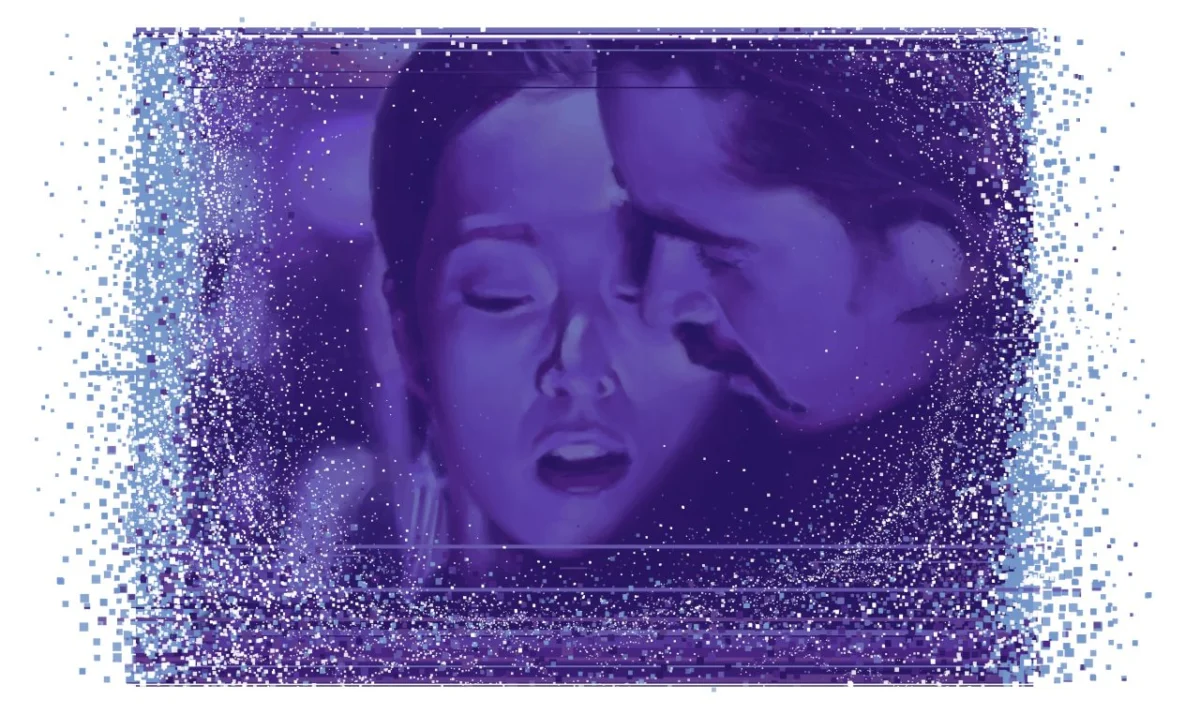
In the summer of 2006, audiences arrived at cinemas expecting a glossy, neon-soaked update of the iconic 1980s television series. What they received instead was something far more abrasive, experimental, and profoundly romantic. Michael Mann’s Miami Vice, a $150 million blockbuster that initially faltered under the weight of critical indifference and audience confusion, has undergone a radical transformation in the public consciousness. Nearly two decades after its release, the film has shed its reputation as a "sullen summer failure" to emerge as a towering achievement of digital expressionism—a melancholic, erotic, and deeply abstract masterpiece of the crime genre.
The Architecture of an Undercover Masterpiece
At its surface, Miami Vice plays the role of a standard-issue procedural. It features a high-octane ensemble cast—Jamie Foxx as Ricardo Tubbs, Naomie Harris as Trudy Joplin, and Colin Farrell as Sonny Crockett—navigating the dangerous, interconnected webs of transnational narcotrafficking. The film is saturated with the familiar tropes of the "cop movie": terse, tough-guy dialogue, fast-boating sequences, and the relentless swagger of professionals operating on the edge of the law.
However, the film’s true identity exists entirely undercover. Beneath the hyper-masculine posturing and the "gladiator academy" jargon, Mann utilizes the framework of a big-budget action film to house a fragile, libidinal melodrama. The film is less about the mechanics of a drug bust and more about the existential yearning of its protagonists—specifically Sonny Crockett—who exists in a state of perpetual oscillation between his fabricated persona and a raw, exposed humanity.
Chronology of a Cultural Reevaluation
The journey of Miami Vice from box-office disappointment to cult classic is a study in temporal perspective.
- 2006 (The Release): The film hit theaters to a tepid reception. Critics were baffled by the decision to eschew the iconic aesthetic of the 1980s show in favor of a gritty, handheld, and often pixelated digital look. The lack of traditional exposition and a "transparent" plot left general audiences feeling alienated.
- 2010s (The Digital Shift): As the landscape of cinematography shifted toward digital high-definition, film scholars and cinephiles began to revisit Mann’s use of the Thomson Viper FilmStream camera. The "smeary" and "super-fine" imagery, which once looked like a technical mistake, was recontextualized as a deliberate aesthetic choice meant to mirror the "humid, hallucinatory" nature of Miami itself.
- 2024 (The Victory Lap): The cultural re-embrace reached a crescendo at the Egyptian Theater in Los Angeles, where a special screening and Q&A with the "Miami Nice" podcast hosts and Michael Mann himself served as a formal validation of the film’s artistic intent. Memes, deep-dive essays, and a growing consensus have cemented the film’s status as a foundational text in 21st-century action cinema.
Technical Innovation: The Viper FilmStream Aesthetic
The visual language of Miami Vice is defined by the collision of two opposing forces: the "crystalline whole" of high-end digital imaging and the "distorto-disintegration" of pixelated noise. Because the Thomson Viper captured a 10-bit logarithmic signal—essentially an unfinished, flat image—Mann and his team were forced to engage in an intensive digital color-grading process.
This process resulted in an aesthetic that feels like a "bioluminescent bruise." When the frame captures a night scene or a storm over the ocean, the image does not merely document reality; it interprets the humidity and the heat as sensory data. This "digital oblivion" is not a flaw; it is the film’s primary thematic vehicle, representing the instability of the characters’ lives as their undercover identities begin to corrode their sense of self.
The "Medalist" Syndrome: Professionalism as a Mask
Central to the film’s narrative is what Mann explores as "medalist syndrome"—a psychological state where an undercover operative becomes so consumed by their fabricated identity that the mask begins to supersede the reality.
In the film’s universe, the "tough talk" and the "cop-movie clichés" are not simply dialogue; they are survival mechanisms. For characters like Crockett and Tubbs, the perfection of their craft is a desperate attempt to create a stable reality. Yet, as the film progresses, Mann strips away the artifice. The most poignant moments of the film do not occur during the shootouts or the high-stakes interrogations, but in the quiet, silent spaces: Crockett leaning against a floor-to-ceiling window, staring at the sea, his face betraying a yearning that his "tough-guy" persona cannot express.

Implications: The Twelve Minutes of Truth
If the film lasts two hours and twelve minutes, the "real" film—the emotional core that anchors the entire experience—exists in a specific twelve-minute window set in Cuba. It is here, away from the bureaucratic machinations of the FBI and the cartel, that the film becomes a pure, unadulterated love story.
The encounter between Sonny Crockett and Isabella (Gong Li) is the film’s hinge point. It is an erotic, wordless exchange of capabilities. When they drive a go-fast boat through the sapphire void of the ocean, the film ceases to be about law enforcement and becomes about the compression of time. As Isabella notes, "Time is luck." In a world defined by the imminent threat of violence, the characters recognize that their love is "too good to last."
This realization has profound implications for the interpretation of Mann’s filmography. Throughout his career, from Thief to Heat and The Insider, Mann has obsessed over the "compressed moments" of human connection. His characters are not looking for perfection in their work; they are looking for a reason to stop working. They are looking for someone to look back at them across the face of the water.
Official Responses and Legacy
Michael Mann has frequently described his own creative process as being tied to the rhythm of the ocean. During his 2024 discussion at the Egyptian Theater, he reflected on the sea as a place where he goes to "figure something out." This meta-commentary confirms that the film is, in many ways, an autobiography of the creative process itself: the struggle to capture an ephemeral feeling, to pin down the "delicate interface between ocean and air."
The failure of Miami Vice to succeed in 2006 was, in hindsight, a success of its own ambition. It refused to be a product. It demanded that the viewer abandon their expectations of narrative clarity and instead experience the film as a "sensorial aggregate."
Conclusion: The Shape of the Vacuum
Ultimately, Miami Vice is a film that only reveals its true form once it is gone. Its impact is felt in the "raw vacuum of its departure." By the time the credits roll, the viewer is left with the haunting image of the sea—a constant, shifting force that mirrors the volatility of the human heart.
The film serves as a reminder that the most compelling stories are often those that hide their true intentions behind a mask. Just as Crockett must return to his life of crime to protect the person he loves, the film had to hide as a generic summer blockbuster to protect the delicate, fragile truth at its core. It is a masterpiece of "undercover" filmmaking, a work of art that, like the tide, continues to rise and fall, leaving behind the sediment of deep emotional impact long after the initial noise has subsided.
