
Behind the Walkie-Talkie Static: How Location Scouting Shaped Paula González-Nasser’s Feature Debut, “The Scout”

When the walkie-talkie on a film set crackles to life with a call for someone from the locations department, seasoned crew members know it is rarely bearing good news. In the high-stakes, hyper-logistical world of television and film production, a page to locations usually means a crisis: a local tenant is threatening to shut down production, a neighbor is blocking the street with their vehicle out of spite, or a truly surreal, unscripted human encounter has crossed into the absurd.
For writer-director Paula González-Nasser, those grueling days on the pavement left a permanent mark. Having worked her way up through the industry trenches—serving as a unit production assistant (PA), locations scout, and locations coordinator—González-Nasser transitioned from the logistics sheet to the director’s chair for her debut feature film, The Scout.
Starring Mimi Davila as Sofia, a beleaguered young location scout tasked with tracking down picture-perfect apartments for a high-profile network TV pilot while desperately trying to keep her personal life from unraveling, the film is a love letter and a cautionary tale about the unsung heroes of filmmaking. While González-Nasser has successfully traded her clipboard for a megaphone, the eccentric trials, punishing hours, endless parking tickets, and bizarre interpersonal dynamics of her past life continue to drive her creative vision.
Main Facts: The Reality Behind The Scout
At its core, The Scout offers a rare, authentic glimpse into an industry department that audiences rarely think about, yet utterly relies upon. Location scouting is the invisible architecture of cinema. Without a scout finding the right street corner, abandoned warehouse, or opulent penthouse, a script remains merely words on a page.
- The Creative Catalyst: For González-Nasser, scouting is not just a logistical hurdle; it is the genesis of storytelling. "Scouting is the first seed for me," she told IndieWire in an interview ahead of the film’s release. "How I look at a space and what’s there kicks the ideas off in my head."
- The Narrative Arc: The Scout tracks Sofia’s frantic daily routine as she navigates the labyrinthine bureaucracy of New York City real estate, demanding producers, and unpredictable property owners.
- Theatrical Release: Greenwich Entertainment’s The Scout is currently screening in select theaters, drawing praise from critics and industry veterans alike for its hyper-realistic portrayal of below-the-line film crew labor.
Chronology: From the Trenches to the Director’s Chair
To understand The Scout, one must understand the unique career pipeline that birthed it. González-Nasser’s journey into feature filmmaking follows a path forged through exhaustion, resilience, and an intimate education in human psychology.

The Ranks of Production
In the film industry, the locations department is often the first to arrive on a location and the absolute last to leave. González-Nasser experienced every rung of this demanding ladder:
- Unit Production Assistant (PA): The entry-level grounding where long hours are spent guarding cones, locking up pedestrian traffic, and eating cold meals on the curb.
- Locations Scout: The boots-on-the-ground detective work of scouring cities, suburbs, and rural roads for spaces matching vague director-and-designer briefs.
- Locations Coordinator: The administrative anchor managing permits, parking variances, community complaints, and financial payouts.
The Breaking Point: Unscripted Chaos
Working in cities like New York introduces a level of unpredictability that no film school can teach. González-Nasser recalls being trapped in an apartment with a landlord determined to share elaborate 9/11 conspiracy theories. On another notable production—the Tracy Morgan-starrer The Last OG—she faced a property owner who aggressively demanded a face-to-face meeting with Morgan just to give the comedian "a piece of their mind."
These bizarre anecdotes, weathered over years of service, ultimately crystallized into the screenplay for The Scout. By returning to these memories, González-Nasser managed to craft a cinematic narrative that treats the mundane horrors of permitting and property management with the tension of a psychological thriller.
Supporting Data: The Master Class of NYC Locations Work
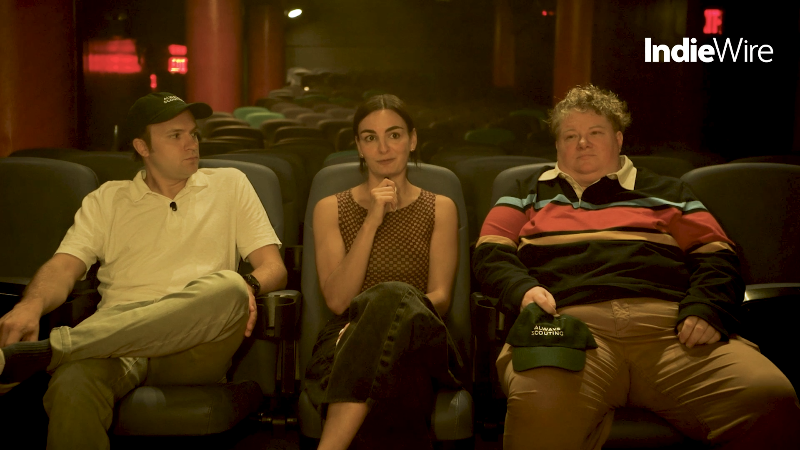
Ahead of the premiere of The Scout at the historic Film Forum, IndieWire sat down with González-Nasser alongside two stalwarts of the New York City locations community: Julie Sage and Hayden Dunham. Between them, Sage and Dunham have managed locations for a staggering roster of prestige television and blockbuster films, including High Maintenance, Search Party, Billions, And Just Like That…, One Night Only, and Transformers.
Although Sage and Dunham did not work directly on The Scout, their collective experience paints a vivid picture of the sheer scale and structural limitations of shooting in the tri-state area.

The Dual Reality of New York Production
According to Sage, the geographical and economic dichotomy of New York City makes it one of the most exciting, yet volatile, places to shoot in the world.
"New York really has a huge spectrum of high-end places and then much lower-end places," Sage explained. "You can be in a junkyard one day, and the next day you’re scouting suites at The Plaza. So I think that’s a really cool part of the job is seeing so much that New York has to offer on locations."
This access also grants crews a phantom view of the metropolis. Because major stunts, street closures, and historical site filming often occur during off-hours, locations professionals frequently bear witness to urban ghost towns. Sage highlights filming overnight on Ellis Island as a prime example—offering a private, midnight tour of historical monuments when the rest of the world is fast asleep.
The "Film-Friendly" Shortcuts
Because securing permits for random public buildings can take months, New York productions heavily rely on a tried-and-true rotation of film-friendly municipal and private infrastructure. Dunham revealed the industry’s worst-kept secrets regarding standing locations:
- Courtrooms: Almost every fictional trial set in New York is filmed in the exact same courtroom at the Bronx Courthouse.
- Correctional Facilities: Production teams generally pull from a rotation of just two primary jail facilities.
- Hospitals: Metropolitan Hospital is the go-to destination for medical drama sequences due to a dedicated, contemporary wing explicitly kept unutilized for incoming film productions.
Similarly, specific private event spaces—such as La Capitale on the Bowery or Castle Gould at the Sands Point Preserve—are legendary among location managers. Their architectural versatility allows art departments to transform them overnight into anything from a high-society charity gala to a gritty underground fighting arena. However, the logistical hurdle of funneling 100 to 200 crew members, massive lighting trucks, and catering units into these spaces eliminates dozens of potential locations before scouting even officially begins.

Official Responses and Industry Perspectives
The reception of The Scout has sparked a broader conversation among below-the-line workers regarding how their professions are depicted in popular culture. For too long, movies about the "movie business"—from Hollywood golden-age classics to modern satires—have focused exclusively on egomaniacal directors, temperamental movie stars, and out-of-touch studio executives.
The Scout shifts the camera downward, acknowledging the immense physical and emotional labor required to keep the cinematic machine moving.
"A cinematographer can’t do their job if they don’t have a great location," González-Nasser emphasized during her press tour. "A production designer can’t do anything without a great location. It’s such a pillar of the script coming to life."
Industry unions and local film commissions have similarly praised the film for accurately reflecting the bureaucratic red tape, community relations, and neighborhood negotiations that govern modern urban filmmaking. In an era where local pushback against runaway production is rising in cities across North America, The Scout serves as a timely reminder of the delicate diplomacy required to bring stories to the screen.
Implications: What The Scout Means for Independent Cinema
The release of The Scout represents a notable cultural shift for independent filmmaking in several key ways:
- The Rise of Below-the-Line Authorship: Historically, auteur theory prioritizes the writer and the director. However, as more crew members transition into feature filmmaking, we are seeing a new wave of cinema rooted in technical authenticity. Directors who came up as grips, gaffers, sound mixers, and location scouts are bringing a gritty, blue-collar realism to narrative features.
- A Re-evaluation of Urban Production Spaces: As cities like New York and Los Angeles face rising costs, housing shortages, and increasingly strict permitting regulations, films like The Scout highlight the fragility of urban filmmaking ecosystems. The spaces available to indie filmmakers are shrinking, making the job of the location scout more perilous and vital than ever.
- The Human Cost of Logistics: Beyond the industry insights, The Scout forces audiences to confront the emotional toll placed on service workers in the arts. Sofia’s struggle to balance professional demands with personal well-being mirrors the broader burnout crisis facing modern creative laborers.
Ultimately, Paula González-Nasser’s feature debut proves that compelling drama doesn’t always require car chases or explosions. Sometimes, true suspense can be found in the quiet panic of a location scout staring down a disgruntled landlord, five minutes before the cameras are scheduled to roll.
“The Scout” is currently playing in select theaters nationwide.
