
The Legal Battle Over Baby Reindeer: Netflix Suffers Major Setback as Fiona Harvey’s $170 Million Defamation Lawsuit Moves Closer to Trial
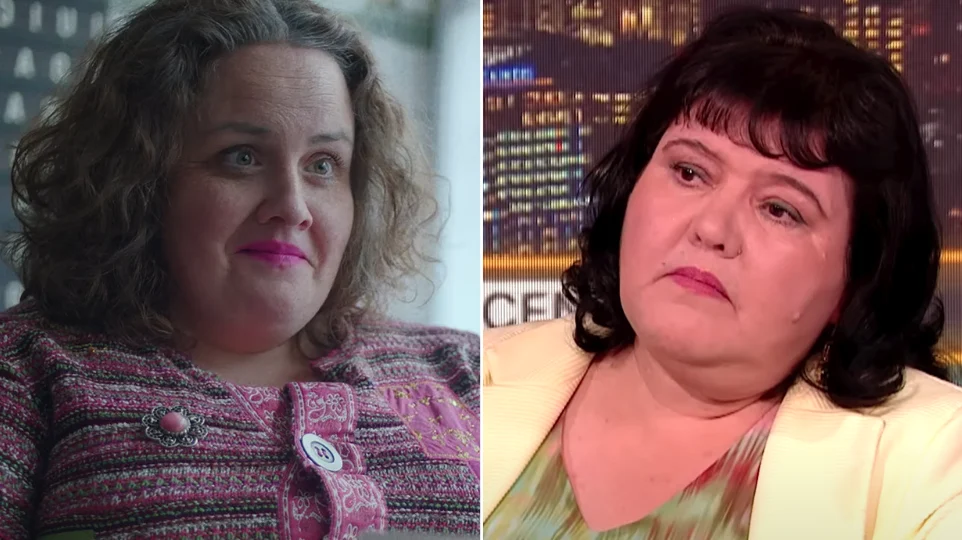
EXCLUSIVE: The high-stakes legal battle surrounding Netflix’s global television phenomenon Baby Reindeer has officially reignited. Following more than a year of legal dormancy, streaming giant Netflix has suffered a significant blow in its ongoing efforts to have Fiona Harvey’s multi-million-dollar defamation lawsuit thrown out of court.
The U.S. Court of Appeals for the Ninth Circuit has ruled that it lacks jurisdiction to hear Netflix’s appeal, effectively clearing the path for the contentious case to proceed toward a jury trial. The decision marks a major hurdle for the platform, which has aggressively sought to dismantle the lawsuit since it was filed in mid-2024.
Main Facts of the Case
The legal confrontation stems from the runaway success of Baby Reindeer, a darkly comedic and deeply psychological limited series created by Scottish comedian and writer Richard Gadd. Upon its release in April 2024, the show became an overnight global sensation, pulling in an astonishing 103 million views and sweeping prestigious accolades, including Emmy, BAFTA, and Golden Globe awards.
However, the line between fiction and reality quickly blurred. Within days of the show’s premiere, internet sleuths identified Fiona Harvey, a Scottish former lawyer, as the real-life inspiration behind "Martha"—the unstable and obsessive stalker character brilliantly portrayed by actress Jessica Gunning.
In June 2024, Harvey launched a staggering $170 million defamation lawsuit against Netflix in the Central District of California Court. At the heart of Harvey’s complaint is the show’s controversial framing. Billed explicitly in its opening titles as "a true story," the series depicts Martha as a twice-convicted stalker who was sentenced to five years in prison for her crimes against Gadd’s autobiographical character, Donny Dunn.
Harvey vehemently denies these depictions. She has never been convicted of stalking Gadd or anyone else, and she has publicly labeled the series "the biggest lie in television history." According to Harvey’s legal team, Netflix’s deliberate decision to market the show as factual documentary-style truth—rather than fictionalized drama—falsely branded her as a violent criminal to a global audience of millions.
Chronology of Events
To understand how a television show spawned one of the most polarizing defamation lawsuits in modern entertainment history, it is necessary to examine the timeline of events:
- April 2024: Netflix premieres Baby Reindeer, starring Richard Gadd. The series becomes an instant viral phenomenon, accompanied by the tagline "This is a true story."
- May–June 2024: Viewers rapidly track down the real-life identities of the characters. Fiona Harvey comes forward publicly in media interviews, identifying herself as the inspiration for Martha, and subsequently retains high-profile legal counsel.
- June 2024: Harvey officially files a $170 million defamation, intentional infliction of emotional distress, and negligence lawsuit against Netflix in U.S. federal court.
- September 2024: U.S. District Judge R. Gary Klausner delivers a crucial preliminary ruling, denying Netflix’s motion to dismiss the case. Judge Klausner rules that Harvey’s lawsuit has legal grounds to proceed because Netflix marketed the show as a "true story" despite making virtually no effort to fact-check Gadd’s claims or effectively obscure Harvey’s identity.
- Late 2024–2025: Legal proceedings stall as Netflix files an interlocutory appeal with the U.S. Court of Appeals for the Ninth Circuit, pausing the progression toward a scheduled May 2025 trial date.
- Recent Ruling: The Ninth Circuit Court of Appeals issues an order stating it lacks jurisdiction to hear Netflix’s appeal on technical grounds. The court directs Netflix to either voluntarily dismiss the appeal or justify why it should remain active, effectively removing the procedural roadblock and reviving the prospect of a trial.
Supporting Data and Legal Arguments
The legal arguments underpinning the case center heavily on the tension between artistic license, defamation law, and corporate due diligence in the streaming era.
Harvey’s Legal Position
Harvey’s attorney, Richard Roth, has consistently maintained that Netflix acted with reckless disregard for the truth. Roth argues that the streaming service had a journalistic and ethical obligation to verify the factual claims presented in a project marketed as a true story. Because the series falsely accuses Harvey of serious criminal convictions—including a prison sentence she never served—Roth asserts that her reputation was irreparably damaged on a global scale.
Furthermore, Harvey’s legal team emphasizes that Netflix made minimal effort to protect her identity. Despite altering minor details, the show featured dialogue, career paths, and distinctive catchphrases directly lifted from Harvey’s real-life interactions with Gadd, making her instantly recognizable to friends, former acquaintances, and millions of internet users.
Netflix’s Defense
Netflix, conversely, has defended its position by arguing that Harvey’s claims fail to meet the legal standard for defamation. The platform’s legal representatives have contended that Harvey "does not allege a provably false statement of fact was made about her" within the specific legal framework required for such lawsuits.
Additionally, Netflix has argued that Harvey’s public reputation was already deeply compromised prior to the show’s release. The defense points to historical news reports and public records detailing Harvey’s previous interactions, harassment allegations, and stalking complaints involving various public figures in the United Kingdom. Netflix maintains that because her public profile was already marred by these past events, the series could not have caused the catastrophic reputational damage she claims.
Official Responses
The latest procedural development has drawn sharp reactions from both sides of the legal aisle.
Richard Roth did not mince words when discussing the Ninth Circuit’s dismissal of Netflix’s appeal. In a statement to Deadline, Roth accused the streaming titan of using procedural delays to avoid accountability:
"Netflix is doing everything to avoid a trial of this action. First, it made a motion before the federal district court which it lost. Then it appealed that decision, which was dismissed. Notwithstanding its efforts, there will be a trial in this action where its wrongdoing will be front and center before a jury."
Netflix, meanwhile, has adopted a more cautious public posture following the appeals court ruling, declining to comment on the specifics of the Ninth Circuit’s order. However, the company’s internal legal strategy has clearly centered on exhausting all available procedural mechanisms to prevent the case from reaching a jury box, where unpredictable emotional factors could heavily favor a private citizen squaring off against a multi-billion-dollar media empire.
Implications for the Entertainment Industry
Beyond the immediate financial and legal stakes for Fiona Harvey and Netflix, this high-profile lawsuit carries massive implications for the broader entertainment and streaming industries.
The Death of "True Story" Marketing?
For decades, adding the prefix "Based on a True Story" or "Inspired by True Events" has been a standard marketing tool used by Hollywood studios to add prestige, urgency, and gritty realism to dramatic projects. However, the Baby Reindeer controversy has exposed the severe legal liabilities of this practice.
If Netflix is ultimately held liable—or forced into a massive financial settlement—streamers and production companies will likely think twice before slapping "true story" labels onto biographical or semi-autobiographical content without rigorous, documented fact-checking processes. Legal experts predict a surge in preventative measures across Hollywood, including stricter journalistic vetting for creative writers, more aggressive anonymization of real-life individuals, and a widespread shift toward explicitly fictionalized disclaimers.
The Standard of Care for Streamers
The ruling by U.S. District Judge R. Gary Klausner established a critical precedent: streaming platforms cannot hide behind creative license when they actively market a dramatic work as factual truth. By failing to verify Gadd’s allegations or adequately obscure Harvey’s identity, Netflix crossed the line from distributing protected artistic expression into the realm of potential defamation.
As the case lumbers closer to a potential jury trial, all eyes in the legal and entertainment worlds will be fixed on the California courtroom. Whether the case results in a landmark courtroom victory for Harvey, a massive settlement, or a vindication of Netflix’s distribution rights, Baby Reindeer has permanently altered how Hollywood tells—and labels—stories ripped from real life.
