
The Audacity of Survival: Russell T Davies’ ‘Tip Toe’ Confronts a Fracturing Britain
In the landscape of contemporary television, few voices possess the raw, searing urgency of Russell T Davies. Following his masterful 2021 AIDS drama It’s a Sin—a work that looked backward to find the roots of modern resilience—Davies has pivoted to the immediate, uncomfortable present. His latest project, the five-episode limited series Tip Toe, arriving on Starz following a provocative run on the U.K.’s Channel 4, serves as both a cultural barometer and a grim warning. Set against the backdrop of a post-Brexit Britain gripped by resurgent xenophobia and deep-seated social malaise, Tip Toe is a work of blunt-force trauma, designed to rattle the complacency of its audience.
The Collision of Two Worlds
The title of the series is a deliberate act of subversion. It comes from the mouth of Melba (Paul Rhys), a retired drag queen and the most pessimistic regular at Leo’s bar, located on Manchester’s iconic Canal Street. For Melba, the hard-won visibility of the 2010s was not a victory, but a trap—a lure that brought the queer community into the open only to make them more vulnerable to a rising tide of cultural backlash. "Now I tiptoe," he confesses, "just in case."
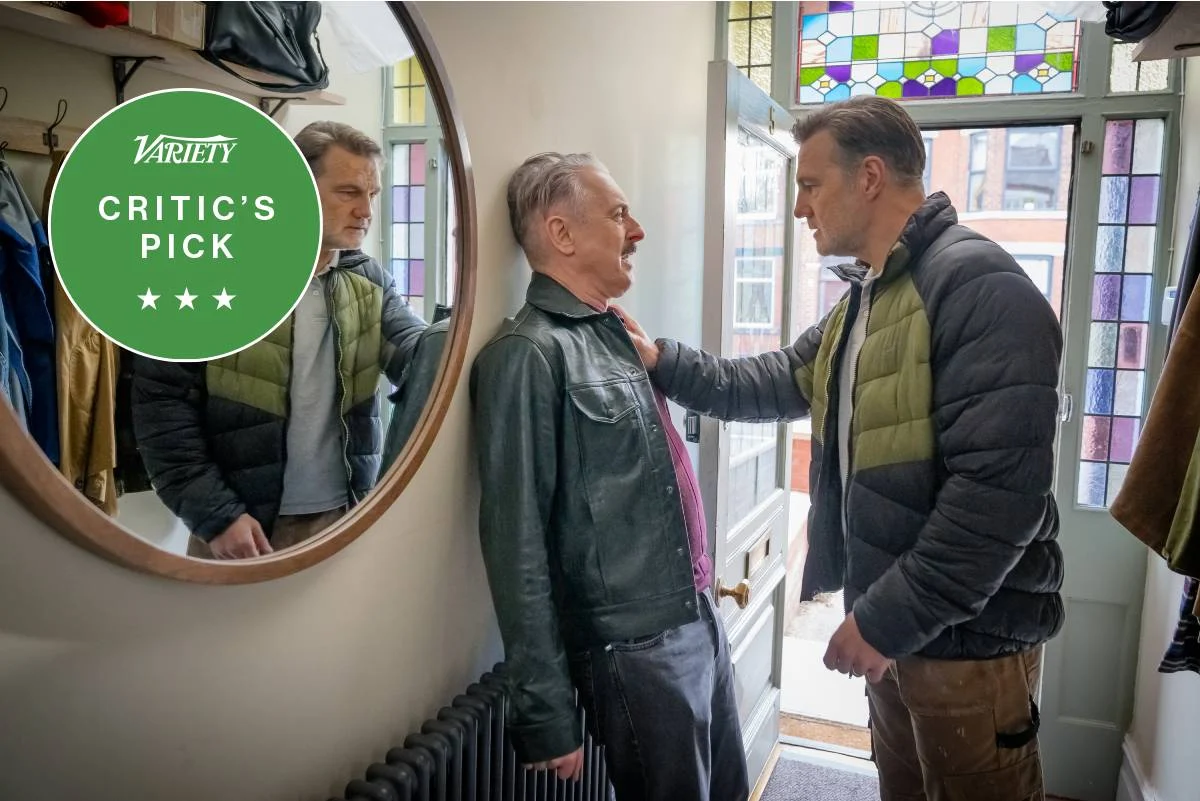
The narrative focuses on the collision between two neighbors: Leo (Alan Cumming), a middle-aged, HIV-positive gay bar owner, and Clive (David Morrissey), a disgruntled electrician. The show’s premise is established with harrowing clarity in the opening minutes: a flash-forward reveals Leo’s lifeless body hanging from a lamppost, with Clive watching from the shadows.
This is not a whodunit, but a why-did-it-happen. The series maps the escalating tensions between these two men, who function as ideological avatars for their respective "tribes." Throughout the episodes, the phrase "you lot" becomes a recurring motif—a linguistic weapon used to otherize the queer community. "It’s always sex with you lot," Clive snarls at Leo, crystallizing a worldview that reduces complex human lives to a singular, stigmatized identity.
A Legacy of Provocation: The Russell T Davies Style
Tip Toe marks a return to the stomping grounds that defined Davies’ early career. From the epoch-defining Queer as Folk at the turn of the millennium to the midlife existentialism of Cucumber, Davies has long used the vibrant, often chaotic milieu of Northern England’s gay scenes to explore the human condition.
However, where his previous works often balanced personal growth with communal celebration, Tip Toe widens its lens to include the breakdown of the national psyche. Davies has always had a knack for weaving the personal into the political, but Tip Toe feels different. It is less concerned with internal community dynamics and more focused on the external forces that threaten to dismantle them. As Leo poignantly asks his best friend, Stephanie (Elizabeth Barrington), "We fought to be seen. But what if we got it wrong? What if they see us and they still don’t like us?"
Chronology of Tensions
The series meticulously constructs a timeline of radicalization and fear. We follow the everyday indignities faced by those who cannot afford to "tiptoe." There is Zee (Iz Hesketh), a trans woman working in Leo’s bar, whose access to life-saving estrogen is severed by a GP under the weight of shifting gender orthodoxies. There is George (Jackson Connor), Clive’s 16-year-old son, who begins to question his own sexuality, only to be met with his father’s suspicion and the toxic, algorithm-fueled narrative that paints all gay men as "groomers."
As the series progresses, the "walls" described by the characters begin to feel physical. The political malaise of post-Brexit Britain is not merely a background detail; it is the oxygen the characters breathe. The tension is compounded by the personal failures of the leads: Leo is reeling from a divorce, masking his profound loneliness with a fragile, theatrical bravado that even a performer of Alan Cumming’s caliber imbues with deep, aching sadness. Conversely, Morrissey’s Clive is a masterclass in pathetic villainy. He is a man who blames immigrants and "the gays" for his inability to secure steady work, ignoring the reality that his own unpleasant, volatile nature is the primary architect of his professional and personal isolation.
Supporting Data: The Anatomy of a Backlash
The series does not shy away from the broader, global context of this "backward lurch." Davies acknowledges the far-reaching influence of American politics, citing the re-election of Donald Trump as both a symptom and a catalyst for the emboldened bigotry seen in the U.K.
The social geography of the show is equally telling. Even among characters who ostensibly align with liberal values, cracks appear. Stephanie, though a close friend to Leo, represents a specific subset of "essentialist" feminism that rejects the validity of trans identity—a direct nod to the real-world discourse surrounding figures like J.K. Rowling. By placing this friction within the "progressive" camp, Davies suggests that the dehumanization of marginalized groups is not restricted to the far-right, but has permeated the mainstream.
The brilliance of the show’s structure lies in its refusal to offer easy solutions. Director Peter Hoar uses a striking, bravura montage to close the premiere, juxtaposing the private lives of his characters: Leo and George in their bedrooms, Clive doomscrolling, and his wife, Marie (Pooky Quesnel), finding escapism in explicit fanfiction about Slow Horses. It is a snapshot of a lonely, disconnected society, all searching for intimacy in a world that feels increasingly hostile.
Official and Critical Perspectives
The reception of Tip Toe has been as polarizing as its subject matter. Critics have noted that the show relies on deterministic plotting—at times, Leo’s decision to engage with the increasingly aggressive Clive borders on the unbelievable. However, in the context of Davies’ body of work, these choices feel intentional.
In his 2019 series Years and Years, Davies used the framework of speculative fiction to distill the surreal, dizzying speed of modern life. In Tip Toe, he abandons the safety of the future. He argues that we are already living in the dystopia we feared. When asked about the necessity of such bleak storytelling, the production team has maintained that the series is a "call for empathy." By showing the specific, messy, human quirks of both the victim and the perpetrator, Davies forces the viewer to grapple with the reality that dehumanizing rhetoric has real-world consequences on actual human hearts.
Implications: The High Cost of Visibility
What are the implications of a society that decides it no longer wishes to "see" its marginalized citizens? Tip Toe suggests that the cost is total. As the series moves toward its inevitable, tragic conclusion, it poses a haunting question: when the cultural climate turns, is there anywhere left to hide?
The series serves as a stark reminder that rights are not permanent markers of progress, but fragile agreements that can be revoked when fear outweighs empathy. The "you lot" label, once used to identify a community, becomes the target that marks them for erasure.
For audiences in the United States and abroad, Tip Toe acts as a mirror. It forces a confrontation with the reality that the political anxieties of the U.K. are not isolated events, but part of a global tide. By the time the final credits roll, the audience is left with the uncomfortable realization that the "tip-toeing" Melba advocates for is not a strategy for safety, but a symptom of a society that has lost its way.
Russell T Davies has once again proven that he is not interested in providing comfort. He is interested in the truth—and as Tip Toe demonstrates with terrifying efficacy, the truth is often a scream at the top of one’s lungs.
