
The Meta-Documentary Frontier: Alex Ross Perry’s Deconstruction of Pop Culture
By [Your Name/Staff Writer]
In the landscape of contemporary independent cinema, few figures are as polarizing or as intellectually restless as writer-director Alex Ross Perry. Known for his claustrophobic, acerbic character studies like Listen Up Philip and Her Smell, Perry has recently pivoted toward a radical new territory: the non-fiction essay film. His latest projects, Videoheaven and Pavements, serve as sprawling, metafictional investigations into the artifacts of 1990s culture. While neither film has yet received a traditional festival release or a widespread marketing campaign, they represent a significant shift in Perry’s trajectory—moving away from traditional narrative fiction toward a rigorous, and often playful, interrogation of memory, obsolescence, and the mythology of the "indie" era.
The Genesis of the Essay Film
The impetus for this pivot, according to Perry, was born as much from the constraints of the film industry as from his own evolving artistic interests. Videoheaven, a three-hour deep dive into the metaphysics of American video-store culture, has been in development since 2014. For Perry, the film was a reaction to repeated failures to secure funding for narrative television projects centered on the same subject matter.
"The more it became clear that I’d never get corporate money to tell a video-store saga, the more important it was to finish this film on my own," Perry explains. In this light, Videoheaven functions as a personal monument to a lost era of cinephilia, one that is highly dependent on fair-use archival footage and a scholarly approach reminiscent of Thom Andersen’s Los Angeles Plays Itself.
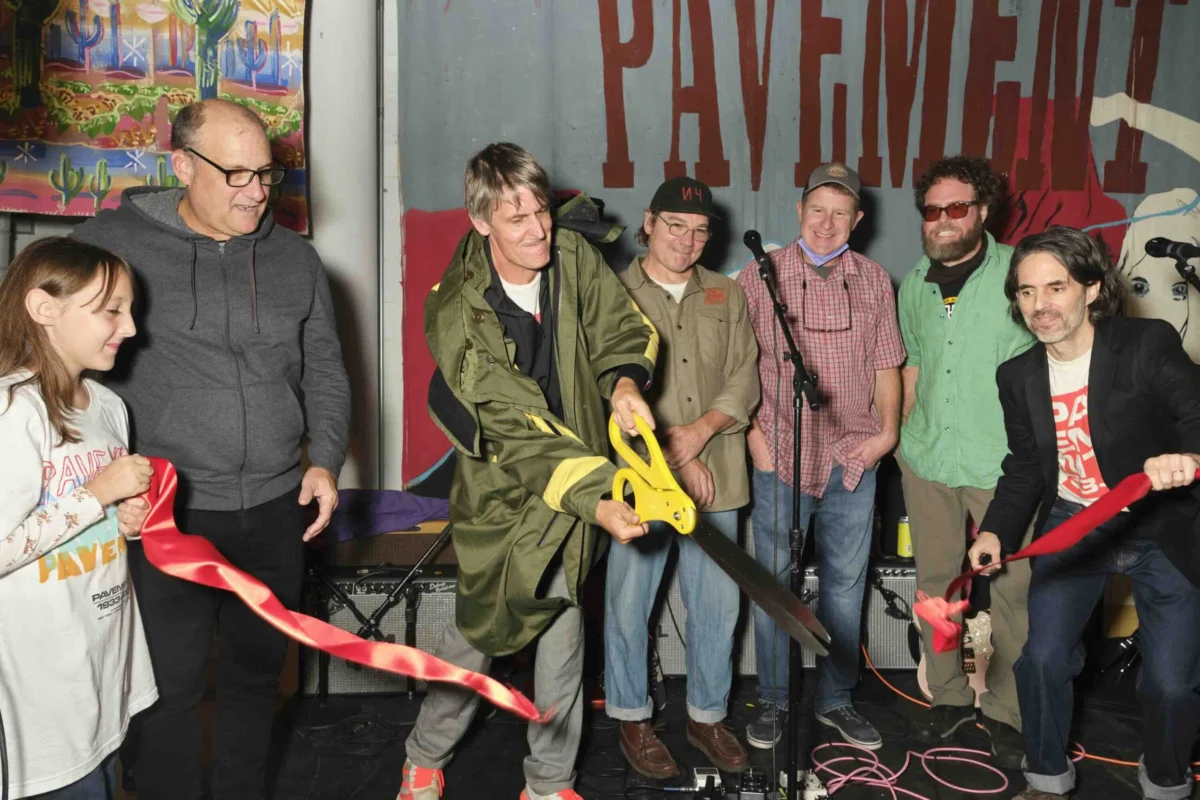
Conversely, Pavements—a kaleidoscopic meditation on the seminal indie rock band Pavement—originated from a specific, if provocative, industry prompt. When approached to create a project about the band, Perry was told that frontman Stephen Malkmus "feels like an Alex Ross Perry character." This observation provided the friction necessary to construct a film that is part concert documentary, part scripted biopic, and part jukebox musical, effectively turning the lens back on the very nature of rock-star hagiography.
A Chronology of Obsession
The development of these two films ran in parallel, creating a unique cross-pollination of themes. While Videoheaven is rooted in the academic research of Daniel Herbert’s Videoland, the project gained its final momentum during the COVID-19 pandemic. With New York City’s film community largely shuttered, editor Clyde Folley—a key collaborator on the project—was able to dedicate the intensive hours required to synthesize nearly 200 film clips into a cohesive, three-hour meditation.
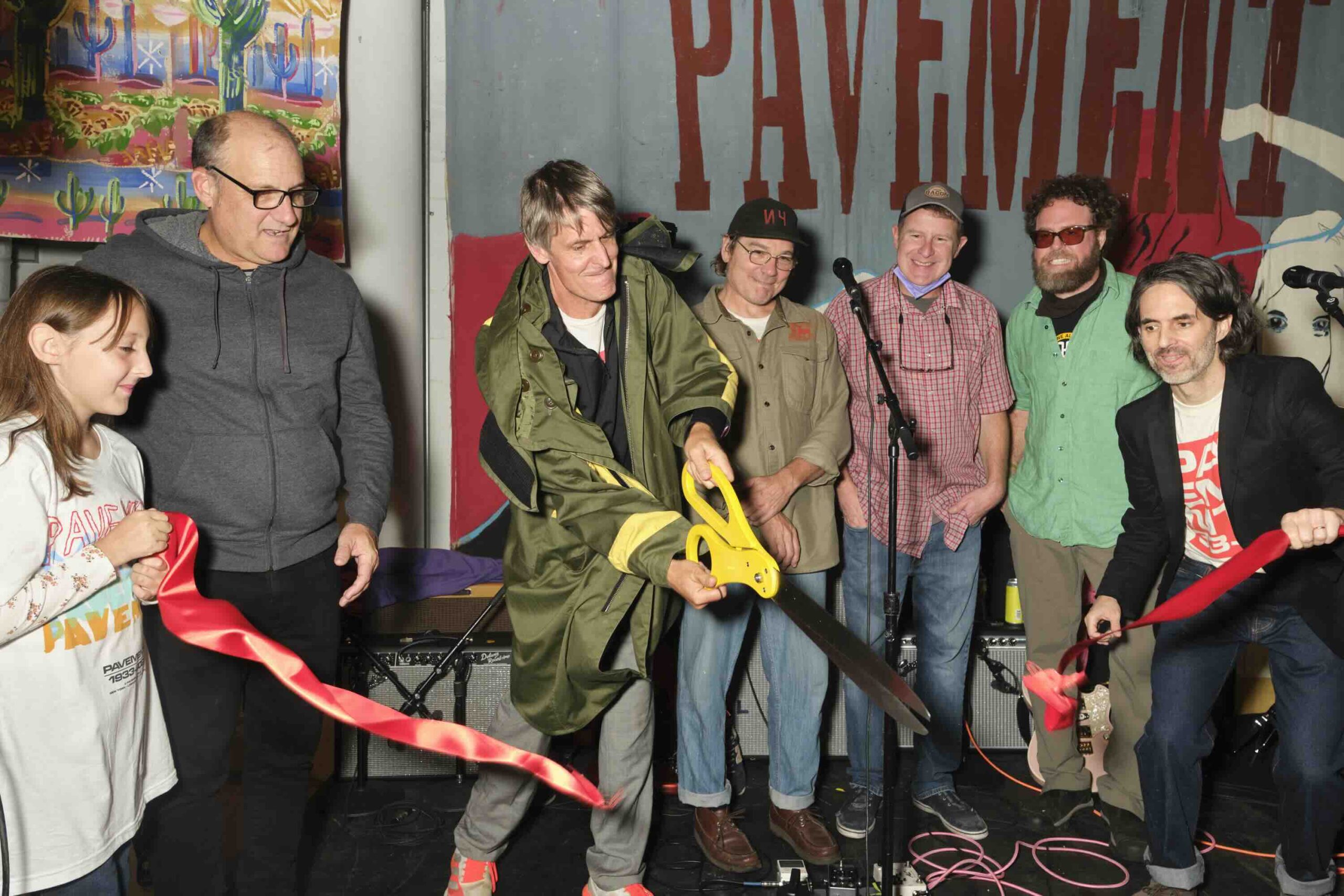
Pavements followed a different, more volatile path. Conceived as a response to the current trend of "every band getting a movie," Perry decided to lean into the absurdity of the format. He created public-facing stunts, including a makeshift "Pavement Museum" and a fully staged jukebox musical, which were then captured by his documentary crew. By treating these staged events with the seriousness of a historical archive, Perry blurred the line between reality and performance, forcing the audience to grapple with the authenticity of the "truth" being presented on screen.
Supporting Data: The Anatomy of the Projects
To understand the scope of these works, one must look at the structural choices Perry has made:
- The Narrative Structure: Videoheaven follows a chronological evolution, moving from the early 1980s—where the video store was a functional, middle-class retail space—to the 1990s and 2000s, where the video clerk became a cinematic archetype.
- The Cast of Contributors: The production of Videoheaven involved a lean team of seven to eight people, emphasizing a "handmade" aesthetic. Pavements featured a broader cast, including actors hired to play band members in a fictionalized biopic sequence that sits uncomfortably alongside interviews with the real band.
- Archival Scope: Videoheaven synthesizes clips from dozens of films, tracking the shift in the representation of movie-store spaces from functional backdrops to symbols of intellectual cachet.
Official Responses and Creative Philosophy
In discussions regarding these works, Perry remains candid about his skepticism toward traditional documentary formats. He views the "documentary" label as something of a misnomer for his current work. "It’s a dinner with five entrees and no side dishes," he says of Pavements.
When pressed on why he chose to use a narrator for Videoheaven rather than his own voice, Perry is characteristically self-deprecating: "I just wouldn’t want to listen to my voice for three hours, nor would anybody, I don’t think." This decision highlights his desire to maintain an academic distance, allowing the clips themselves to "talk about themselves," while he functions more as a curator than an orator.
Regarding the band’s involvement in Pavements, Perry notes that Stephen Malkmus and his bandmates were surprisingly receptive to his "meta-mythological" approach. By allowing Perry to create a fictitious museum and a musical out of their catalogue, the band effectively participated in the "invention" of their own legend. This creates a fascinating tension: the film is clearly a work of fiction, yet it exists within a documentary framework that the band has endorsed.
Implications for the "Indie" Ethos
The broader implications of these films touch upon the current state of cultural nostalgia. Perry is interested in why his generation—and those surrounding it—process the 1990s as a "premium decade." He challenges the audience to consider the difference between a band like Pavement, which maintained a fierce indie integrity, and the commercialized, profit-driven models that have emerged in the decades since.
The "misanthropy" often attributed to Perry’s fictional characters is present here as well, though it is directed toward the industry itself. His work suggests that the "indie" label, once a marker of artistic freedom, has been commodified into a product that can be packaged as a jukebox musical or a streaming-service biopic. By revealing the machinery behind the documentary, Perry exposes the artifice of the rock-star portrait.
Furthermore, the films serve as a commentary on the "end of the video store" as a social hub. Perry argues that the community once found in the aisles of a video store has migrated to digital spaces like Letterboxd, yet something essential has been lost in the translation—the physical, tactile experience of discovery.
Conclusion
Alex Ross Perry’s Videoheaven and Pavements are not merely films about pop culture; they are films about the act of consuming pop culture. They ask why we feel the need to preserve, categorize, and rewrite the histories of the bands and movies that shaped our formative years.
As these projects move toward their eventual release, they are likely to polarize audiences. Some will find them insular and overly concerned with the "signifiers" of 90s nostalgia; others will find them to be brilliant, rigorous, and profoundly funny deconstructions of the contemporary documentary form. Regardless of the reception, Perry has succeeded in creating something that is, at its core, deeply personal. Whether or not his "invention" of Stephen Malkmus or his taxonomy of video-store culture is factually "correct" is ultimately secondary to the discourse he has sparked—a discourse that, for a filmmaker who grew up in the back rooms of video stores and listening to Crooked Rain, Crooked Rain, is perhaps the only work that matters.
