
Beyond the Mirrorball: Ezra Frech’s Mission to Redefine Representation on Dancing With the Stars
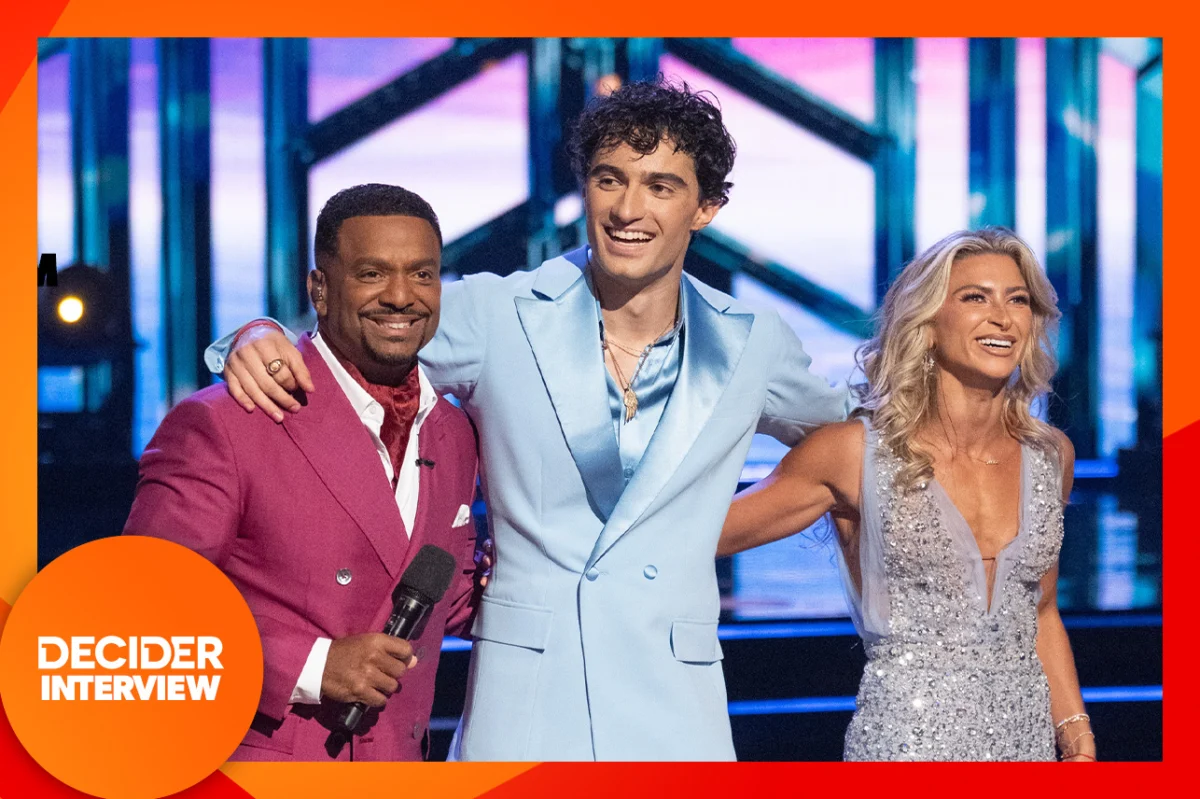
In the glitzy, high-pressure world of Dancing With the Stars (DWTS), Season 35 has been defined by a singular, electrifying presence: Ezra Frech. The 21-year-old Paralympic gold medalist has not only dominated the leaderboard for three consecutive weeks but has also transformed the ballroom into a platform for profound social change. While his technical prowess with partner Daniella Karagach has captured the attention of judges and viewers alike, Frech insists that his "secret sauce" is not found in a dance studio—it is found in his purpose.
For Frech, who was born with congenital limb differences, his participation in the ABC hit competition is less about securing a trophy and more about tackling what he calls the "last frontier" of societal representation.
The Motivation Behind the Movement
As the show prepares for the highly anticipated Mariah Carey Night, the atmosphere surrounding Frech is one of both intense focus and widespread inspiration. Since the season’s premiere, social media has been flooded with viral clips of children and adults with limb differences—as well as those in wheelchairs—watching in awe as Frech executes complex routines like the tango and the cha-cha.
"I feel like I’m really connected to my purpose," Frech explained in an exclusive interview. "That’s getting the opportunity to be the disability representation that I think we need as a society. It’s those videos that I see on social media of a little kid with a hand difference jumping up and down and watching me dance… maybe that motivates them just five percent more to get out of bed and go pursue something."
Frech’s journey, however, is far from effortless. Despite the grace he exhibits under the studio lights, he candidly admits that the physical demands of professional ballroom dancing are grueling. Yet, he views the bodily strain as a small price to pay for the visibility he is providing to millions. "Regardless of what I feel on a day-to-day basis, I know that I’m dancing for a bigger purpose this season," he added.
A Chronology of Success: From the Paralympic Podium to the Ballroom
Ezra Frech’s rise to national prominence did not happen overnight. Before he was a reality television sensation, he was a dominant force in the Paralympic circuit, a testament to his lifelong commitment to athletic excellence.
- Early Life & Advocacy: Long before Dancing With the Stars, a young Ezra was already making waves. His appearances on The Ellen DeGeneres Show—first as a nine-year-old and later as a teenager—showcased a charismatic, resilient youth who refused to let his physical circumstances dictate his potential.
- The Athlete’s Mindset: Frech founded Angel City Sports, a nonprofit dedicated to providing adaptive sports opportunities. His work in the disability community provided the bedrock for his current platform.
- DWTS Debut: Entering Season 35, Frech arrived with a clear objective. His early weeks were marked by a steep learning curve, but his natural athleticism and rapport with professional dancer Daniella Karagach quickly propelled them to the top of the leaderboard.
- Current Standing: Having held the top spot for three consecutive weeks, Frech has transitioned from an inspirational contestant to a genuine frontrunner for the Mirrorball Trophy.
The Chemistry of Success: The Karagach-Frech Dynamic
A critical component of Frech’s success has been his partnership with Daniella Karagach. In the world of DWTS, the relationship between a celebrity and a professional is the engine of the entire experience. For Frech, Karagach has been more than a choreographer; she has acted as a coach, therapist, and, most importantly, a friend.
"This person is primarily responsible for your experience," Frech remarked regarding the professional partnership. "I just couldn’t be happier with the fact that I got someone not only as gifted and talented as a dancer, but just as a human being. I feel like we’ve known each other our whole lives."
The pair’s communication style is so synchronized that it has minimized the traditional learning curve. By adapting ballroom technique to accommodate his unique physical movements, they have created a language of motion that is uniquely their own, allowing Frech to tackle complex choreography with a level of confidence that has left the judges stunned.
Industry Perspectives: The Scale of the Ballroom
Frech admits that the scale of the show is difficult to grasp until one is standing in the center of the ballroom. "You never really understand the scale of the show," he said. "Of course, I know it’s massive, but when you’re actually in it, I’m not backstage thinking, ‘Wow, six or ten million people are going to see this.’"
The production itself—a "well-oiled machine"—has earned his respect. He noted that the camera operators and production crew are "professional athletes in their own right," moving with the dancers to capture the intensity of every performance. This high-production environment has only heightened the stakes for the contestants, yet Frech remains grounded by his connection to the audience and the broader impact of his visibility.
Implications: Changing the Cultural Narrative
The significance of Frech’s presence on prime-time television cannot be overstated. By participating in a show that emphasizes aesthetic perfection and physical coordination, he is systematically dismantling preconceived notions about what a body "should" look like in a dance setting.
The "Last Frontier"
Disability representation in media is often relegated to supporting roles or stories focused entirely on the hardship of the disability itself. Frech is flipping this script. He is not a "special interest" story; he is a competitor, a performer, and a top-tier athlete. His ability to perform a rumba or a foxtrot with such technical precision forces the viewing public to broaden their definitions of capability.
Building a Community
Frech’s influence has extended to his fellow cast members as well. His friendship with contestant Connor Wood and his camaraderie with Amber and Pasha represent a collaborative, rather than purely cutthroat, environment. By fostering these bonds, Frech is showing that the competitive landscape of television can still be a space for genuine connection and mutual support.
Looking Ahead: The Road to the Finale
As the season progresses, the pressure will inevitably mount. For the upcoming Mariah Carey Night, Frech is set to perform a rumba to "Anytime You Need a Friend." While he jokingly noted that he was relieved he didn’t get stuck with the inevitable holiday-season earworm "All I Want For Christmas Is You" in early October, he is clearly energized by the emotional demands of the song.
When asked about the ultimate goal—the Mirrorball Trophy—Frech remains philosophical. He recognizes that, unlike track and field, dance is subjective. "There’s not a clear winner and a clear loser," he explained. "There is so much that’s up for interpretation… controlling the things that we can control, which is our work, our process, the sacrifice, and the commitment—that’s what I’ll continue to do."
Regardless of whether he holds the trophy at the season’s end, Ezra Frech has already secured a victory of a different kind. He has utilized the biggest stage in the country to prove that while physical challenges are a reality, they are not a barrier to artistry, excellence, or, ultimately, human connection.
Fans can catch Ezra Frech on Dancing With the Stars live on Tuesdays at 8/7c on ABC and Disney+, with episodes streaming the following day on Hulu.
