
The Mirrorball Dilemma: Is Dancing With the Stars Losing Its Way?
By Hope Sloop
Published: October 7, 2026, 5:30 p.m. ET
For decades, the premise of ABC’s Dancing With the Stars (DWTS) has operated under a fragile social contract. Audiences tune in expecting a blend of technical progression, celebrity transformation, and high-stakes competition. However, as the series wades deep into its 35th season, that contract is fraying. The recent, shocking elimination of Summer House star Ciara Miller during "Mariah Carey Night" has reignited a fierce, long-standing debate: What is the true purpose of the ballroom? Is it a meritocracy for the most improved dancers, or has it devolved into an unpredictable popularity contest where technical skill is secondary to a sympathetic narrative?
The Fall of a Fan Favorite
The elimination of Ciara Miller and her professional partner, Brandon Armstrong, on Tuesday night was more than just a standard exit; it was a watershed moment that left fans reeling. Miller, who was the first celebrity announced for Season 35 following the viral fallout of the Summer House drama involving Amanda Batula and West Wilson, arrived with significant momentum. As a cultural "It Girl," she brought a massive, engaged digital footprint to the show.
Yet, despite delivering her highest score of the season—a jazz routine to Mariah Carey’s "Emotions" that the judges lauded as her "best dance yet"—Miller was sent packing. The timing of her exit has struck a raw nerve, particularly among the show’s fans of color. Miller’s departure comes just one week after the elimination of Britt Stewart, the show’s only Black female professional dancer, and her partner, Taylor Hanson. This sequence of events has fueled accusations that the competition is structurally biased, creating an uphill battle for contestants of color that defies the show’s purported focus on skill.
A Chronology of Systemic Frustration
To understand the current outrage, one must look at the historical context of the show’s diversity issues. For years, critics have pointed to the glacial pace at which the series has embraced representation behind the scenes. It took ten years for Keo Motsepe to become the first Black male professional, and another six years before Britt Stewart was given the opportunity to compete as a pro—only after she had served six seasons in the troupe.
This systemic skepticism informs how fans view the current season’s results. When a contestant who is consistently showing technical improvement is eliminated in favor of lower-scoring, "adorable" personalities, the audience feels betrayed. The pattern is cyclical: we watch talented individuals lose their footing in the competition, not because they failed to perform, but because they failed to capture the subjective whims of the voting public.
The Popularity Paradox: Scoring vs. Voting
At the heart of the Dancing With the Stars identity crisis is the tension between the judges’ scores and viewer participation. The show posits that a combination of these two metrics determines who stays and who goes. However, the influence of the audience is so heavily weighted that it renders the judges’ expertise almost moot.
Consider the case of Jimmy Kimmel Live’s Guillermo Rodriguez. Week after week, he has languished at the bottom of the leaderboard, never once receiving a score higher than a "5" from any judge. Yet, he remains in the competition. When a participant is consistently underscored by experts but kept safe by the voting public, it signals to the audience that the "dance" portion of the show is merely decorative.
This is compounded by the logistics of the voting system. West Coast viewers, who are forced to vote before they have even seen the performances of the night, are essentially casting "blind" ballots. This creates a feedback loop of popularity-based voting that rewards familiar faces over those who demonstrate the most significant week-to-week growth. The result is a competition that feels disconnected from the very performances being showcased on stage.
The Double Standard: Men, Women, and "Adorable" Narratives
There is a pervasive, gendered disparity in how contestants are treated by both the voting public and the judging panel. In Season 34, we saw the rise of Andy Richter; in Season 35, we have Guillermo Rodriguez. In both instances, the fanbase has "infantilized" the male contestants, labeling them "adorable" and pushing them through the ranks despite mediocre technical ability.
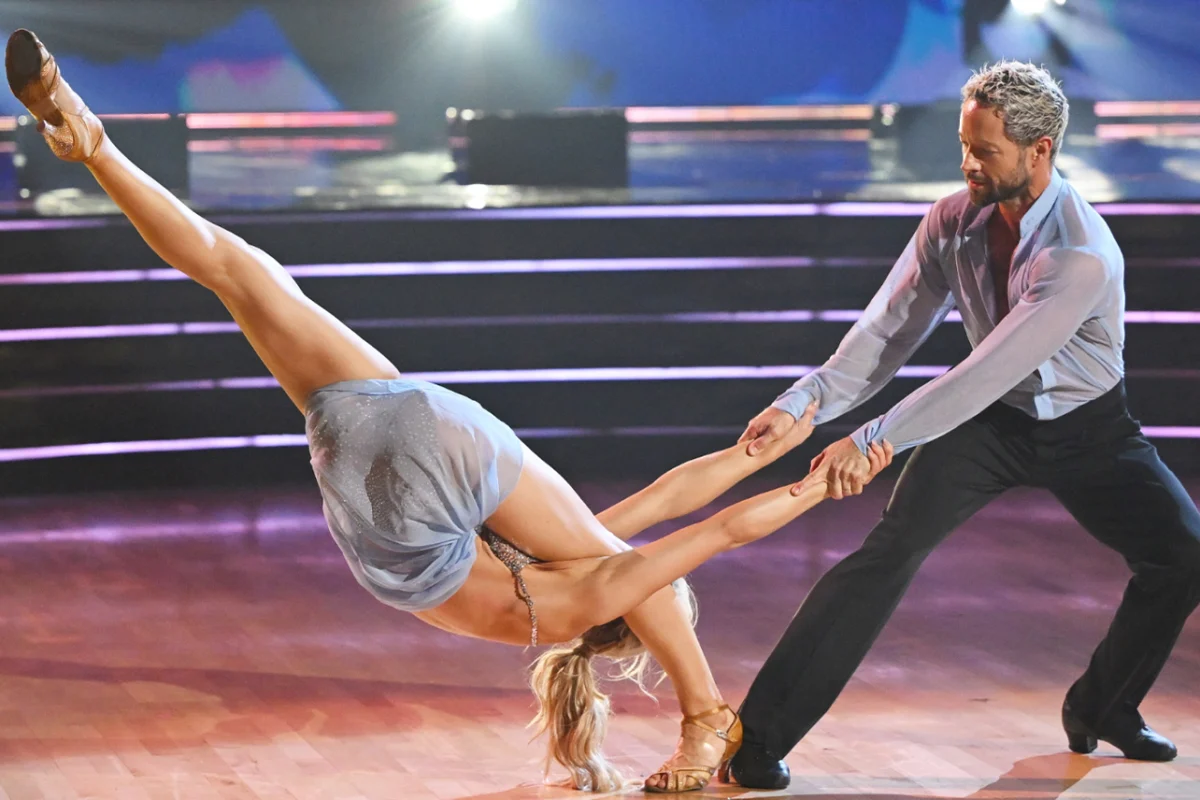
Conversely, the standard for female contestants—and female professionals—remains significantly higher. As judges like Derek Hough, Carrie Ann Inaba, and Bruno Tonioli often reiterate, the female dancer is intended to be the focal point of the routine. This places the burden of performance squarely on their shoulders. Yet, when a woman performs a technically demanding maneuver—such as being lifted out of a split—the judges frequently award scores that do not adequately reflect the difficulty compared to their male counterparts.
The most recent example of this was the scoring of Amber Glenn. Her rumba to "Hero" was a masterclass in ballroom elegance, yet she received a "7" from Carrie Ann Inaba—the same score given to Bachelorette alum Tyler Cameron for a significantly less refined performance. The outcry on social media was immediate, with fans joking that the judges might need to invest in new eyewear to distinguish between quality and popularity.
Implications for the Future of the Franchise
If Dancing With the Stars intends to maintain its status as a premier reality competition, it must address these fundamental "kinks." The current format—featuring 16 contestants—feels bloated. When the premiere must be split into men’s and women’s rounds just to manage the sheer volume of participants, the show loses its narrative intimacy.
Proposed Structural Reforms:
- Reduced Cast Size: Shrinking the field to 10 or 12 contestants would allow for more substantial character development and deeper investment from the audience.
- The Judges’ Save: Bringing back the "Judges’ Save" is a necessity. Too many high-caliber dancers are being eliminated due to single-week anomalies or popularity bias.
- Synchronized Voting: Implementing a system where the results show occurs on a second night would allow the entire country—including the Pacific time zone—to view and vote on performances before the elimination occurs.
- Staggered Scoring: Some experts suggest that judges should not reveal their scores until all couples have performed, preventing the unconscious bias of "scoring inflation" that happens when a judge compares a later performance to a weak early one.
The Bottom Line: Can the Show Pivot?
Ultimately, Dancing With the Stars is caught in a tug-of-war between its past as a variety spectacle and its potential as a genuine dance competition. If the show continues to prioritize "adorable" narratives over technical merit, it risks alienating the dedicated viewers who watch for the artistry of the sport.
Ciara Miller’s elimination should serve as a wake-up call for the production team. If the audience cannot trust the integrity of the elimination process, the "Mirrorball Trophy" loses its prestige. The show can certainly be a popularity contest, and it can be a place for heartwarming journeys, but to survive another 35 seasons, it must strike a balance that respects the work of the professionals and the progress of the celebrities.
As it stands, Dancing With the Stars remains the hottest reality show in the industry, but it is a show currently operating on borrowed time—and perhaps, borrowed credibility. Fans will continue to tune in on Tuesdays at 8/7c on ABC, but they will do so with a increasingly critical eye, waiting to see if the judges—and the producers—can finally answer the question that has haunted the ballroom for years: What is this show actually about?
For now, the answer remains a messy, frustrating, and deeply polarizing work in progress.
