
A New Era of Media: The $110 Billion Skydance-WBD Merger Reshapes the Industry
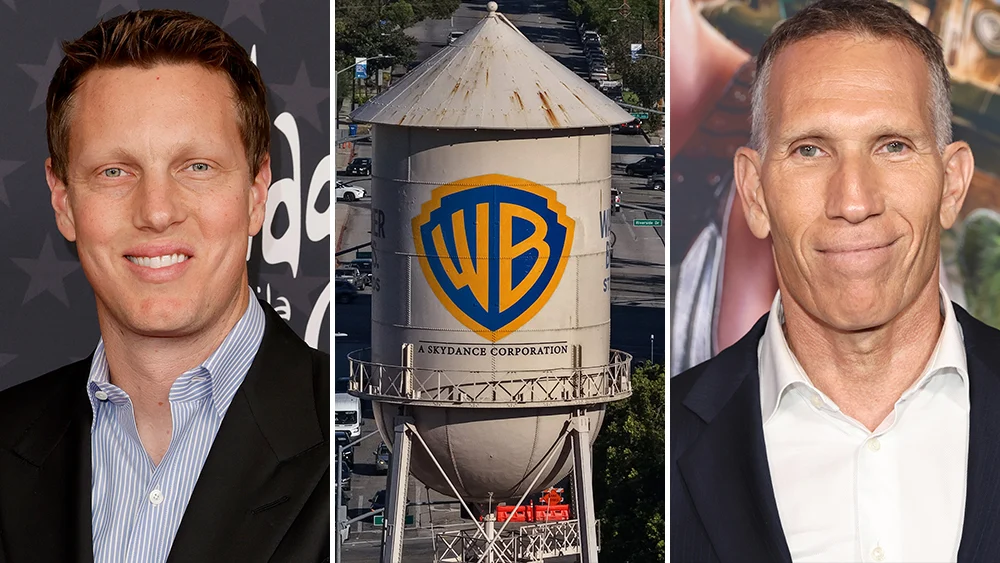
In a monumental shift for the entertainment landscape, the $110 billion merger between Skydance Media and Warner Bros. Discovery (WBD) has officially reached its conclusion. Seven months after David Ellison first pitched the acquisition to wary Warner executives, he returned to the Steven J. Ross Theater on the Warner Bros. lot in Burbank—not as a suitor, but as the CEO of the new, unified corporate parent.
The Tuesday town hall, which served as both a victory lap and a sobering reality check, underscored the sheer scale of the challenge ahead. With $80 billion in debt, a mandate to slash $6 billion in costs, and the daunting task of integrating two corporate cultures, the road to "the next generation of media" is paved with uncertainty.
A Chronology of the Mega-Merger
The path to this consolidation has been anything but linear. The roots of the deal trace back to a three-year strategic roadmap established by Ellison, beginning with the initial Skydance-Paramount merger in 2025. Following that foundational consolidation, the pivot toward Warner Bros. Discovery represented an audacious attempt to create a behemoth capable of competing with the likes of Disney, Netflix, and tech giants encroaching on the media space.
In February, the proposal was formally accepted, setting off a flurry of regulatory hurdles. The deal encountered a significant legal impasse in July when twelve states, joined by the WGA, filed antitrust lawsuits seeking to block the transaction. The subsequent resolution of these suits, achieved through high-stakes negotiations, allowed the merger to cross the finish line.
For the employees gathered in the Ross Theater—some of whom endured morning traffic to cross the hill from Paramount—the event served as the first formal introduction to their new leadership, including Co-CEO Ynon Kreiz, the former head of Mattel, who stepped into his new role just one week prior.
The Vision: Creativity Meets Technology
During an hour-long presentation moderated by CNN host Anderson Cooper, Ellison and Kreiz articulated a vision centered on "human ingenuity." Ellison, reflecting on his own roots in filmmaking, emphasized that the merger was driven by a fundamental love for the craft.
"The last time I was here, I talked about why I got into this business in the first place," Ellison noted. "I love filmmaking. I love the combination of creativity, technology, and sheer human ingenuity that goes into taking an idea and turning it into something that can move millions of people around the world."
Kreiz, bringing a seasoned executive’s polish to the stage, framed the merger as a response to a global inflection point. "The industry is at an inflection point, and we have the assets, the brands, the capabilities, the global reach, and most importantly, the people, to be a driver of growth and innovation," Kreiz stated. He insisted that his description of the new entity as "one of the most exciting companies in the world" was not hyperbole, but a reflection of the combined intellectual property now under their control.
Addressing the Elephant in the Room: Debt and Layoffs
While the tone from the stage was one of optimism, the atmosphere in the room was undeniably colored by the specter of impending layoffs. Despite Ellison’s refusal to use the word "layoffs" directly, the message to the workforce was clear: the financial structure of the deal necessitates drastic measures.
With an $80 billion debt load, the company has committed to a $6 billion cost-reduction program. Industry analysts expect thousands of positions to be affected as the new leadership seeks to streamline operations.
"Bringing together two companies of this size and complexity will require difficult decisions," Ellison acknowledged. "There will be changes, and there will be impacts. I’m not going to pretend otherwise."
He attempted to mitigate the anxiety by promising transparency. "What I can promise you is that we will move through those decisions as quickly and thoughtfully as we can. We will communicate directly. We will tell you what we know when we know it."
When pressed by Anderson Cooper on specific numbers or percentages for potential staff reductions, both executives remained tight-lipped, pivoting to the mantra: "You can’t cut your way to growth." This response, while strategically sound from a corporate communications standpoint, did little to soothe the nerves of employees who have survived previous rounds of downsizing at Warner Bros. Discovery.
The CNN Question: Editorial Independence in a Polarized Climate
A significant portion of the Q&A was dedicated to the future of CNN. In an era of intense political scrutiny, the network’s editorial independence has become a focal point of the merger’s public perception.
Ellison made a pointed effort to distance the company from potential political pressure, specifically regarding Donald Trump. Despite the known proximity of the Ellison family to the MAGA circle, the CEO pledged to protect the network from executive interference. He notably supported CNN’s past legal and professional battles to maintain press access, contrasting his position with the adversarial relationship the network has faced in the past.
Interestingly, Donald Trump himself offered a lukewarm blessing to the merger when questioned by reporters in Washington, labeling the new entity "a great company" and the leadership "terrific people." Whether this endorsement eases or complicates the brand’s standing with its audience remains to be seen.
Internal Reception: Skepticism and the "Wait and See" Approach
The reception to the town hall was decidedly mixed. Anderson Cooper was widely praised by attendees for his willingness to ask "tough questions," effectively acting as a surrogate for the workforce. However, the responses from Ellison and Kreiz received a more polarized reaction.
Some attendees appreciated the clarity regarding the company’s mission, while others characterized the answers as "vague non-answers." The skepticism is perhaps an occupational hazard for the new leadership; WBD staff have been through a revolving door of ownership and failed acquisitions, leading to a pervasive sense of distrust.
"No one really trusts their word," one staffer remarked after the livestream concluded. Another noted that while there were moments of "hopeful enthusiasm," the prevailing mood was one of dubiety. The contrast in performance styles between the two CEOs was also noted: Kreiz, with his extensive experience as a public company CEO at Mattel, came across as polished and seasoned, whereas Ellison’s more earnest, filmmaker-centric demeanor struck some as less prepared for the brutal realities of managing a massive, debt-laden conglomerate.
Strategic Implications: A Two-Lot Future
One of the key logistical takeaways from the town hall was the decision to maintain two separate studio lots. Despite the drive for consolidation and cost-cutting, the leadership signaled that the physical footprint of the companies would remain distinct for the time being.
This decision reflects a desire to preserve the institutional heritage and operational capacity of both the Warner and Paramount lots. It is a strategic compromise: integrate the corporate machinery, the debt management, and the content strategy, but keep the creative "homes" separate to maintain the culture of production.
Looking Ahead: The Challenge of Integration
The success of the Skydance-WBD merger will not be determined by town halls or the rhetoric of "creativity and technology." It will be defined by the execution of the integration process.
The appointment of Makan Delrahim as Chief Legal Officer and President of Global Corporate Affairs was a standout moment of the event. Delrahim, the former head of the DOJ’s antitrust division, was credited by Ellison as the architect of the deal’s legal survival. The audience’s "whoops" of approval for Delrahim suggested that the rank-and-file are at least appreciative of the legal acumen required to navigate the deal to this point.
However, the battle for the "hearts and minds" of the workforce is only beginning. The company has promised not to allow a "prolonged integration process" to distract from their creative goals, yet the sheer scale of the $6 billion cost-cutting mandate suggests that the distraction may be unavoidable.
As the new leadership team settles into their offices, the industry will be watching closely. Can a studio-led, creativity-focused management team succeed where traditional media conglomerates have struggled? Or will the debt burden and the cultural friction of combining these giants prove too heavy a lift? For now, David Ellison and Ynon Kreiz have set the stage, but the true performance—the operational reality of the new entity—is yet to be seen. The company claims it is building for the next generation; the question is whether it can survive the current one.
