
‘The Diplomat’ Season 4 Review: Netflix’s High-Stakes Political Drama Loses Its Sparkle
Main Facts: The Evolution and Stagnation of a Netflix Hit
When Netflix’s glossy, fast-paced political thriller The Diplomat returns for its highly anticipated fourth season, it brings back the high-octane global crises, tailored suits, and breathless behind-the-scenes machinations that made creator Debora Cahn’s series a runaway streaming sensation. Headlined by Keri Russell as the fiercely independent career diplomat Kate Wyler and Rufus Sewell as her charismatic, manipulative husband Hal—now the Vice President of the United States—the show has never lacked ambition.
Yet, as Season 4 unfolds across eight episodes premiering Thursday, October 15, the series confronts a major narrative identity crisis. The core engine that drove the first three seasons—the volatile, razor-sharp, emotionally devastating friction between Kate and Hal—has fundamentally shifted. In their ongoing attempt to find stability after a turbulent marital rollercoaster, the Wylers have chosen reconciliation.
Unfortunately for viewers, a happy, cooperative power couple makes for remarkably subdued television. By trading in their high-voltage warfare for a united front, Kate and Hal have inadvertently stripped The Diplomat of its primary source of dramatic suspense. Add in a heavy-handed, headline-adjacent presidential shooting plotline involving Allison Janney’s aggressive Commander-in-Chief Grace Penn, and Season 4 struggles to recapture the intoxicatingly Byzantine thrill that once defined it.
Chronology: How the Wylers’ Dynamic Shifted from Chaos to Compromise
To understand where Season 4 falters, it is necessary to trace the trajectory of Kate and Hal’s relationship over the series’ lifespan.

- Seasons 1–2 (The Golden Era of Friction): Introduced as a brilliant fixer thrust into the high-pressure role of U.S. Ambassador to the United Kingdom, Kate spent most of her time trying to escape Hal’s shadow. Their marriage was defined by mutual suspicion, explosive arguments, professional sabotage, and an undeniable magnetic pull. Hal operated as an unpredictable wild card, while Kate fought tooth and nail to maintain her integrity in a den of international vipers. The tension was palpable, keeping audiences guessing whether they would divorce, destroy each other, or passionately reunite.
- Season 3 (The Breaking Point): The stakes escalated exponentially, culminating in high-stakes geopolitical maneuvering that included President Grace Penn covertly stealing a Russian super-nuke. Amidst the international chaos, Kate and Hal’s marriage reached its ultimate nadir, seemingly fracturing beyond repair as they tumbled from passionate highs into informal separation and looming divorce.
- Season 4 (The Uncomfortable Alliance): Kicking off with an impromptu vow renewal in Episode 1, the fourth season abruptly attempts to stabilize the Wylers. Driven by guilt over past infidelities and a desire to heal old wounds, Kate humbles herself. She chases Hal, considers his political needs, and pivots from being an autonomous force of nature to what feels uncomfortably like a glorified assistant—drafting his speeches, coaching his messaging, and holding up metaphorical cue cards.
Supporting Data and Production Details
- Release Date: All eight episodes of The Diplomat Season 4 debut on Netflix on Thursday, October 15.
- Cast Additions and Standouts: Keri Russell (Kate Wyler) and Rufus Sewell (Hal Wyler) continue to anchor the series, supported by an expanded ensemble that includes Allison Janney as President Grace Penn and Bradley Whitford as First Gentleman Todd Penn. Ato Essandoh (Stuart) and Ali Ahn (Eidra) return to round out the secondary relationship arc.
- Directing and Direction: Episode 1 is directed by Alex Graves, whose staging of the season’s pivotal opening sequence—the shooting of President Grace Penn—delivers technical precision, even if the fallout feels narratively rushed.
- Thematic Structure: Season 4 leans heavily into a "relationship triptych" model, examining romance across three distinct life stages: the young and naive (Stuart and Eidra), the mid-life crisis power couple (Kate and Hal), and the senior, battle-weary administration veterans (Grace and Todd Penn).
Official Responses and Creative Intentions
Behind the scenes, creator Debora Cahn and her writing team have consistently defended the evolution of their characters. Speaking on the thematic weight of the show, the creative team has emphasized that political relationships—both professional and marital—cannot remain stagnant in a vacuum of perpetual hostility.
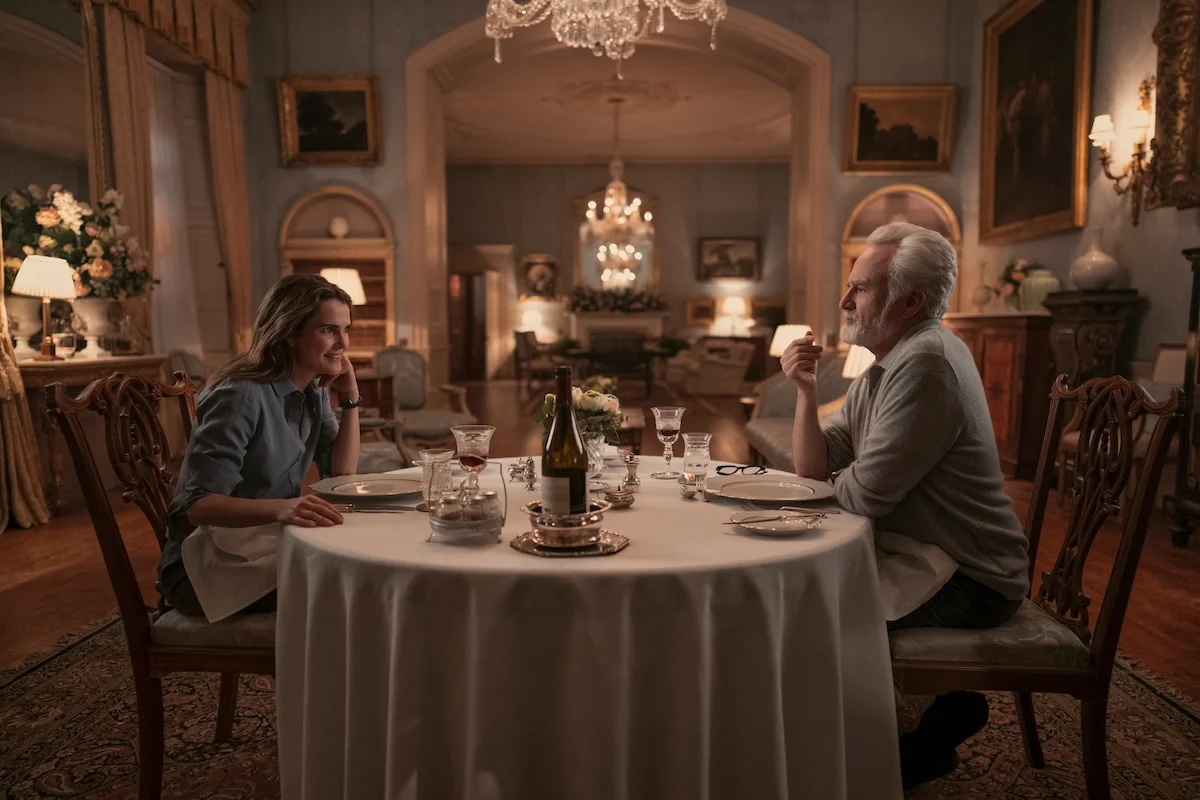
The introduction of Bradley Whitford alongside Allison Janney as a presidential power couple was designed to mirror and challenge the Wylers’ dynamic. Whitford’s Todd Penn portrays a man increasingly emasculated by a spouse who retreats into bitter militance, offering a dark reflection of what Kate and Hal could become if they fail to communicate.
However, critics and long-term fans have noted that replacing the volatile chemistry of the central duo with a more polite, orderly simulation of Washington politics robs the show of its escapist entertainment value. When fiction mirrors real-life political anxieties too closely—particularly through an aggressive, ally-betraying POTUS pushing the globe toward conflict—the absence of sharp, witty romantic banter becomes glaringly obvious.
Implications: What Season 4 Means for the Future of Netflix’s Political Thrillers
The tonal shift in Season 4 carries significant implications for The Diplomat and its standing within Netflix’s prestige-adjacent catalog.

1. The Loss of the "Spicy" Factor
The primary reason The Diplomat carved out a unique space in modern television was its ability to blend high-concept international diplomacy with the soapy, emotionally literate intensity of a prestige relationship drama. When Kate and Hal stopped fighting, the narrative engine sputtered. Watching Kate act as a lackey to a man who was once her equal diminishes her character agency, alienating viewers who tuned in specifically to watch her dominate patriarchal systems.
2. The Saturation of Real-World Parallels
By leaning further into domestic political strife—highlighted by President Penn surviving an assassination attempt and immediately doubling down on aggressive military stances—the series bumps up against the fatigue of real-world news cycles. While shows like Scandal or House of Cards relied on theatrical, over-the-top escapism, The Diplomat occasionally veers into an uncomfortable gray area where its fictional crises feel both too familiar to offer relief and too trivial to offer genuine political insight.
3. A Diluted Ensemble Focus
Spreading the emotional weight across three different couples dilutes the narrative focus. While Stuart and Eidra offer sweet, grounding moments of young love, and the Penns provide marital fireworks of their own, they cannot carry the sheer kinetic energy that Russell and Sewell generated when their characters were at odds.
Final Verdict
The Diplomat remains a slick, stylish, and occasionally magnetic production buoyed by top-tier lead performances. Yet, Season 4 proves that a respectable union built on diplomatic compromises is far less entertaining than an honest partnership fueled by friction. For a show that thrives on adrenaline and wit, the ultimate takeaway of its fourth outing is simple: the fights have got to be spicy.

Grade: C
