
The Cinematic DNA of Ray Gunn: Brad Bird’s Masterclass in Neo-Noir Evolution
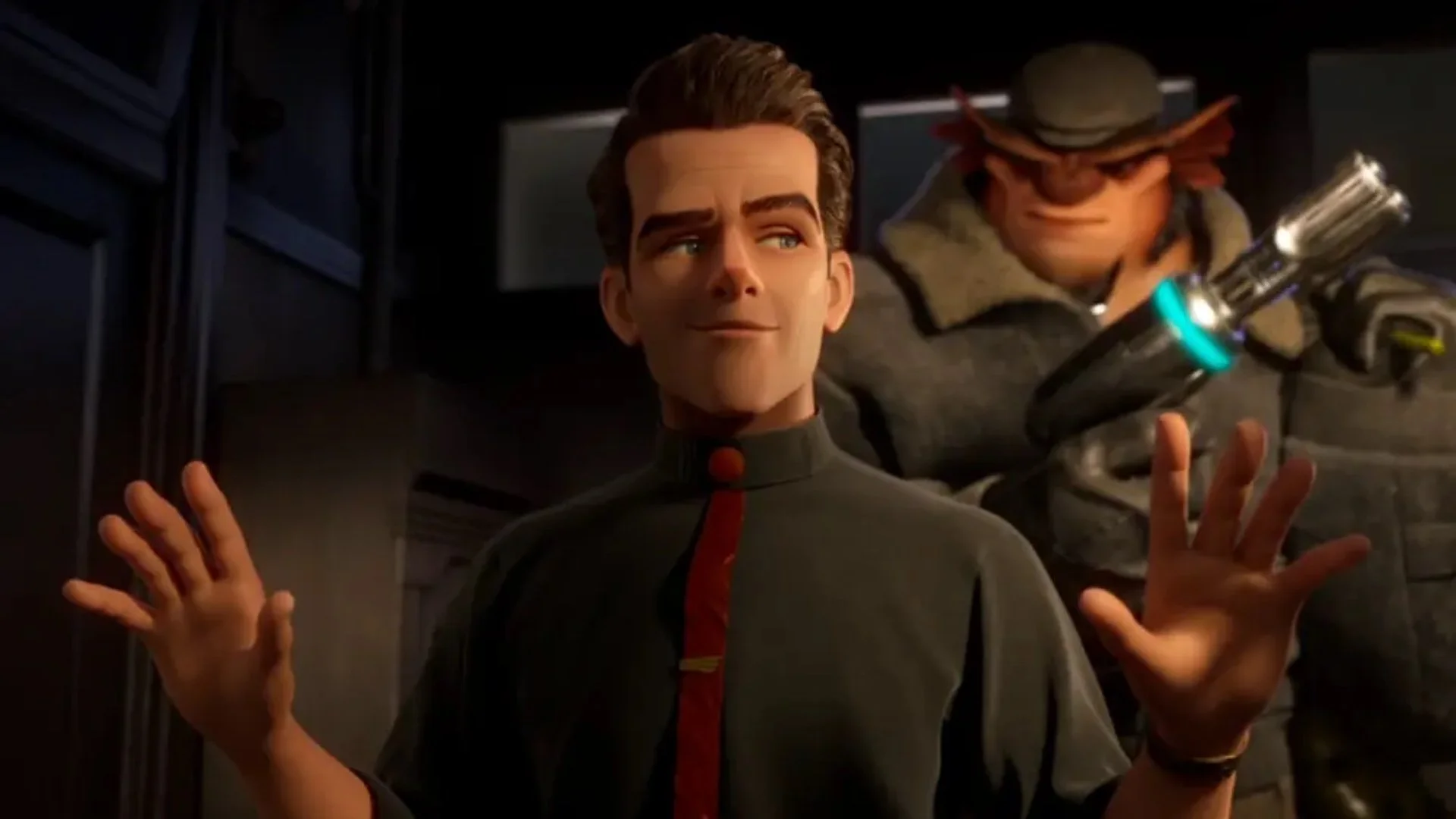
When Brad Bird—the visionary filmmaker behind The Iron Giant, The Incredibles, and Ratatouille—decides to revisit a project that has lived in his mind for decades, the result is bound to be a masterclass in genre synthesis. His latest project, Ray Gunn, is not merely an animated film; it is a love letter to the history of cinema. With its sprawling vistas of flying cars, neon-drenched cityscapes, and the classic, sharp-tongued tropes of the hard-boiled detective genre, Ray Gunn invites audiences into a world where sci-fi noir isn’t just an aesthetic, but a living, breathing character.
For those eager to understand the architecture of this wild, retro-futuristic world, Bird has provided a roadmap. Following a recent screening in Los Angeles, the filmmaker participated in a deep-dive Q&A session, peeling back the layers of his creative process. Far from simply nodding to the genre’s icons, Bird’s influences span the history of the medium, creating a bridge between the smoky, shadow-filled alleys of the 1940s and the vibrant, high-concept visual storytelling of the 21st century.
The Foundation: A Cinematic Genealogy
To understand Ray Gunn, one must look at the bedrock upon which it is built. During the post-screening discussion, the conversation naturally gravitated toward the film’s stylistic roots. When asked about the foundational texts of the noir genre, Bird didn’t hesitate to pay homage to the titans.
“Those are two of my favorites. Absolutely,” Bird said, referencing the moderator’s mentions of John Huston’s The Maltese Falcon and Roman Polanski’s Chinatown. These films serve as the narrative spine of the detective story: complex webs of deceit, morally grey protagonists, and the inevitability of human frailty. However, Bird’s watchlist is far more eclectic than the typical film school syllabus.
His list of essential viewing reads like a curated history of tension:
- The Classics: The Big Sleep (1946) and Out of the Past (1947). The latter, featuring Robert Mitchum, was highlighted by Bird as a masterclass in tone.
- The Stylistic Innovators: Stanley Kubrick’s The Killing (1956), a film that redefined the heist-noir structure.
- The Modern Reinterpretations: L.A. Confidential (1997) and both iterations of Blade Runner (1982 and 2017).
- The Subversive Noir: Perhaps most interestingly, Bird cited The Big Lebowski (1998). "It’s funny, but it’s noir. It is," he insisted.
This grouping is crucial because it reveals Bird’s philosophy: noir is not defined by the absence of color or the presence of a trench coat, but by the weight of the mystery and the psychological turbulence of the characters.
Chronology of Influence: From Black-and-White to Technicolor
The evolution of Ray Gunn can be traced through Bird’s deliberate attempt to break away from the monochromatic constraints of classic noir. While the narrative DNA is deeply rooted in the 1940s and 50s, the visual palette represents a daring departure.
Bird’s team faced a significant challenge: how to capture the "aggressive black and white lighting" of classic film noir while working within a vibrant, animated color space. The solution came from an unlikely source: the lush, hyper-saturated world of Douglas Sirk. Known for his 1950s melodramas like All That Heaven Allows and Written on the Wind, Sirk’s work is the antithesis of the dark, gritty alleyway aesthetic—and yet, it is precisely that contrast that Bird utilized.
"We looked at Douglas Sirk movies, which are very melodramatic, but they have really rich technicolor, even though they’re dark," Bird explained. By synthesizing the dramatic, high-contrast lighting schemes of early detective films with the lush, painterly color palettes of Sirk’s era, Ray Gunn achieves a look that feels both vintage and radically new. This isn’t a pastiche; it is an evolution.
Supporting Data: Why "The Detective" Remains Timeless
Why does the detective story endure? Whether it’s the rain-slicked streets of 1940s Los Angeles or the neon-lit sprawl of a futuristic metropolis, the core appeal remains the same. As Bird noted, these films are "all detective movies and they’re fun to watch."
The "detective DNA" that Bird identifies is built on four pillars:
- The Mystery: A hook that demands resolution.
- The Character: Archetypes that subvert expectations (the femme fatale, the weary gumshoe, the corrupt official).
- The Decision: The pivot point where a character makes a choice that seals their fate.
- The Environment: A world that feels heavy, lived-in, and inherently dangerous.
By incorporating elements from The Big Lebowski—a film that uses the detective framework to explore suburban absurdity—Bird demonstrates that the "noir" label is flexible. It allows for humor, for surrealism, and for the kind of world-building that sci-fi excels at. In Ray Gunn, the futuristic setting is not a gimmick; it is an amplification of the alienation that has always been at the heart of the genre.
Official Responses and Creative Philosophy
During the Q&A, Bird emphasized that the goal was never to create a carbon copy of any specific work. Instead, he and his team sought to "raid" cinematic history, pulling disparate pieces from different eras to construct something unique.
"We pushed each other to see it," Bird remarked on the collaboration between himself and his creative team. This pressure to innovate—to take the "rich Technicolor photography" of the past and apply it to the "detective DNA" of the mid-century—created a sandbox that was far larger than any single film could provide. By refusing to limit his scope to the standard noir tropes, Bird ensures that Ray Gunn avoids the trap of being a mere tribute. It is a work that acknowledges the shoulders of the giants it stands upon while simultaneously walking its own path.
Implications: The Future of Animated Noir
The implications of Bird’s approach are significant for the animation industry. For years, the medium of animation was frequently pigeonholed into "family-friendly" or "fantastical" buckets. With Ray Gunn, Bird is effectively proving that the tools of animation—lighting, color theory, and character design—are uniquely suited to explore the dark, complex themes of noir.
By blending the hard-boiled grit of Robert Mitchum with the futuristic dread of Blade Runner and the melodramatic color of Douglas Sirk, Bird is redefining the boundaries of what an animated film can be. This is not just a story about a detective; it is an exploration of cinematic history, compressed into a single, high-octane narrative.
For the audience, the "homework" Bird assigned is not a chore, but an invitation. By watching the films he listed—The Big Sleep, The Killing, Out of the Past, and the rest—viewers aren’t just learning about the source material; they are gaining a deeper appreciation for the craft involved in Ray Gunn.
Conclusion: A Living Legacy
As Ray Gunn prepares to make its mark on the cultural consciousness, it does so with the confidence of a project that knows exactly what it is. It is a synthesis of decades of filmmaking, a collision of the old and the new, and a testament to Brad Bird’s enduring vision.
The film serves as a reminder that the best art never exists in a vacuum. It is a conversation with the past, a critique of the present, and a vision for the future. Whether you are a dedicated cinephile looking to trace the lineage of a frame, or a casual viewer looking for a thrilling ride through a neon-soaked world, Bird’s latest work offers something rare: a film that is as intellectually stimulating as it is visually arresting.
So, before you settle in to watch Ray Gunn, take the filmmaker’s advice. Dive into the archives. Watch the shadows, observe the color, and listen to the dialogue. You’ll find that when the screen lights up for Ray Gunn, you aren’t just watching a new movie—you are watching the culmination of a century of cinematic noir, reborn in color and chrome.
