
The Evolution of Audiobooks: How AI Voice Cloning and Multi-Character Dialog Are Reshaping Spoken-Word Production
By Global Media & Technology Desk
The landscape of modern audio production is undergoing a quiet, profound revolution. For decades, the gold standard of audiobook production relied on either a single narrator attempting to modulate their voice for multiple characters or, in rarer, high-budget instances, a full cast of human voice actors. Today, advancements in generative artificial intelligence—specifically voice-cloning technology—are bridging the gap between artistic ambition and tight budgetary constraints.
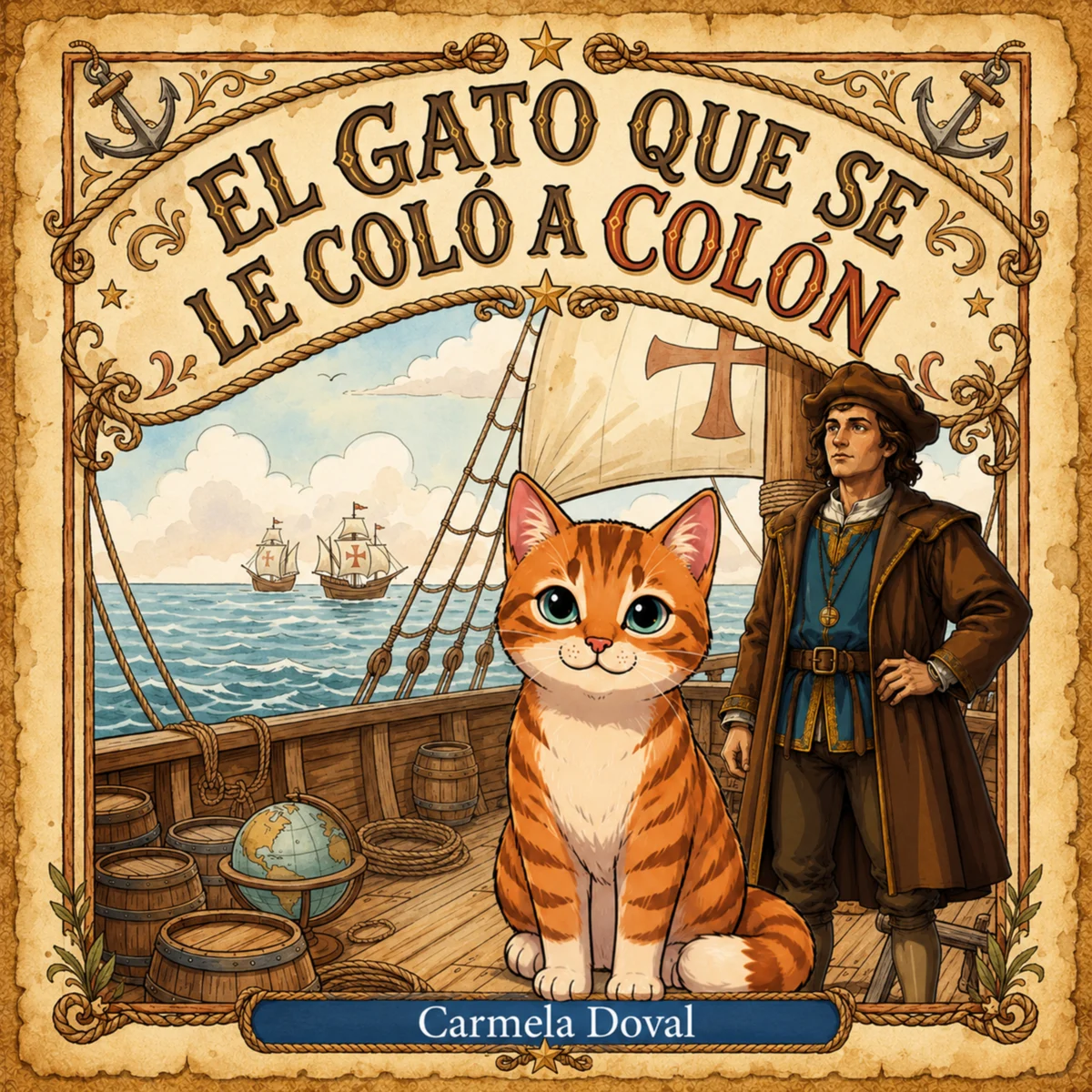
Industry veterans and independent publishers are discovering that tools like ElevenLabs are no longer just novelties for generating single-voice promotional clips; they are sophisticated production suites capable of rendering complex, multi-character dialogues with startling emotional depth. A prime example of this technological shift can be found in the recent Castilian audio adaptation of the children’s book El gato que se le colgó a Colón (written by Carmela Doval, also known as Carmen L. Bofill), which utilizes a six-voice AI-cloned cast to bring its narrative world to life.
Main Facts: The Intersection of AI and Multi-Character Audiobooks
The core development in this latest wave of audiobook production is the democratization of multi-voice casting. Historically, producing an audiobook with distinct voices for a narrator and a roster of characters required a substantial financial investment—one often out of reach for independent authors and boutique publishing houses.
- The Production: The audio version of El gato que se le colgó a Colón features six distinct voices. This includes a primary narrator and five unique character personas.
- The Technology: The project was brought to life using the Pro plan of ElevenLabs, an advanced AI voice-cloning platform.
- The Economic Reality: Facing a budget that could not accommodate even a single human voice actor—let alone an ensemble cast of six—the production team turned to synthetic voices to achieve true interactive dialog rather than relying on a singular narrative voice.
- The Distribution Strategy: To maximize author royalties, the audiobook and PDF versions are sold exclusively through the book’s dedicated website, while physical paperback editions are distributed globally via Amazon, IngramSpark, and TecnoTur’s extended distribution channels covering Latin America and independent bookstores in Spain.
Chronology: A History of Dialogue-Driven Production and AI Integration
To understand the weight of this technological leap, it is necessary to examine how audio production has evolved from early analog setups to modern neural-net synthesis.
1. The Late 1980s: The Genesis of Multi-Voice Audio Promos
The appreciation for dynamic audio dialogues dates back decades. In the late 1980s, foundational audio productions began experimenting with alternating male and female voice talent to inject energy into commercial spots and video promos. Working with local access cable television stations—such as the historic WUBC-TV in Connecticut—producers recognized that alternating voices functioned effectively as "caffeine for the ears," immediately capturing audience attention in a way single-speaker monologues could not.
2. The Decades of Single-Narrator Domination
For many years, despite the proven efficacy of dual-voice or multi-voice setups, economics dictated the audiobook industry. While introductory credits, prologues, or epilogues might feature guest voices, the vast majority of long-form audiobooks remained the domain of a solitary narrator. Hiring multiple professional voice actors for a full-length book required significant studio time, talent fees, and coordination, locking out independent authors working on modest budgets.
3. The Rise of Generative AI and Voice Cloning
Over the past several years, generative AI platforms have matured rapidly. Platforms like ElevenLabs introduced high-fidelity voice cloning capable of infusing synthetic speech with genuine emotional cadence, dynamic pacing, and localized accents. Producers who once used these tools strictly for rapid prototyping or simple narration began testing their capabilities on full-scale narrative works.
4. Present Day: The First True Multi-Voice AI Audiobook
The production of El gato que se le colgó a Colón marks a specific milestone: the first instance where a full narrative requiring intricate character interactions was executed entirely through a coordinated ensemble of cloned voices, bypassing traditional budgetary barriers while retaining a cohesive auditory experience.
Supporting Data: Technical Insights, Pronunciation Handling, and Distribution
Working with AI voice generation in a multi-character environment involves distinct technical challenges and workflows. Producers must navigate everything from regional linguistic nuances to precise phonetic adjustments.
Navigating Pronunciation and Regional Dialects
Modern AI voice engines feature automated manuscript scanning systems that flag ambiguous words, unfamiliar terms, or proper nouns. Producers can audit these words, listen to the system’s default phonetic guess via an integrated play button, and manually input phonetic spellings when necessary.

For example, during the production of El gato que se le colgó a Colón, the proper noun Dade (as in Miami-Dade County, which appears in the "About the Author" section) was initially mispronounced by the engine using English phonetics as "Dah-Day." By inputting the Castilian phonetic spelling deid, the engine corrected the pronunciation instantly.
However, subtle nuances remain. Voice clones can occasionally exhibit minor quirks—such as intermittent shifts in regional pronunciation (e.g., alternating between distinguishing and seseante Castilian pronunciations depending on the specific word or sentence structure). While casual listeners may not detect these microscopic shifts, seasoned audio engineers remain attuned to them, highlighting the ongoing, albeit narrowing, gap between human and synthetic performances.
Multi-Platform Publishing and Global Reach
While the audiobook and digital PDF versions of El gato que se le colgó a Colón remain exclusive to the project’s official website (Elgatoqueselecolóacolón.com) to protect author royalties, the physical paperback version utilizes a multi-tiered distribution network:
- Amazon: For broad, direct-to-consumer digital and print fulfillment.
- IngramSpark: To service independent bookstores and libraries globally.
- TecnoTur Extended Distribution: Expanding physical availability into emerging commercial regions across Latin America and select independent storefronts in Spain.
Official Perspectives and Industry Commentary
While major tech firms and AI developers frequently publish marketing materials praising their own software, independent producers offer a more grounded, boots-on-the-ground perspective on the utility and limitations of these tools.
Industry veterans emphasize that while the gap between human professional voice talent and cloned professional voice talent still exists, it has narrowed significantly. The introduction of platforms equipped to handle emotional modulation, character distinction, and localized linguistic adjustments has transformed what an independent creator can achieve on a shoestring budget.
Furthermore, creators stress that transparency is vital. Platforms and producers utilizing synthetic voices are increasingly open about their methods, allowing audiences to evaluate the emotional resonance of the work directly through free public samples—such as the sample available on the book’s official portal, which showcases the interplay between the narrator, the protagonist, and secondary crew members.
Implications: What AI Voice Cloning Means for the Future of Publishing
The integration of advanced AI voice cloning into audiobook production carries sweeping implications for authors, publishers, and voice actors alike.
1. Democratization for Indie Authors
For decades, professional audiobook production was an exclusive tier reserved for best-selling authors or those backed by major publishing houses with dedicated audio budgets. AI-cloned voice ensembles dismantle this financial barrier. Independent authors can now offer fully realized, multi-character audiobooks that rival traditional studio productions in pacing and engagement.
2. Redefining the Role of Voice Actors
The rise of voice cloning inevitably sparks intense discussions within the creative community regarding copyright, consent, and the future employment of human voice talent. While synthetic voices offer an economic alternative where zero budget exists, the irreplaceable nuance, improvisational depth, and cultural authenticity of human actors ensure that professional human talent remains the gold standard for high-end commercial productions.
3. Localization and Global Markets
As AI engines improve their command of regional dialects, accents, and phonetic nuances across multiple languages (including Castilian, English, and Italian), the speed at which literary works can be localized and distributed to international markets will accelerate exponentially. Publishers can adapt regional editions with localized voice profiles faster than ever before.
Summary
The release of multi-character AI-narrated works like El gato que se le colgó a Colón signals a permanent shift in how spoken-word content is conceptualized and produced. As the technology continues to refine its emotional output and dialectal consistency, the boundaries between human-led and AI-assisted audio production will continue to blur, opening up new creative frontiers for storytellers worldwide.
