
From Infamous Flop to Cult Legend: The Unpredictable Journey of Manos: The Hands of Fate and Jackey Neyman Jones
Independent filmmaking has always been defined by a beautiful, often terrifying unpredictability. A feature can arrive with millions in backing and immense marketing hype, only to vanish into cinematic obscurity within weeks. Conversely, a micro-budget endeavor cobbled together with obsolete equipment, raw enthusiasm, and a crew of utter novices can defy the odds, surviving for generations to capture the imaginations of global audiences.
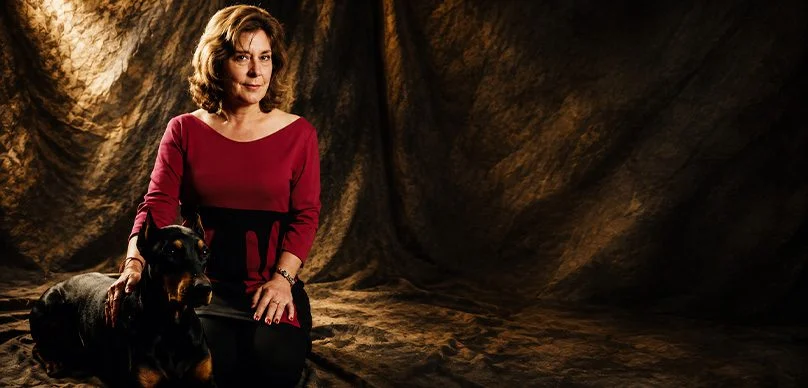
Few motion pictures encapsulate this phenomenon quite like the 1966 horror outing Manos: The Hands of Fate. At the center of this cinematic anomaly is Jackey Neyman, who was just six years old when she played "Debbie" in the original production. What began as a local community theater project snowballed into a notorious midnight-movie masterpiece. Decades later, Neyman—now an accomplished actress, artist, and producer—returned to the surreal universe she helped birth, co-creating the legacy sequel Manos Returns.
The extraordinary arc of Manos offers a masterclass in the realities of indie filmmaking, the strange alchemy of cult fandom, and the sheer grit required to shepherd a creative vision from conception to the silver screen.
Main Facts: The Anatomy of a Cult Classic
The original production of Manos represents independent cinema stripped down to its barest components: human willpower, whatever equipment could be scraped together, and a stubborn, borderline unreasonable determination to cross the finish line.
Helmed by fertilizer salesman and amateur writer-director Hal Warren, the production took root in El Paso, Texas. Warren had placed a bet with Stirling Silliphant—an Oscar-winning screenwriter visiting the area—that anyone could make a horror movie. To prove his point, Warren set out to write, direct, and star in a feature film.
- The Cast and Crew: Warren recruited heavily from local community theater. This included Jackey Neyman’s father, who was subsequently tapped to build sets, design props, and sew costumes.
- Resourcefulness Born of Necessity: With virtually zero budget, the production relied entirely on local goodwill and household items. The crew borrowed furniture, vehicles, and even the family Doberman Pinscher for the film.
- The Behind-the-Scenes Reality: There was no elaborate studio infrastructure or craft services table. Jackey vividly remembers the cast keeping their bag lunches in an old family refrigerator during breaks in shooting, which mostly took place on weekends and late nights.
For young Jackey, this bootstrap environment served as an unorthodox introduction to the film industry, revealing the cavernous gap between the glamour promised by the silver screen and the grueling, unglamorous grind unfolding behind the camera.
Chronology: From El Paso Premiere to Midnight Movie Phenomenon
Phase 1: The Red-Carpet Premier
The premiere of Manos in El Paso provided the first stark indication that the film was not going to be the mainstream triumph its creators envisioned. Warren, a master of local showmanship, manufactured massive excitement: searchlights swept the night sky, a red carpet was rolled out, a limousine delivered the cast, local dignitaries attended, and autograph seekers lined the street.
Jackey and her father sat roughly five rows from the screen. As the projector rolled, the atmosphere in the theater shifted palpably. Whispers rippled through the crowd, soon giving way to open laughter. For Jackey, initial excitement quickly curdled into sheer horror when her character appeared on screen. Hearing her own dubbed voice rattled her so profoundly that her face flushed hot, and she spent the remainder of the premiere in tears, enduring a deeply miserable evening.
Phase 2: Decades of Obscurity
Following its disastrous premiere, Manos effectively vanished. Nearly everyone involved tried to move on with their lives, eager to bury the embarrassment. Jackey recalls that nobody wanted to discuss the movie, and for years, she operated under the assumption that she would never lay eyes on it again.
Phase 3: The Mystery Science Theater 3000 Renaissance
Then occurred an event that no one associated with the original 1966 production could have possibly planned or predicted: the satirical television series Mystery Science Theater 3000 (MST3K) featured the film in a 1993 episode.
Suddenly, Manos had a massive, captive audience. The film’s staggering technical shortcomings, disjointed sound design, bizarre creative choices, and glacial pacing became the very elements that captivated viewers. What was once a localized embarrassment slowly morphed into bona fide cult-film history. Fans began dissecting it, generating original artwork, staging live-action parodies, and building an obsessive subculture around a movie that Hollywood had long since discarded.
Phase 4: The Birth of Manos Returns
Decades after the MST3K revival, that fervent audience created an opportunity that seemed entirely improbable: making a legitimate sequel.
However, Jackey and the creative team behind Manos Returns faced a uniquely daunting creative hurdle: How do you follow up a movie famous specifically for its unintentional mistakes?
Their answer was simple—they refused to cynically manufacture another "bad" film. Jackey explained that the original could never be artificially recreated because its bizarre, hypnotic quality stemmed from the genuine, earnest ambition of inexperienced filmmakers trying their absolute hardest. Instead, Manos Returns acknowledged the rich history of the original while carving out its own distinct identity. Remarkably, Jackey returned to the franchise, her octogenarian father filmed new scenes, and the production team actively sought out surviving cast members and families from the 1966 shoot.
Supporting Data: Modern Crowdfunding Realities
Bringing Manos Returns to life underscored how dramatically the landscape of independent filmmaking has evolved over the decades, particularly regarding financing and team collaboration.
Rather than relying on traditional studio gatekeepers or wealthy individual investors, the filmmakers launched a Kickstarter campaign with a modest base goal of $24,000. Jackey quickly learned that executing a successful crowdfunding campaign is not a passive side-project—it is a full-time job.
- Division of Labor: Producer Rachel Jackson managed Kickstarter logistics and press outreach alongside Jackey and director Tonjia Atomic. Director of photography Joe Sherlock engineered promotional graphics, while editor and screenwriter Steve Foley spearheaded campaign video production.
- The Collaborative Advantage: Rather than falling into the classic indie trap of forcing one exhausted filmmaker to shoulder production, publicity, crowdfunding, editing, and social media simultaneously, the team distributed responsibilities logically.
- Budgetary Realities: The filmmakers were acutely aware of what capital could achieve. While an experienced low-budget crew can scrape by at a baseline level, incoming funds directly translate to improved costumes, expanded production scope, additional collaborators, and elevated visual fidelity.
The core takeaway for contemporary indie filmmakers is pragmatic: the crowdfunding campaign is a production in its own right. While an inflated budget does not guarantee a cinematic masterpiece, adequate resources placed in the hands of seasoned creators buy precious commodities: time, flexibility, talent, and creative optionality.
Official Perspectives and Industry Implications
Reflecting on the legacy of Manos, industry observers and participants often overlook a crucial nuance highlighted by Jackey: Hal Warren may not have possessed the technical mastery to make a great movie, but he was relentlessly attempting to make the best movie he could with the tools at hand.
Furthermore, Warren never intended Manos to be a one-off stunt. He envisioned the production as a proof-of-concept—an ambitious catalyst designed to demonstrate that El Paso could sustain a vibrant local film industry. While that grand ambition vastly outstripped his actual resources and experience, the underlying instinct remains deeply familiar to every independent filmmaker working today.
"Sometimes the first movie isn’t supposed to be a masterpiece," industry analysts often note. "Sometimes its sole purpose is simply to prove to yourself that you can finish one."
Key Takeaways for Independent Filmmakers:
- Unpredictability is Guaranteed: You cannot engineer a cult classic in a boardroom. Once a film is released into the wild, its cultural trajectory is entirely out of your hands.
- Embrace Collaboration: Micro-budget filmmaking requires a distributed team. Trying to wear every single hat usually leads to burnout and compromised quality.
- Finish the Project: You cannot control whether critics will understand your art, whether audiences will embrace it on day one, or whether lightning will strike twice. The only variable entirely within a creator’s control is whether they cross the finish line.
The story of Jackey Neyman Jones and Manos: The Hands of Fate remains a beacon for creators everywhere. A project that failed by every conventional metric of its era, vanished for decades, and ultimately returned to eclipse technically superior contemporaries proves that perseverance, heart, and a bit of bizarre cinematic history can conquer even the harshest box-office odds.
For those looking to dive deeper into the legacy of El Paso’s most infamous cinematic export, additional audio retrospectives and interviews are available via associated indie film podcasts and archives.
