
The Tamron 20-40mm F/2.8 Di III VXD: A New Standard for Nikon Z-Mount Versatility

The landscape of mirrorless photography has been fundamentally reshaped by the pursuit of the "do-it-all" lens. For years, photographers were forced to choose between the convenience of a zoom and the optical excellence of a prime. However, with the official arrival of the Tamron 20-40mm F/2.8 Di III VXD for Nikon Z-mount, that compromise has been significantly mitigated. Building on the success of its Sony E-mount predecessor, this lens arrives as a strategic addition to the Nikon ecosystem, offering a unique focal range that bridges the gap between ultra-wide architectural vistas and the intimate framing of street photography.
Main Facts: A Paradigm Shift in Compact Optics
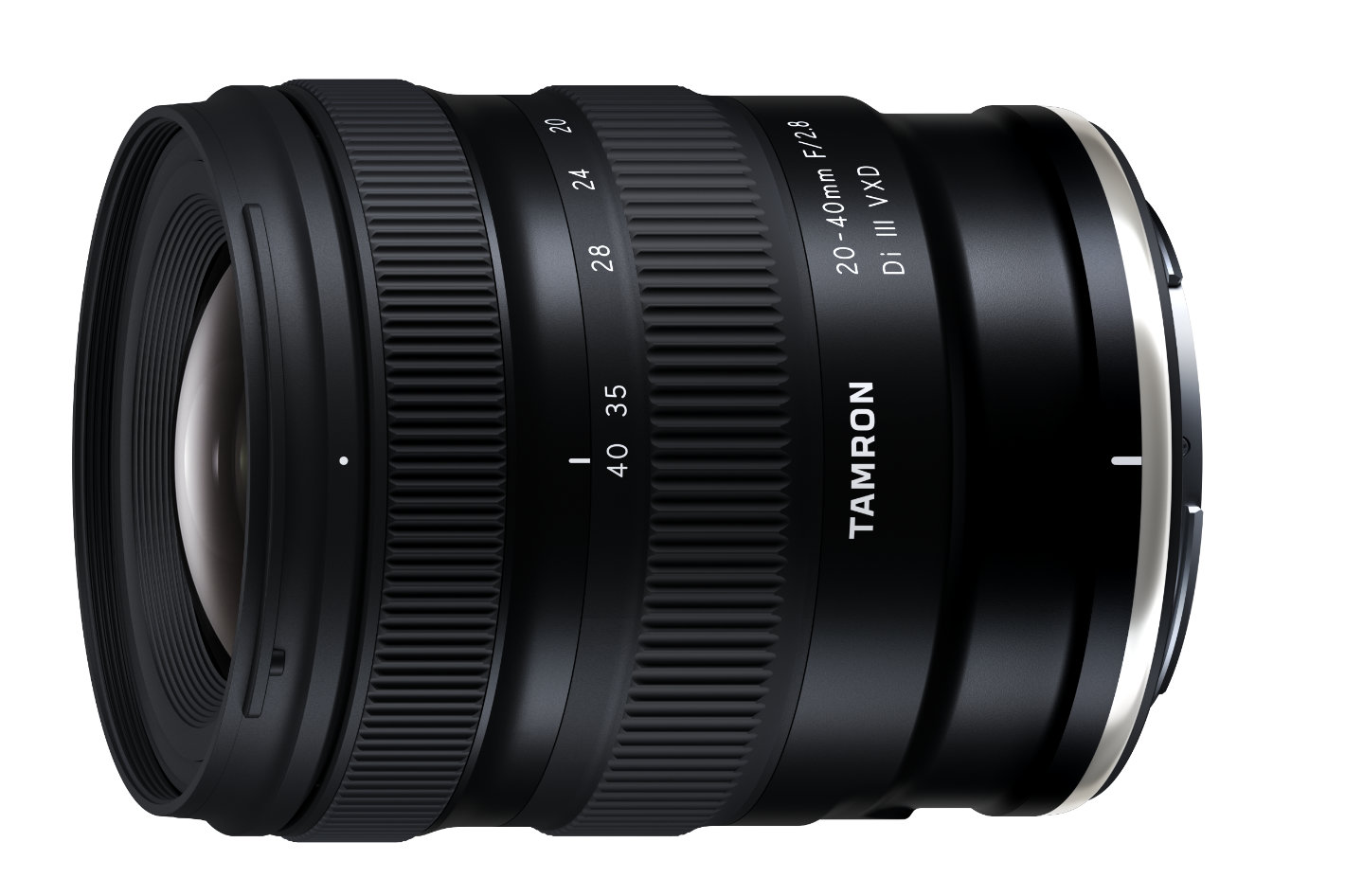
At its core, the Tamron 20-40mm F/2.8 is engineered to be the ultimate "everyday" companion. By selecting a focal range of 20mm to 40mm, Tamron has intentionally bypassed the traditional 24-70mm standard zoom, opting instead for a wider, more dynamic starting point that caters specifically to the needs of contemporary creators—vloggers, travel photographers, and urban documentarians.
Technical Specifications at a Glance:
- Aperture: Constant F/2.8 across the entire zoom range.
- Optical Construction: 12 elements in 11 groups (featuring four LD, two GM aspherical, and one hybrid aspherical element).
- Autofocus: VXD (Voice-coil eXtreme-torque Drive) linear motor system.
- Physical Dimensions: 88.7 mm in length; weight of 380g.
- Filter Size: 67mm.
- Close-Focusing: 0.17m at the 20mm end (1:3.8 magnification).
- Compatibility: Full-frame Nikon Z-mount mirrorless cameras (providing a 30-60mm equivalent on APS-C bodies).
The lens is not merely a tool for landscapes; it is a specialized piece of equipment designed for a generation that prioritizes agility. By keeping the weight at a remarkably low 380 grams, Tamron has ensured that the lens remains balanced on both smaller Z-series bodies and professional-grade, grip-heavy flagships.
Chronology: From Sony Innovation to Nikon Adoption
The journey of the 20-40mm F/2.8 began with Tamron’s aggressive expansion into the Sony E-mount market. Recognizing a gap in the market for a high-performance, compact, and affordable constant-aperture zoom, Tamron launched the E-mount version to widespread critical acclaim.
The strategy was simple: dominate the "compact professional" niche. Users praised the lens for its ability to live on a camera body permanently, eliminating the need for constant lens swaps. Following the maturity of the Nikon Z system and the growing demand from Nikon users for third-party glass, Tamron initiated the porting of this successful optical design.
In recent months, the announcement of the Nikon Z-mount version marked a pivotal moment for Nikon users who have long felt limited by the selection of native wide-angle zooms. The release confirms Tamron’s commitment to the Nikon Z ecosystem, signaling that this lens is part of a broader roadmap to provide high-quality alternatives to Nikon’s own S-Line optics.
Supporting Data: Engineering Excellence and Optical Performance
The performance of the 20-40mm F/2.8 is rooted in its sophisticated optical architecture. Achieving a constant F/2.8 aperture in such a small form factor required a reimagining of lens geometry.
Optical Sophistication
The integration of four Low Dispersion (LD) elements, alongside two Glass Molded (GM) aspherical elements, allows the lens to correct for chromatic aberrations—a common pitfall in wide-angle zooms. The inclusion of BBAR-G2 (Broad-Band Anti-Reflection Generation 2) coating is particularly significant. In the field, this manifests as superior contrast management, even when shooting directly into the sun or harsh artificial light sources, effectively suppressing the ghosting and flare that often plague wide-angle photography.
The VXD Advantage
Tamron’s proprietary VXD linear motor system is the engine behind the lens’s reputation. By utilizing a linear motor rather than a traditional gear-driven system, the 20-40mm achieves near-instantaneous autofocus acquisition. For videographers, this is a game-changer; the silent operation ensures that the mechanical "whir" of focusing does not interfere with external or internal audio recordings.
Macro-Style Capability
Perhaps the most understated feature of this lens is its 0.17m close-focusing distance at the 20mm mark. This allows for a unique photographic style: the wide-angle macro. By getting inches away from a subject while keeping a 20mm field of view, photographers can create images that distort perspective in a way that feels immersive and engaging—an effect difficult to replicate with longer focal lengths.
Official Responses: Tamron’s Strategic Philosophy
Tamron’s leadership has been vocal about the design philosophy behind this lens. According to company representatives, the primary objective was to "redefine the everyday zoom."
"One of the key ideas behind the 20-40mm F/2.8 is to offer the brightness of a constant F/2.8 zoom without the size normally associated with this type of lens," a company spokesperson stated. By focusing on the 20-40mm range, Tamron explicitly decided that for many creators, the 40mm to 70mm range is less critical than the 20mm to 24mm range.

By removing the "telephoto" end of the standard 24-70mm zoom, they have successfully stripped away the physical bulk of the lens. This design choice speaks to a broader market trend: the transition of professional photography away from heavy, bulky gear toward systems that favor endurance, mobility, and stealth.
Implications: A New Era for Vlogging and Street Photography
The introduction of the 20-40mm F/2.8 has immediate, practical implications for several segments of the photography and videography industry.
The Vlogging Revolution
For handheld video content creators, the 20mm start point is the "sweet spot." It is wide enough to capture the user and a significant portion of their environment, yet it avoids the extreme "fish-eye" distortion found in 14mm or 16mm lenses. Furthermore, because the lens extends only 9.2mm when zooming, it maintains its center of gravity. This is critical for users employing gimbals, as it requires minimal recalibration when switching focal lengths.
Street Photography and the "Discreet" Professional
In street photography, the ability to zoom to 40mm provides a natural, human-eye perspective that feels more candid than a 24mm or 35mm lens might. The lens’s compact size makes the camera setup look less intimidating, allowing photographers to blend into their surroundings more effectively. The moisture-resistant construction and fluorine coating further support this "go-anywhere" utility, ensuring that the lens remains operational even in inclement weather or dusty urban environments.
The Ecosystem Shift
For the Nikon Z user, this lens represents a democratization of quality. At a retail price of $729, it sits comfortably between entry-level kit lenses and high-end professional glass. It challenges Nikon’s internal lens lineup by providing a compelling price-to-performance ratio that forces users to reconsider whether they truly need the extra reach of a 24-70mm, or if the creative benefits of a 20mm wide-angle are more valuable.
Conclusion: A Strategic Investment
The Tamron 20-40mm F/2.8 Di III VXD is more than just a lens; it is a tactical tool. Its existence acknowledges that the modern photographer is a hybrid creator who needs a single lens capable of jumping from a cinematic landscape shot to an impromptu portrait or a high-quality vlog in seconds. By bringing this technology to the Nikon Z-mount, Tamron has solidified its position as a primary partner for Nikon users, offering a blend of portability, speed, and optical precision that will undoubtedly influence the creative output of a new generation of photographers. Whether you are a professional in need of a lightweight travel solution or a hobbyist looking to expand your artistic range, the 20-40mm F/2.8 is a compelling addition to any kit bag.
