
Sony Unveils the ECM-W5 Wireless Microphone System: A High-Performance Leap for Content Creators and Filmmakers
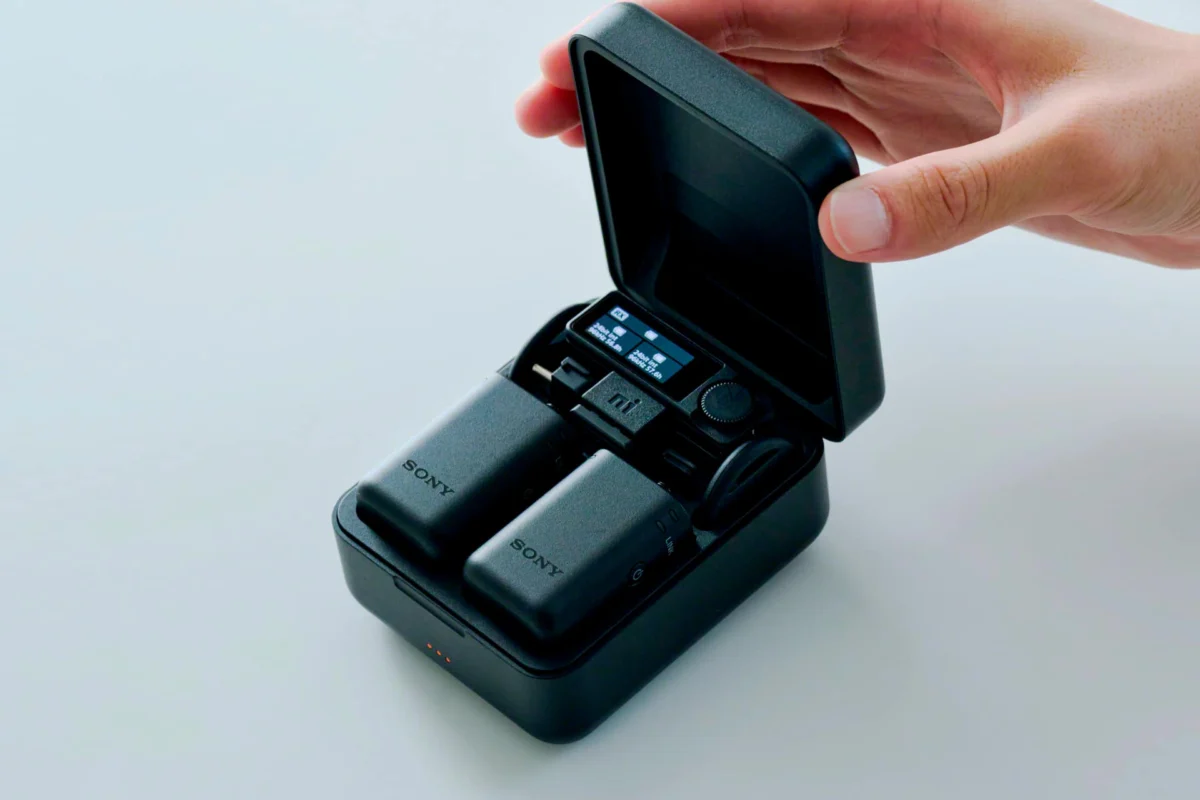
Sony has once again raised the bar for professional on-set audio capture with the announcement of the ECM-W5 wireless microphone system. Designed to meet the rigorous demands of modern videographers, independent filmmakers, journalists, and live streamers, the ECM-W5 combines rock-solid stability, expansive range, and massive internal backup storage into a streamlined, highly integrated ecosystem.
Packed with advanced features like 32-bit float support, direct digital audio transmission via Sony’s proprietary Multi Interface (MI) Shoe, and an impressive line-of-sight range, the ECM-W5 builds heavily upon the success of its predecessor, the ECM-W3, offering roughly triple the transmission stability.
Priced competitively at $399 for the comprehensive dual-transmitter kit, the system is slated to hit shelves in November 2026. This comprehensive overview examines the main facts, structural evolution, technical specifications, workflow implications, and the broader industry impact of Sony’s newest audio tool.
Main Facts: What is the Sony ECM-W5?
At its core, the Sony ECM-W5 is a versatile, multi-component wireless audio system engineered to deliver pristine broadcast-quality sound while eliminating the traditional friction points of field recording.
The complete ecosystem comprises:
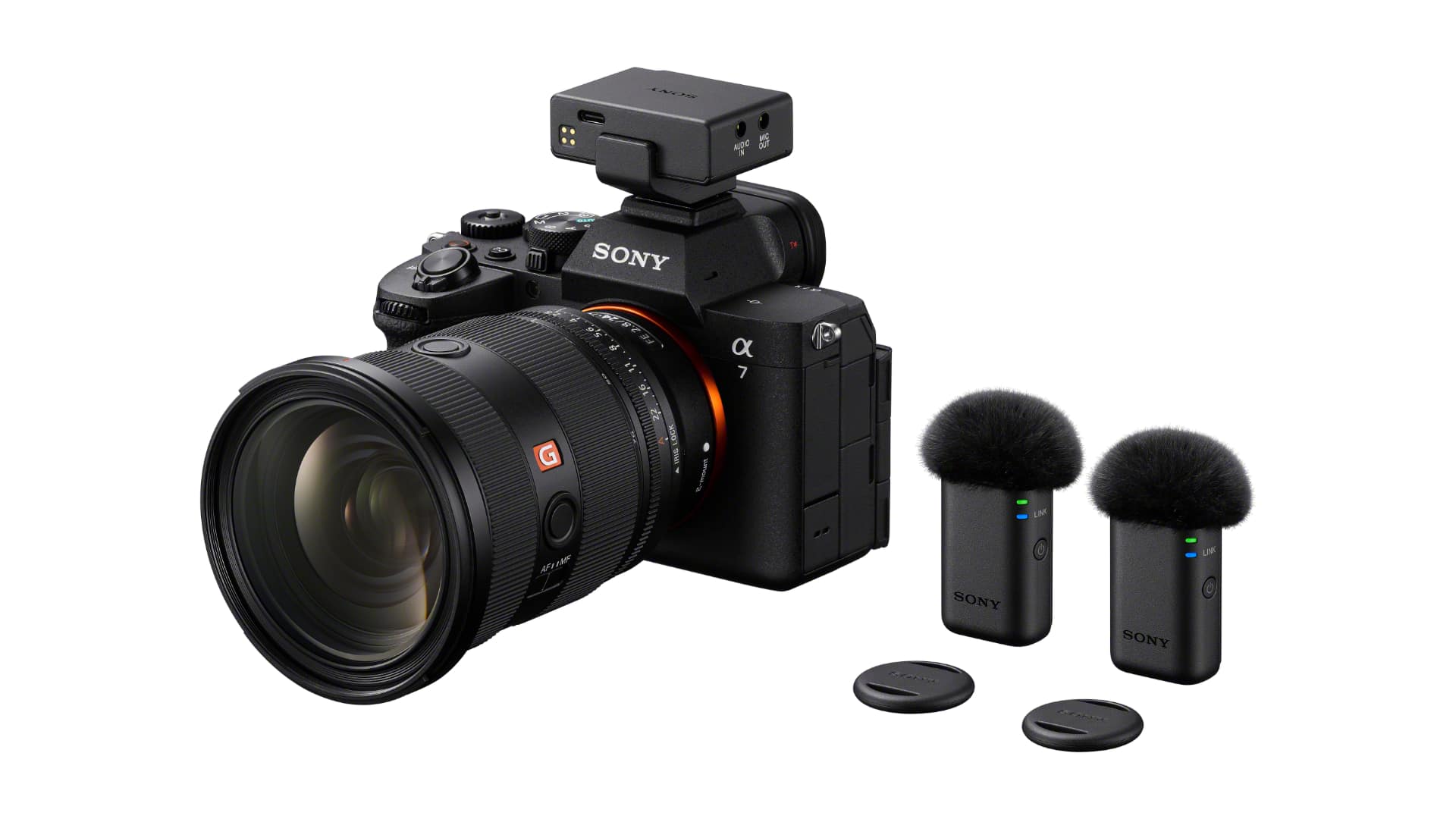
- ECM-W5T Wireless Transmitters: Compact, clip-on units equipped with internal microphones, 3.5mm external mic inputs, and a staggering 64 GB of built-in backup storage.
- ECM-W5R Wireless Receiver: A receiver unit designed to mount seamlessly onto compatible cameras or connect to external recording devices via USB-C.
- The ECM-W5 Kit: A bundled package that includes one receiver, two transmitters, a dedicated charging case, and associated accessories.
Standout Technical Specifications
- Transmission Range: Up to 500 meters (approximately 1,640 feet) in clear line-of-sight conditions.
- Audio Resolution: High-Resolution Audio recording at up to 96 kHz / 24-bit, with 32-bit float support available at 48 kHz.
- On-Board Backup Storage: 64 GB per transmitter, providing up to 90 hours of continuous audio recording at 32-bit float/48 kHz, or up to 60 hours at 24-bit/96 kHz.
- Latency: Low-latency transmission optimized for real-time live streaming and video production.
- Power Management: Powered directly via compatible camera MI Shoes or charged through the included smart storage case.
Chronology: The Evolution from ECM-W3 to ECM-W5
The release of the ECM-W5 represents a calculated and steady evolution in Sony’s audio product roadmap. Understanding how Sony arrived at this point requires looking at the trajectory of their wireless audio offerings over recent years.
The Foundation: The ECM-W3 Era
When Sony launched the ECM-W3, it was widely praised for its seamless integration with Sony mirrorless and cinema camera bodies. By utilizing the Multi Interface (MI) Shoe, the ECM-W3 bypassed the need for analog audio cables, routing digital sound straight into the camera body. This reduced noise floors and simplified setups for run-and-gun shooters. However, users occasionally noted limitations regarding maximum range, interference in congested RF environments, and the lack of robust internal backup recording options—a feature that competitors in the wireless audio space had begun adopting as an industry standard.
Addressing Creator Demands: The Development of the ECM-W5
Listening closely to feedback from videographers, documentary crews, and digital content creators, Sony’s engineering teams went back to the drawing board. They focused on three primary pillars for the next-generation system:
- Unrivaled Connection Stability: Enhancing radio frequency (RF) performance to achieve a threefold increase in stability over the ECM-W3.
- Security Through Redundancy: Integrating high-capacity internal storage (64 GB) directly into the transmitters to ensure creators never lose a take to dropouts or wireless interference.
- Ecosystem Expansion: Broadening compatibility beyond traditional cameras to include smartphones, PCs, and wireless Bluetooth headphones for monitoring and alternate input routing.
The culmination of this development cycle is the ECM-W5, a system built to handle everything from solo YouTube video creation to multi-camera professional broadcast environments.
Supporting Data & Technical Deep Dive
A closer look at the specifications of the ECM-W5 reveals a tool engineered for uncompromising audio fidelity and operational flexibility.
Audio Quality and the 32-Bit Float Dilemma
The ECM-W5 supports up to 96 kHz/24-bit High-Resolution Audio, offering exceptional clarity and dynamic range for dialogue, ambient sound, and musical performances. Additionally, 32-bit float recording is supported at 48 kHz.
However, Sony has issued an important technical caution regarding the input stage: if audio clipping occurs directly at the microphone input capsule (due to a speaker suddenly shouting or an excessively loud sound source), the original clipped audio cannot be magically restored simply by lowering the volume slider during post-production. While 32-bit float protects against clipping within the digital processing pipeline, physical analog-to-digital (ADC) input stage overloading must still be managed properly on set.
Redundant Storage and Battery Life
Each ECM-W5T transmitter features a massive 64 GB of built-in storage. This serves as a safety net, allowing users to record internal backups concurrently with wireless transmission.
- At 32-bit float/48 kHz, a transmitter can store up to 90 hours of audio.
- At 24-bit/96 kHz, storage capacity yields approximately 60 hours of continuous recording.
External Connectivity and Expansion
For those who prefer a traditional wired lavalier setup, the transmitters feature a standard 3.5 mm microphone input compatible with various external mics, including Sony’s separately sold ECM-L1.
Furthermore, the system scales effortlessly. By adding two additional ECM-W5T transmitters, compatible Sony cameras can record up to four distinct audio channels simultaneously, while also supporting in-camera WAV backup recording.
Official Responses and Ecosystem Integration
Sony has positioned the ECM-W5 not merely as an isolated microphone, but as a core node within a broader, interconnected digital ecosystem.
Direct Camera Integration via the MI Shoe
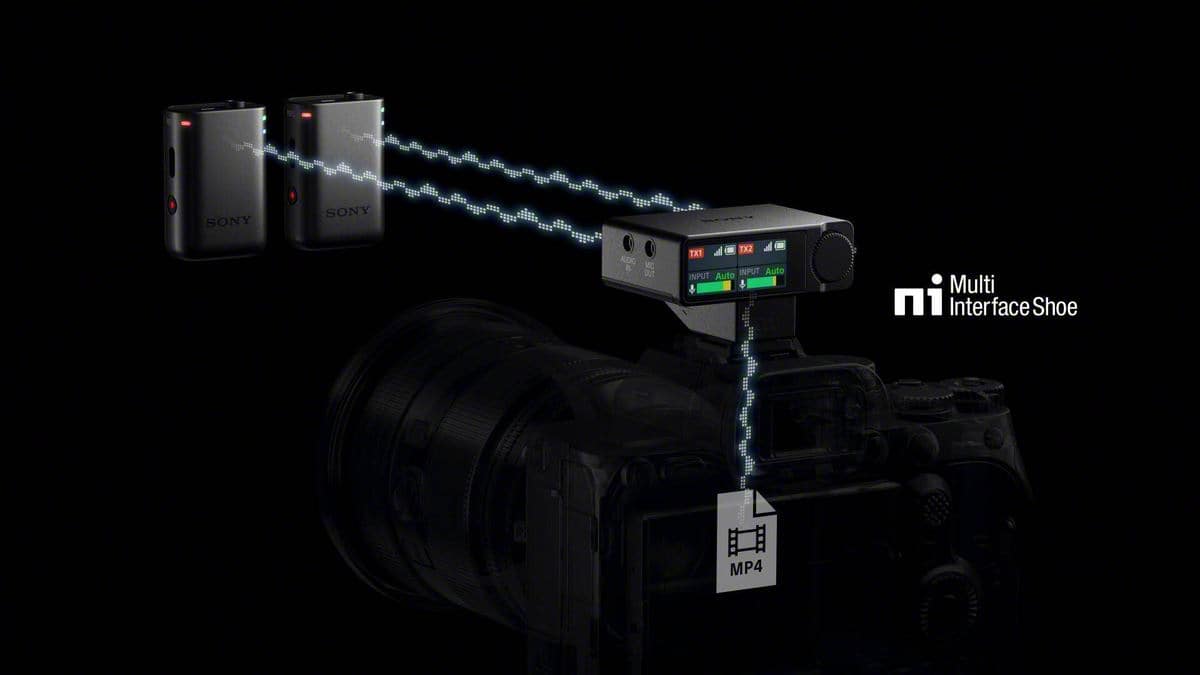
When paired with compatible Sony camera bodies, the ECM-W5 shines brightest. The Multi Interface Shoe handles two critical jobs simultaneously:
- It transmits pure digital audio directly into the camera, embedding the sound cleanly into the video file (such as standard MP4 or professional video formats).
- It supplies continuous power to the receiver, eliminating the need to worry about the receiver’s battery life during long shooting days. Linked power control ensures the receiver turns on and off in tandem with the camera body.
Cable-Free Monitoring and Smartphone Versatility
In an era where mobile journalism and hybrid content creation dominate, Sony has ensured the ECM-W5 is exceptionally adaptable:
- Bluetooth LE Audio: Compatible Sony wireless headphones can be used to monitor audio directly from the system without physical headphone cables, and can even double as alternative wireless microphone inputs.
- Timecode Synchronization: Essential for multi-camera shoots, built-in timecode support ensures frame-accurate synchronization across multiple cameras and separate audio recorders during post-production.
- Mobile and PC Ready: Using the supplied USB Type-C adapter, creators can plug the receiver directly into smartphones, tablets, and computers running operating systems that support USB Audio Class 2.0. Alternatively, a transmitter can connect directly via Bluetooth for quick, cable-free wireless mobile recording.
To help users navigate hardware compatibility, Sony has launched dedicated online resources: camera compatibility lists can be found at sony.net/dics/ecmw5/, and headphone pairing details are available at sony.net/di/TWS/.
Implications for the Industry and Content Creators
The launch of the Sony ECM-W5 carries significant implications for the wireless microphone market, which has seen fierce competition in recent years from brands like Rode, DJI, and Sennheiser.
Raising the Bar for Redundancy and Range
With built-in backup storage becoming an expected feature in premium wireless audio, Sony’s inclusion of 64 GB per transmitter places the ECM-W5 at the top tier of reliability. For documentary filmmakers working in unpredictable environments—where electronic interference, physical obstacles, and erratic subjects are common—having 90 hours of internal backup acts as an absolute insurance policy against ruined shoots.
Furthermore, the certified 500-meter line-of-sight range, coupled with triple the stability of the previous generation, gives event videographers and sports shooters the confidence to move freely without fear of audio dropouts.
Pricing, Availability, and Market Positioning
Scheduled to ship in November 2026, Sony has structured its pricing to appeal to both individual creators and scaling production houses. In the United States, component pricing breaks down as follows:
- ECM-W5T Wireless Transmitter: $119
- ECM-W5R Wireless Receiver: $189
- Complete ECM-W5 Kit (Receiver, two transmitters, and smart charging case): $399
At $399 for the complete dual-mic kit, Sony is aggressively targeting professional and prosumer creators who demand brand-native integration. For shooters already invested in the Sony Alpha or Cinema Line ecosystems, the elimination of external cables, direct MI Shoe power delivery, and four-channel recording capabilities make the ECM-W5 an incredibly compelling upgrade.
As the industry shifts toward smarter, more interconnected gear workflows, Sony’s ECM-W5 proves that wireless audio is no longer just about capturing sound—it is about creating a seamless, reliable bridge from the microphone capsule straight to the editing timeline.
