
Obsession, Letters, and "Young Blood": How Ryan Murphy’s Fanatical Drive Brought The Watcher to Life
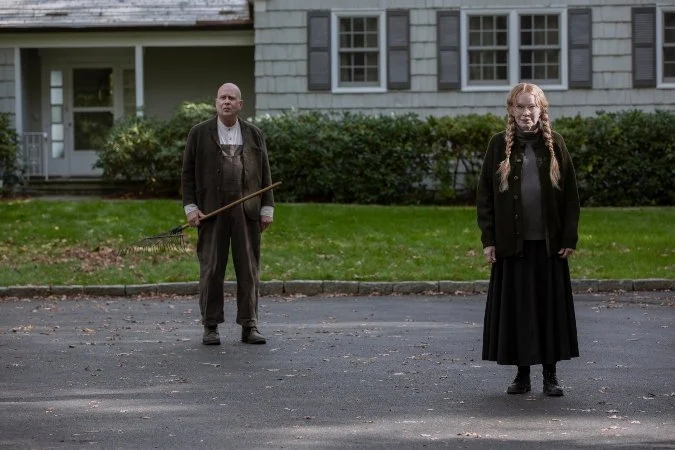
In the high-stakes ecosystem of Hollywood streaming, power deals are usually brokered by agents, lawyers, and high-level executives. Yet, when it came to bringing the chilling, real-life mystery of The Watcher to the screen, the creative engine behind the project was fueled by something far simpler: old-fashioned, obsessive fandom.
Ryan Murphy, the prolific mastermind behind American Horror Story, Glee, and the recent global phenomenon Dahmer – Monster: The Jeffrey Dahmer Story, was so deeply captivated by Reeves Weideman’s 2018 exposé in New York Magazine’s The Cut that he was willing to work for free just to secure a seat at the table. This revelation, shared during a candid Netflix-produced conversation with the series’ star-studded cast, illuminates the creative hunger that drives one of television’s most influential producers.
The Genesis: A Story Too Bizarre to Ignore
The saga of The Watcher began in 2014, when Derek and Maria Broaddus purchased their dream home at 657 Boulevard in the quiet, affluent suburb of Westfield, New Jersey. The $1.3 million property, a stately Dutch Colonial, was meant to be their sanctuary. Instead, it became the site of a psychological nightmare.
Shortly after closing the deal, the couple began receiving sinister, anonymous letters from an individual identifying only as "The Watcher." The writer claimed that their family had "watched" the house for decades, viewing it as their "second coming," and ominously inquired about the Broaddus family’s "young blood." The letters were specific, invasive, and deeply unsettling, eventually forcing the family to abandon the home they had never even moved into.
When Reeves Weideman documented this harrowing ordeal in 2018, the article went viral, gripping readers with its blend of suburban banality and gothic horror. For Ryan Murphy, the story hit a nerve that transcended mere genre interest.
The Creative Pivot
Upon reading the piece, Murphy immediately sought the rights, only to discover that they had already been snatched up by his friend and fellow producer, Eric Newman—the creative force behind Narcos and Spiderhead. Rather than walking away, Murphy made an unconventional proposition: he would waive his fee and write the script for free, provided he could be involved in the project’s development.
"I said, ‘I’m such a fan of this piece and I’m such a fan of this genre that I will write this for free. Just let me write it,’" Murphy recalled during the Netflix roundtable, which featured Naomi Watts, Noma Dumezweni, Mia Farrow, Margo Martindale, and Jennifer Coolidge. Newman, recognizing the value of having a visionary like Murphy onboard, agreed. The partnership was cemented, and what began as an article in The Cut was transformed into a binge-worthy limited series.
Chronology of a True Crime Phenomenon
The trajectory of The Watcher from real-life suburban mystery to Netflix tentpole follows a distinct timeline of growing public fascination:
- 2014: The Broaddus family purchases 657 Boulevard and begins receiving the anonymous letters.
- 2014–2018: The family attempts to sell the home, deals with police investigations, and faces mounting paranoia as the identity of the letter writer remains unknown.
- November 2018: Reeves Weideman publishes The Watcher in New York Magazine’s The Cut, exposing the mystery to a global audience.
- 2019–2021: A bidding war for the rights ensues, eventually landing with Eric Newman under his overall Netflix deal.
- Early 2022: Ryan Murphy joins the production, co-creating the series with his frequent collaborator Ian Brennan.
- September 2022: Murphy’s Dahmer series premieres, creating a massive viewership surge for his work on the platform.
- October 2022: The Watcher debuts on Netflix, topping the streaming charts and reigniting public debate about the original unsolved case.
Supporting Data: The Murphy Industrial Complex
Ryan Murphy’s involvement in The Watcher is a case study in the power of an "overall deal." Since signing a massive contract with Netflix in 2018, Murphy has become the most prolific content generator in the streaming landscape.
His filmography is staggering. Before The Watcher, Murphy’s influence was already felt through Pose, Ratched, American Crime Story, Halston, The Andy Warhol Diaries, The Politician, Scream Queens, and Nip/Tuck. However, his recent pivot toward true crime—specifically the controversial and record-breaking Dahmer—has cemented his status as the "King of Peak TV."
The production value of The Watcher reflects this institutional backing. With a cast that includes heavyweights like Naomi Watts, Bobby Cannavale, Terry Kinney, and Jennifer Coolidge, the show elevates the "suburban nightmare" trope to a high-gloss, prestige drama level. The inclusion of veterans like Mia Farrow and Margo Martindale provides a gravitas that balances the show’s more campy, pulpy elements, a signature trait of Murphy’s directing style.
Official Responses and Creative Motivations
What separates The Watcher from standard crime procedurals is the personal resonance Murphy feels toward the material. In his roundtable discussion, he noted that the central theme of the show is not just the mystery of the letters, but the universal human fear of vulnerability within one’s own home.
"I instantly thought of my own family," Murphy explained. "I think that idea of how we’re living in a world now where everybody… seems under attack in some way and that idea of, ‘How do I keep my family safe?’ was something I was instantly motivated by."
This emotional connection was shared by co-creator Ian Brennan. By framing the series around the existential anxiety of modern parenting—the fear of intrusion, the breakdown of community trust, and the feeling of being watched in an era of constant surveillance—Murphy and Brennan elevated the source material from a localized curiosity to a broader commentary on the modern condition.
Implications: The Ethics of True Crime
The success of The Watcher raises significant questions regarding the ethics of adapting real-life trauma for entertainment. While the show is a fictionalized version of the Westfield story, the real Broaddus family has expressed concern about the renewed media attention the series has brought to their lives.
For Netflix, the strategy is clear: true crime is the platform’s most reliable driver of subscriber retention. Yet, the rapid-fire succession of Dahmer and The Watcher underscores a growing trend in television where real-life tragedy is repackaged with a stylistic, "Murphy-esque" polish that prioritizes narrative tension over the lived reality of the victims.
The Impact on the Genre
Murphy’s brand of true crime is characterized by:
- Aestheticization: High-contrast lighting, meticulous set design, and a heightened sense of dread.
- Character-Driven Drama: Focusing as much on the psychological erosion of the protagonists as on the "villain."
- Cross-Platform Synergy: Leveraging social media buzz and the curiosity generated by the original source material.
By choosing to involve himself in The Watcher out of pure fandom, Murphy has effectively blurred the line between the audience and the creator. He is essentially the "first viewer" of the show, identifying the hooks that made the original article so addictive and amplifying them for a global streaming audience.
Conclusion: Looking Toward the Future
As The Watcher continues to dominate Netflix viewership metrics, the project stands as a testament to the power of a specific kind of creative obsession. Whether or not the audience finds the series a respectful homage or a sensationalized exploitation of a true story, there is no denying the efficacy of Murphy’s approach.
By aligning himself with projects that resonate with his own personal anxieties—such as the sanctity of the family home—Murphy ensures that his work maintains an emotional core, even when the subject matter is undeniably dark. For now, the house at 657 Boulevard remains a cultural touchstone, a place where the boundary between neighborly curiosity and predatory obsession is permanently, and terrifyingly, thin. As for the identity of the real-life Watcher? That remains a mystery that even a high-budget Netflix production couldn’t fully solve—and perhaps, that is the most unsettling detail of all.
