
The Architecture of the Image: The Cinematic Universe of Ross Meckfessel
By [Your Name/Journalistic Desk]
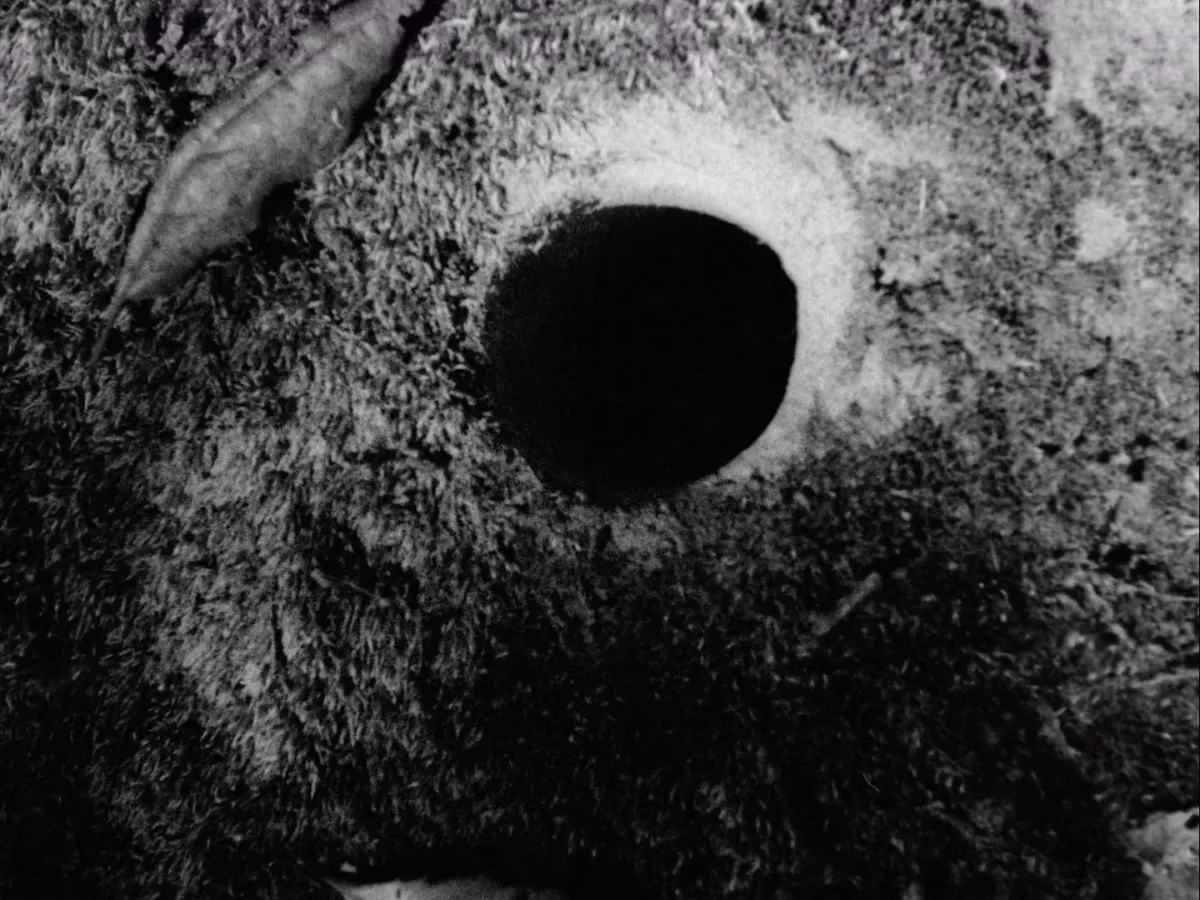
In the age of the infinite scroll, where the act of taking a photograph has become a reflex rather than an artistic intention, the work of American filmmaker Ross Meckfessel stands as a vital, reflexive inquiry. Meckfessel’s body of work does not merely document the world; it deconstructs the very apparatus through which we perceive it. By blending experimental montage, rephotography, and a hauntingly disjunctive use of pop music, Meckfessel has emerged as one of the most incisive voices in contemporary avant-garde cinema, mapping the textures of a reality increasingly mediated by screens and digital artifice.
The Philosophical Framework of the Image
To engage with Meckfessel’s filmography is to confront two distinct, often colliding, narratives regarding the purpose of the image. The first is a utopian taxonomy: the dream of a world where every possible photograph has been taken, rendering the visible universe fully cataloged and "named." This, as film critic Phil Coldiron has noted, plays out as a comedy of manners—or perhaps a tragedy of totalitarianism—where the ceaseless effort to refine the system reflects a Chaplin-esque struggle against the infinite.
The second narrative concerns the "hero" of the visible world: being itself. Here, the medium attempts to prove its fidelity to the real, a "screwball comedy" where the camera acts as a hapless lover, attempting to capture the entirety of existence. Meckfessel’s work occupies the friction between these two poles. He is part of a small, interconnected cohort of artists who understand that in a world saturated with imagery, the most radical act is not to capture "more," but to question the structural integrity of what we have already seen.
Chronology: A Decade of Formal Evolution
Meckfessel’s official filmography, spanning the last decade, reveals a trajectory of increasing technical and thematic precision. His early work served as a laboratory for formal experimentation, while his recent films demonstrate a mature, almost architectural, approach to the medium.
- 2011–2012: The Undergraduate Threshold. Cheryl stands as a seminal entry. Utilizing monochrome footage of art-school bohemianism alongside rephotographed headshots of women, the film acts as a microcosm of Meckfessel’s later preoccupations: the compulsive, often coercive, nature of the "gaze." It remains a film productively at odds with itself, questioning why the impulse to create beauty is so often tethered to the impulse to dominate.
- 2014–2017: The Search for Voice. This period saw the filmmaker oscillating between pure formalism—such as the flicker-film parody All My Star Wars Cards—and the development of his core structural elements: open montage, pop-soundtrack manipulation, and rephotography. A critical turning point occurred during the filming of A Century Plant in Bloom (2017), where a single, steady shot of an iPhone playing waterfall footage alongside a physical houseplant crystallized his methodology: the digital image as a discrete, physical object within the filmic world.
- 2018–Present: The Mature Synthesis. With The Air of the Earth in Your Lungs (2018), Estuary (2021), and Zero Length Spring (2021), Meckfessel achieved a stylistic maturation. These works utilize "open montage"—an editing pattern where the potential for meaning between shots is unrestricted yet governed by a rigorous internal syntax—to explore how digital and physical realities bleed into one another.
Foundational Elements of Meckfessel’s Practice
Meckfessel’s distinct aesthetic is built upon three pillars that distinguish his work from standard found-footage or experimental practices:
1. Open Montage
Unlike traditional narrative editing, which seeks to guide the viewer toward a singular conclusion, Meckfessel’s "open montage" relies on the viewer’s ability to recognize connectives between disparate images. Influenced by the work of Nathaniel Dorsky and Stan Brakhage, Meckfessel demands that the viewer remain an active participant, capable of identifying emotional or logical threads in a sequence that could, in theory, shift in any direction.
2. The Recontextualization of Pop
Meckfessel treats pop soundtracks not as background noise or ironic signifiers, but as raw material. By heavily editing, slowing, and rhythmically misaligning well-known songs, he creates a "tonal chiaroscuro." This disjunction highlights the ambivalence toward pop culture prevalent in the digital age—we recognize the source material, but its placement within the film makes it feel "haunted" and alien.
3. The Digital-Physical Bridge
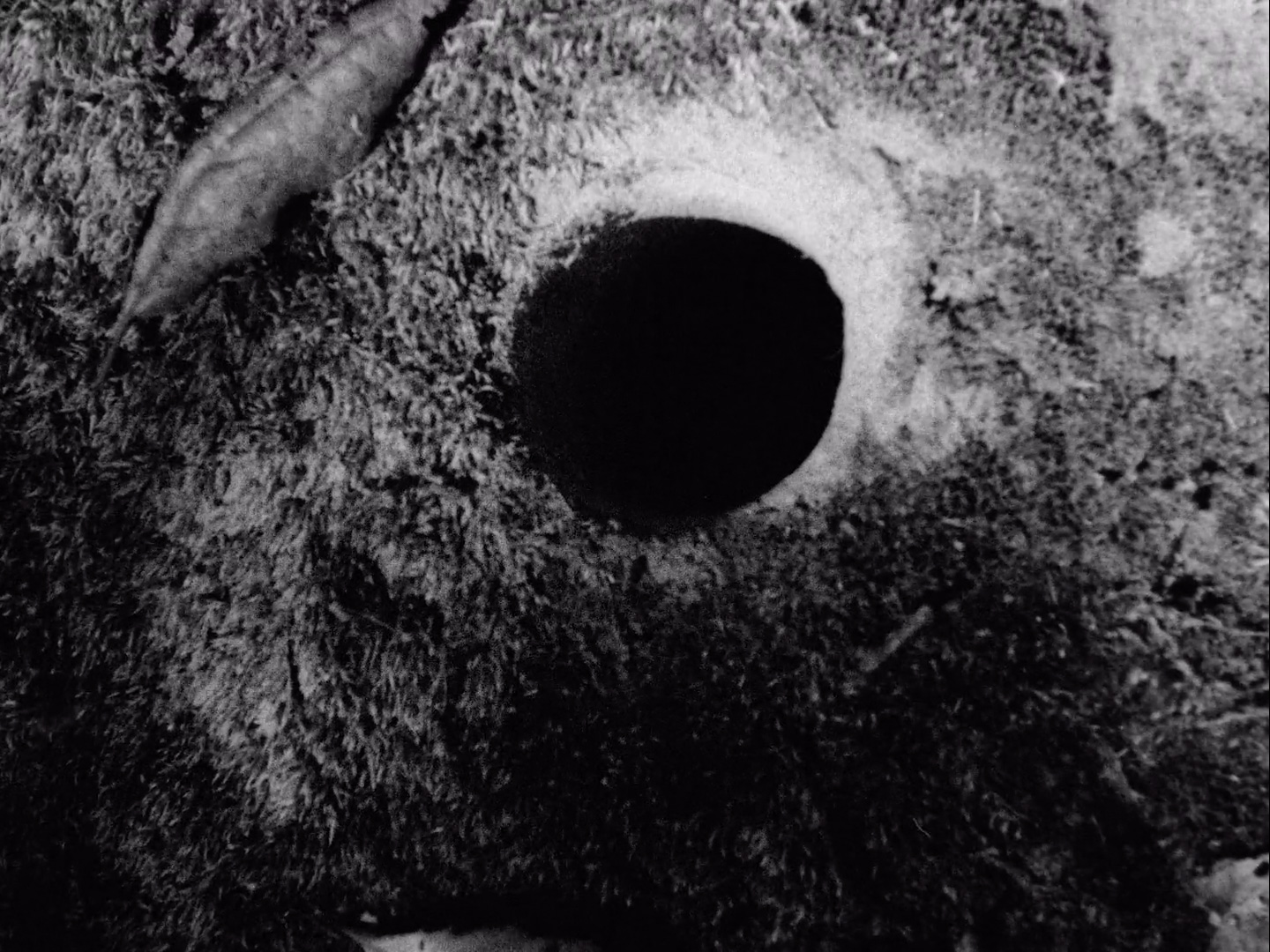
Meckfessel’s use of rephotography—specifically transferring digital video onto 16mm film—serves as his most critical intervention. By filming off screens, he emphasizes the "weight" of the image. A digital rendering of a waterfall or a video game landscape is treated with the same gravitas as a physical object, forcing the audience to grapple with the "spooky post-pop atmospheres" that define modern visual consumption.
Thematic Depth: Zero Length Spring and Spark from a Falling Star
In his most recent output, Meckfessel has turned toward the literary and the genre-based to challenge his own formalist constraints.
In Zero Length Spring, the filmmaker introduces text-based narratives—pairing a story about squirrel removal with reiki-healing sequences—to suggest the presence of "unseeable energies." The film acts as a hypnotic, meditative space that forces the viewer to confront their own nature as a "physical form" within an increasingly abstract, digital landscape.
Conversely, Spark from a Falling Star represents his most ambitious leap: the adaptation of the genre narrative. By framing a sci-fi alien abduction story within his established aesthetic of rephotographed architecture and disjunctive montage, Meckfessel explores the terrifying photogenicity of modern spaces—like the glass-heavy interiors of Manhattan’s One Vanderbilt. Here, the "aliens" are not monsters, but the very architecture of our image-driven, surveillance-heavy world, which renders human subjects as mere decoration.
Implications: The Future of the Lyric Film
The implications of Meckfessel’s work are profound for the future of independent cinema. He suggests that "a fully free perception" is a myth in our era, yet he attempts to reclaim lyricism through the very tools that usually constrain us: digital screens, social media-ready architecture, and mass-produced pop music.
By refusing to provide a clear, relatable human "reverse shot" to anchor his films, Meckfessel forces the viewer to exist in a state of suspended animation. He does not offer comfort; rather, he offers a mirror to the fractured way we process existence. If the avant-garde has historically sought to break away from the "industry" of images, Meckfessel proposes a different path: staying within the belly of the beast and rearranging its parts until they reveal the "truth of experience."
As we move further into a future dominated by AI-generated imagery and synthetic reality, Meckfessel’s commitment to the tactile—the 16mm grain, the smudge on the MacBook screen, the manual labor of rephotography—becomes an essential defense against total abstraction. He reminds us that even in a world of terminal darkness, there is room for the "spark from a falling star"—provided we have the patience to watch the frame.
Summary of Key Works
- Cheryl (2011/12): A formative inquiry into the ethics of the gaze.
- A Century Plant in Bloom (2017): The discovery of the digital-physical connective.
- The Air of the Earth in Your Lungs (2018): A breakthrough in mature, open montage.
- Estuary (2021): An exploration of the "glassy" boundary between screen and architecture.
- Zero Length Spring (2021): A turn toward the mystical and the literary.
- Spark from a Falling Star (Recent): An oblique, genre-defying sci-fi narrative on the nature of space and surveillance.
