
Aaron Sorkin’s ‘The Social Reckoning’: A Classical Hollywood Lens Confronts Modern Tech Tyranny
Main Facts
Academy Award-winning screenwriter Aaron Sorkin returns to the subject of social media power dynamics with The Social Reckoning, a major studio feature film that directly connects the inner-working machinations of Facebook to the January 6, 2021, attack on the United States Capitol. Serving as writer and director—his fourth time stepping behind the camera—Sorkin attempts a thematic and narrative follow-up to his critically acclaimed 2010 masterpiece, The Social Network.
However, where The Social Network offered a cold, cynical, and deeply detached glimpse into the chaotic genesis of a tech empire, The Social Reckoning opts for an entirely different cinematic register. Driven by palpable outrage over the degradation of American civic institutions, Sorkin frames the modern tech crisis through a distinctly classical, moralistic Hollywood lens.
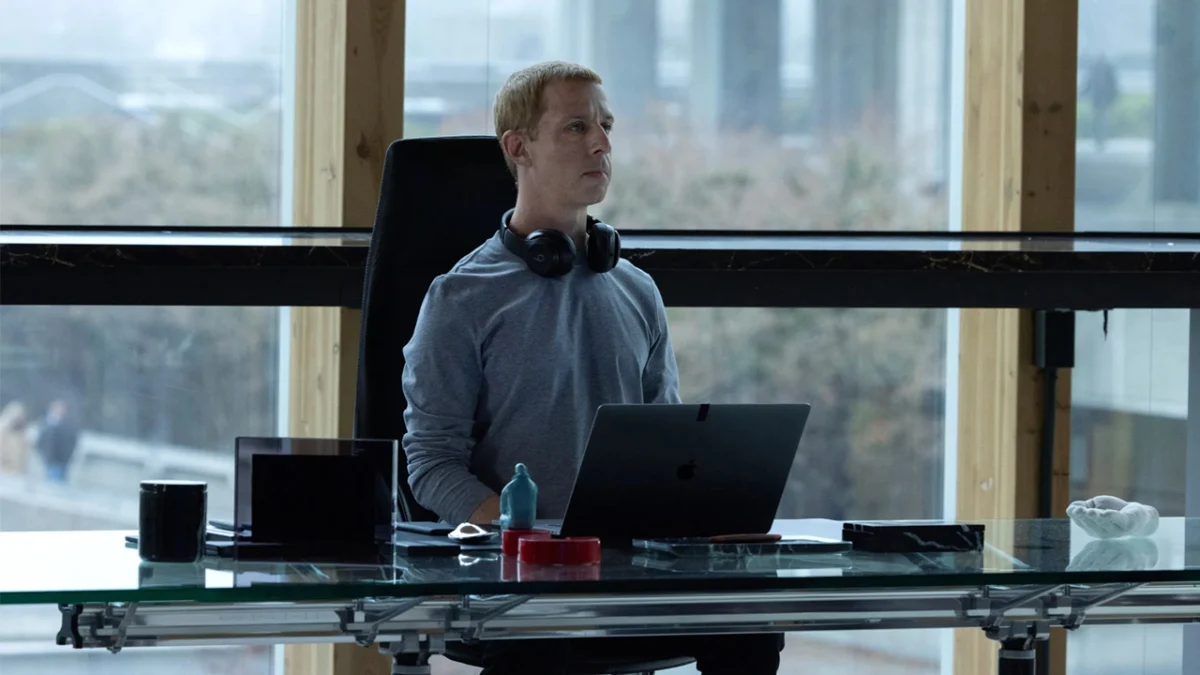
The film operates across dual timelines. The first follows the painstaking investigative work of Wall Street Journal reporter Jeff Horowitz—portrayed by Jeremy Allen White—as he uncovers the Pulitzer Prize-winning Facebook Files series. Horowitz’s reporting is aided by Facebook whistleblower Frances Haugen, played by Mikey Madison, who exposes the corporation’s internal methodology: consciously stoking societal divisiveness to maximize user engagement and corporate profits. The second timeline captures Facebook founder and CEO Mark Zuckerberg—played with mechanical, dead-eyed menace by Jeremy Strong—as he prepares for a high-stakes congressional hearing under the tutelage of crisis management experts led by Raya (Wunmi Mosaku).
Clocking in with a star-studded ensemble cast that includes Bill Burr and Billy Magnussen, the film maps the terrifying evolution of Facebook from a niche college networking site into a sprawling conglomerate encompassing Instagram and WhatsApp, ultimately boasting 2.8 billion users. Sorkin’s narrative posits that Zuckerberg’s awkward, brooding persona has devolved into that of a modern technological tyrant, willfully ignoring the real-world harm orchestrated by his algorithms. The film opens in theaters nationwide on Friday, October 9.
Chronology: From Garage Startup to Capitol Insurrection
To fully understand the narrative arc Sorkin constructs in The Social Reckoning, one must trace the historical and cinematic timeline of Facebook’s public reckoning over the past two decades:
- 2004: Facebook is founded in a Harvard dorm room, a period famously dramatized in The Social Network (2010), ending with the platform celebrating its landmark 1,000,000th user. For years, Silicon Valley operates with broad cultural and regulatory immunity, viewed as an emblem of American ingenuity and connectivity.
- 2016–2019: The platform expands aggressively, absorbing Instagram and WhatsApp, scaling its user base to 2.8 billion people worldwide. Behind closed doors, data scientists like Frances Haugen begin to notice systemic structural failures and intentional algorithmic choices designed to prioritize outrage over factual accuracy.
- 2021 (The Turning Point): Internal documents are leaked to the press, exposing the company’s internal awareness of its toxic social impacts. Months later, the culmination of online radicalization and algorithmic sorting materializes in real life: the violent January 6 attack on the U.S. Capitol. For Sorkin, this event marks an unforgivable desecration of democratic infrastructure.
- October 9 (Current Release): The Social Reckoning hits theaters, attempting to retrospectively tie the administrative negligence of Silicon Valley’s leadership directly to the erosion of American democracy.
Supporting Data and Production Dynamics
Sorkin’s directorial pedigree relies heavily on fast-paced, hyper-literate dialogue, highly structured A and B plots, and a traditional Hollywood framing of heroes and villains. In The Social Reckoning, this stylistic signature manifests in the meticulous breakdown of how social media algorithms manipulate public discourse.
According to the narrative mechanics of the film—mirroring the real-world Facebook Files—the platform systematically executed a clinical strategy:
- Algorithmic Polarization: Prioritizing high-engagement content, even when known to be inflammatory, toxic, or misleading.
- Public Relations Shielding: Presenting a false public narrative that an algorithmic shift toward friends and family content would reduce engagement, while simultaneously hiding behind a manufactured defense of absolute free speech.
- Institutional Bypass: Operating at a scale that effectively bypassed traditional journalistic and governmental oversight mechanisms until irrevocable societal damage was dealt.
The supporting cast brings distinct ideological archetypes to life within Sorkin’s universe. Bill Burr features as an unfiltered venture capitalist who boldly compares Facebook to a crossing guard standing idly by while automotive accidents pile up around them. Meanwhile, Billy Magnussen embodies corporate public relations as an immaculately smiled, deeply sinister operative. Jeremy Strong’s portrayal of Zuckerberg relies on a cold, robotic demeanor, guided through speech and mannerisms by Raya’s team in a manner evocative of Tony Stark calibrating the Iron Man armor.
Critically, however, reviewers have noted a widening chasm between Sorkin’s Baby Boomer, WASP-y sensibilities and the contemporary realities of digital culture. Characters explicitly invoke classic cinematic touchstones—such as explicitly stating they are not "Frank Capra characters," even as they structurally embody the Jimmy Stewart archetype of the naive, virtuous individual fighting a corrupt corporate monolith.
Official Responses and Industry Reception
As The Social Reckoning prepares for its theatrical rollout, initial critical reception has highlighted a fascinating tension between Sorkin’s undeniable artistic craft and his tonal disconnect from modern cynicism.
Industry analysts have pointed out that Sorkin’s greatest cinematic triumphs historically occurred when he was paired with visionary, seasoned directors capable of grounding his theatrical instincts. These include Rob Reiner (A Few Good Men, The American President), Danny Boyle (Steve Jobs), and David Fincher (The Social Network). Since moving into the director’s chair himself a decade ago—with films like Molly’s Game, The Trial of the Chicago 7, and Being the Ricardos—Sorkin has increasingly relied on the comforting structural tropes of his television roots, specifically echoing the rhythm and pacing of The West Wing.
While institutional defenders of Sorkin’s work praise his unyielding respect for American governance and the rule of law, cultural critics argue that applying a Frank Capra framework—complete with an optimistic, triumphant It’s a Wonderful Life-style fist-pump resolution—feels woefully inadequate when dealing with the pervasive, ongoing crisis of digital misinformation. Where a bleaker, more uncompromising narrative conclusion like Serpico or Mr. Smith Goes to Washington might match contemporary pessimism, Sorkin’s insistence on a moral victory leaves some viewers feeling that the film’s gravity is prematurely undercut.
Representatives for major tech conglomerates have historically declined to comment directly on dramatized Hollywood adaptations of their corporate histories, preferring to let their established public safety and content moderation frameworks speak for themselves. However, the release of The Social Reckoning guarantees a renewed public discourse regarding corporate accountability, algorithmic transparency, and the legal immunities currently shielding social media giants.
Implications for Democracy, Media, and Hollywood
The release of The Social Reckoning carries significant cultural and political implications across multiple sectors:
1. The Redefinition of "American Institutions"
Sorkin’s career has consistently explored the sanctity of traditional American power structures—the courtroom, the White House briefing room, the newsroom. By positioning social media platforms as de facto American institutions that have gone "rotten," Sorkin elevates the tech sector from a mere commercial industry to a systemic threat to national stability. The film forces audiences to confront the reality that private algorithmic feeds now hold more sway over public opinion than traditional civic education or institutional journalism.
2. The Limits of Classical Storytelling in the Digital Age
The cinematic approach of The Social Reckoning sparks a broader debate within Hollywood about how narrative art should address systemic, decentralized threats. Traditional Hollywood storytelling relies on individual heroes, identifiable villains, and neat narrative resolutions. Critics argue that the modern attention economy, algorithmic radicalization, and democratic decay are too amorphous, decentralized, and ongoing to be neatly wrapped up in a three-act dramatic structure. As one cultural commentator noted, while classic dramas can successfully memorialize historical shipwrecks of the past, contemporary digital crises represent a ship that is continuously, actively taking on water.
3. Heightened Scrutiny on Silicon Valley Leadership
Coming at a time of increased bipartisan pressure regarding child safety online, algorithmic transparency, and data privacy, The Social Reckoning serves as a high-profile cultural touchstone that will undoubtedly influence public perception. By translating complex data science and whistleblower depositions into accessible, high-stakes dramatic conflict, Sorkin ensures that the human cost of algorithmic maximization remains firmly in the public consciousness as regulatory bodies worldwide weigh stricter controls on major tech platforms.
