
Beyond Linguistics: Why "Latin America" Remains the Only Viable Term for the Region’s Commercial Landscape
By Global Business Insights Desk
Published by ProVideo Coalition
Main Facts
The ongoing debate surrounding the geopolitical and cultural nomenclature of the Western Hemisphere often triggers intense linguistic and regional disputes. Critics frequently object to the terms "Latin America" and its Castilian equivalent, Latinoamérica, arguing that they obscure the rich, distinct indigenous and European roots of the region’s diverse populations. Purists often push for alternatives such as Hispanoamérica, Iberoamérica, or Castellanoamérica.
However, a closer examination of multinational corporate structuring reveals a striking reality: while these linguistic and cultural alternatives hold validity in academic, literary, or sociological contexts, they completely fail when applied to international trade, corporate logistics, and regional sales governance.
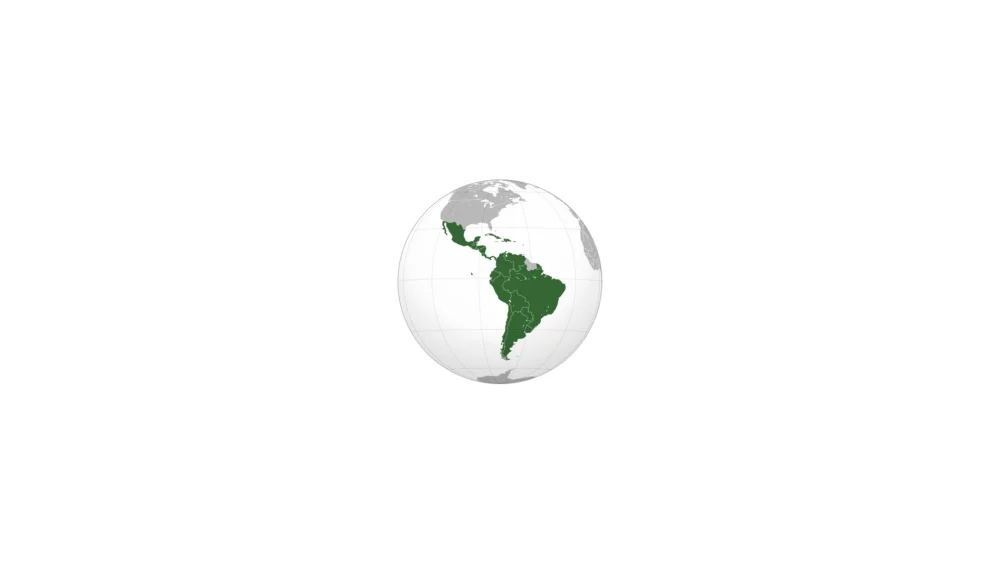
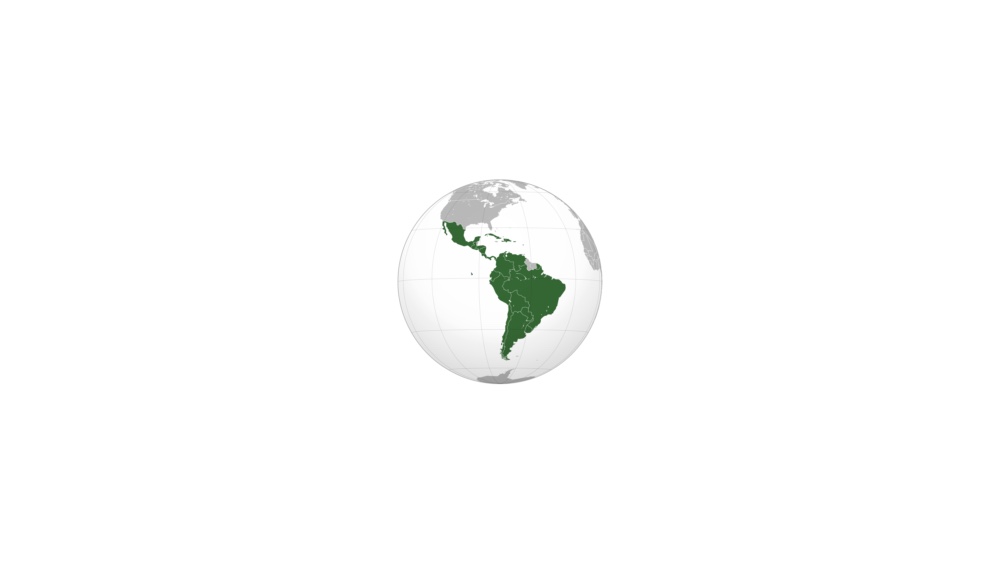
From a strictly commercial standpoint, "Latin America" operates as a unique geopolitical trade zone. Under corporate governance models utilized by multinationals operating within the United States, a "Latin American Sales Manager" is universally prohibited from executing domestic sales within the U.S. market. Paradoxically, their authorized corporate territory frequently spans non-Latin, non-Romance-language-speaking jurisdictions—such as Belize, Guyana, Suriname, and French Guiana—while entirely excluding the United States.
Consequently, replacing "Latin America" with culturally specific linguistic terms like Hispanoamérica creates an immediate logistical paradox. Because the United States boasts tens of millions of Spanish speakers, a massive Hispanic media footprint, and deep historical ties to the Spanish language, it would legally and culturally fall under the umbrella of Hispanoamérica or Iberoamérica. Yet, it remains entirely separated from the "Latin America" commercial sales region. Thus, for corporate entities, trade regulators, and multinational sales forces, "Latin America" is not merely a linguistic descriptor—it is a distinct economic frontier with no viable commercial synonym.
Chronology
The evolution of how the Western Hemisphere is divided, governed, and categorized for trade has developed across centuries of colonial history, linguistic shifts, and late-20th-century corporate globalization:
- Pre-Colonial and Colonial Era: Indigenous civilizations govern the Americas for millennia. Following the arrivals of Christopher Columbus (1492) and Pedro Álvares Cabral (1500), the Spanish and Portuguese empires carve out vast territories, establishing administrative vice-royalties that lay the primary foundations for linguistic divisions.
- 19th Century (Independence & Nomenclature): Following the independence movements led by figures like Simón Bolívar and José de San Martín, the concept of a unified Hispanic or Iberian America emerges. Concurrently, French intellectuals in the 19th century popularize the term Amérique latine (Latin America) during the reign of Napoleon III to subtly assert French cultural influence over the non-Anglo-Saxon nations of the Americas, grouping together Spanish-, Portuguese-, and French-speaking nations based on their Romance-language roots.
- Mid-20th Century (The Rise of Multinational Corporations): As post-World War II global commerce expands, U.S. and European multinational enterprises begin establishing formal corporate hierarchies for the Southern Hemisphere. Rather than dividing territories by linguistic purity, corporations group nations by economic development stages, logistical corridors, and trade agreements, cementing the modern boundary of the "Latin American Sales Region."
- Late 20th Century to Present (Digital & Commercial Maturation): With the proliferation of free-trade agreements (such as USMCA, Mercosur, and the Andean Community) and the rise of digital localization, corporate definitions are tested further. Non-Romance-speaking Caribbean and South American territories (like Suriname and the Guianas) are systematically folded into Latin American regional business hubs due to geographic proximity and shared supply chains, while the United States is firmly cordoned off as a distinct domestic market.
Supporting Data
To understand why cultural terms fail in economic spheres, one must analyze the stark demographic and geographic discrepancies between linguistic definitions and corporate territories:
- The U.S. Linguistic Footprint: The United States is currently home to over 41 million native Spanish speakers, making it the second-largest Spanish-speaking country in the world globally, just behind Mexico. Under a purely linguistic definition (Hispanoamérica), the U.S. undeniably qualifies.
- The Corporate Exclusion Zone: Despite its massive Spanish-speaking populace, U.S. domestic sales operations are siloed under North American operations (often grouped with Canada as "US/CAN" or "NAM"). Corporate sales targets, tax structures, and distribution channels treat the U.S. market independently from the region supervised by a "Latin American Sales Manager."
- Anomalies in the Trade Territory: Corporate Latin America frequently incorporates non-Latin linguistic enclaves for logistical efficiency:
- Suriname: Official language is Dutch.
- Guyana: Official language is English.
- Belize: Official language is English (though Spanish is widely spoken).
- French Guiana: An overseas department of France where French is the official language.
- Market Integration: Despite lacking Romance-language majorities, these territories fall under the purview of Latin American trade delegations, regional distributor networks, and localized technical support offices headquartered in Miami, Mexico City, or São Paulo.
Official Responses
Linguists, cultural historians, and corporate executives frequently clash over the appropriateness of the terminology.
Cultural advocates and linguistic purists argue that terms like Latin America are remnants of Eurocentric framing. Dr. Elena Vásquez, a cultural historian specializing in 19th-century hemispheric identity, notes: "Grouping diverse indigenous nations, Afro-descendant cultures, and distinct Hispanic societies under a single banner coined by 19th-century European imperial designers erases local heritage. Terms like Hispanoamérica honor the precise linguistic and historical lineage of the Spanish-speaking populations without lumping them inappropriately with Portuguese-speaking Brazil or French-influenced territories."
Conversely, corporate executives and international trade attorneys defend the commercial nomenclature as an indispensable structural tool. Marcus Vance, a veteran multinational sales director who has managed regional territories for various technology and media hardware brands across the Americas, explains the corporate perspective:
"When you are managing export compliance, tariff structures, localized currency fluctuations, and localized technical support desks, you cannot afford semantic arguments. A regional sales manager based in Miami handles a specific regulatory and logistical footprint. That footprint is officially designated as Latin America. If we called it Hispanoamérica, we would have to legally justify why we are excluding the United States—which has a larger Spanish-speaking population than many nations in our sales territory—while simultaneously explaining why we are including Dutch-speaking Suriname. In commerce, functionality trumps linguistic purity every single time."
Implications
The dichotomy between cultural nomenclature and commercial reality carries profound implications for global business strategy, localization, and cross-border communications.
1. The Trap of Incorrect Localization
For media producers, software developers, and hardware manufacturers, misapplying regional terms can lead to critical operational failures. A localization strategy that assumes "Latin America" and "Hispanoamérica" are interchangeable will inevitably fail when targeting the United States Hispanic market versus the actual Latin American export market. Regulatory compliance, import duties, and consumer behaviors diverge sharply between a domestic U.S. Hispanic consumer and a consumer residing within the geographical trade borders of Latin America.
2. Supply Chain and Logistics Realities
Multinational companies must recognize that trade agreements do not follow cultural lines. Free-trade zones, shipping lanes, and regional distribution hubs are dictated by geography, infrastructure, and international treaties. By understanding that countries like Suriname or Guyana rely on Latin American trade corridors despite linguistic differences, supply chain managers can optimize freight routing and localized technical support more effectively.
3. Respecting Dual Realities
Ultimately, professionals working across the Americas must learn to navigate two distinct vocabularies. When writing about literature, history, sociology, or identity, respecting preferences for Hispanoamérica or Iberoamérica reflects cultural sensitivity and historical accuracy. However, when drafting corporate bylaws, regional sales strategies, export agreements, and logistics frameworks, recognizing "Latin America" as a distinct, uncompromised commercial zone is essential for survival in the global marketplace.
As global trade continues to evolve, businesses must master this duality—honoring the cultural richness of the hemisphere while respecting the immutable geographic and economic parameters that govern international commerce.
