
Behind the Veil: How ‘The Boroughs’ Redefines Sci-Fi Craft Through Collaborative VFX
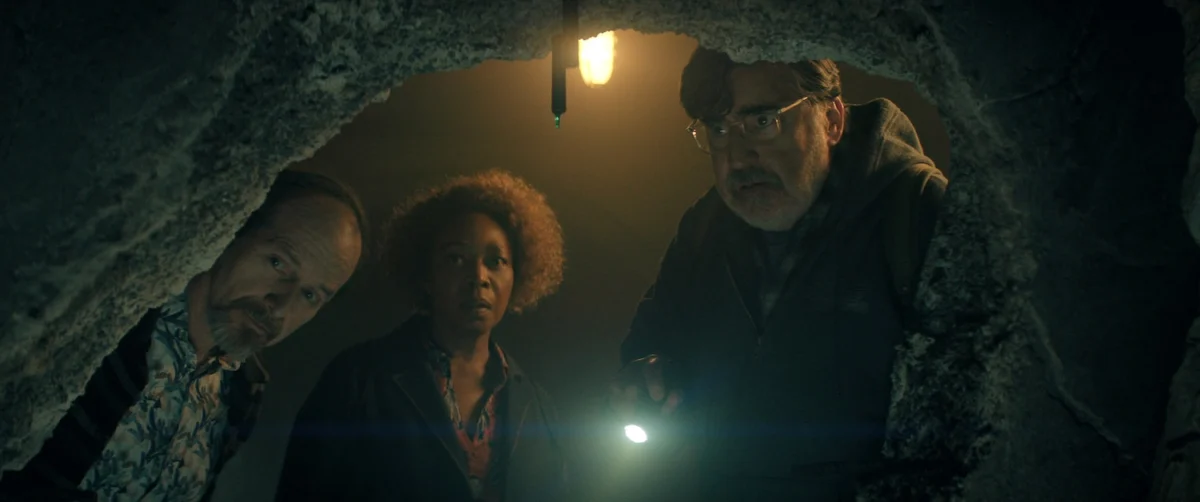
Netflix’s The Boroughs has emerged as a cornerstone of the 2026 television season, thrusting viewers into a Lovecraftian nightmare hidden beneath the manicured lawns of a quiet retirement community. Produced by the Duffer Brothers—the masterminds behind the cultural phenomenon Stranger Things—and created by Jeffrey Addis and Will Matthews, the series marries high-concept science fiction with the grounded, emotional weight of a character-driven drama. While the show is undoubtedly a visual feast, the true alchemy of The Boroughs lies not just in its digital wizardry, but in the meticulous, often invisible collaboration between departments that occurs long before a single frame is rendered.
The Foundation: A New Vision for Genre Television
The Boroughs centers on a seemingly idyllic retirement community, where the facade of peace is shattered by the arrival of a grieving newcomer. After a terrifying, monstrous encounter, he joins forces with a band of misfit residents who soon realize their "golden years" are under siege by forces far more ancient and dangerous than any bureaucratic mismanagement.
The series boasts a powerhouse ensemble cast, featuring legends of the screen including Alfred Molina, Alfre Woodard, Denis O’Hare, Clarke Peters, and Bill Pullman. Their performances provide the human heartbeat of the show, grounding the surreal, otherworldly threats in a sense of lived-in reality. However, creating a seamless experience where these titans of acting can interact with entities that don’t exist required a radical shift in production philosophy.
Chronology of Craft: From Pre-Production to the Screen
During IndieWire’s recent Craft Roundtables, VFX Supervisor Tara DeMarco provided an illuminating look into the production’s workflow. According to DeMarco, the "magic" of The Boroughs is born in the office, not just in the post-production suite.
The Pre-Production "Homework"
The VFX process on The Boroughs begins months before the cameras start rolling. DeMarco emphasized that digital effects are only as convincing as the physical interactions they replace or augment. "Much of the VFX work begins before anything is even shot," DeMarco explained.
This requires a highly integrated approach to the prop department. Before a scene is blocked, the VFX team works in tandem with props to ensure that the physical objects on set are optimized for both the actor’s performance and the subsequent digital compositing.
The Iterative Collaboration
DeMarco highlighted the granular level of planning involved: "Often, we’ll go around to the other departments and ask props to have four different props standing by for the cast to interact with based on what they find. Like, ‘What is that action? Does it need to have weight? Do we need to feel that it has weight? Or are they supposed to throw it really far?’"

This level of detail is critical for maintaining continuity. By preparing multiple iterations of physical props, the team ensures that the actors are not merely gesturing at "green screen air," but are instead reacting to real-world objects that carry the correct weight, texture, and physics. This serves as a "template" for the VFX artists, allowing them to anchor their digital assets to the established physical reality.
Supporting Data: The Synergy of Departments
The success of The Boroughs hinges on what is known in the industry as "inter-departmental fluidity." In many large-scale productions, the VFX department is often treated as a siloed entity that fixes problems in post-production. The Boroughs rejects this, opting for a model where VFX, production design, props, and cinematography operate as a singular, unified force.
Technical Integration
By setting a "template" with the heads of other departments, DeMarco and her team can effectively "advise" on how to capture a performance. If an actor is meant to interact with a Lovecraftian appendage, the props team might provide a rod or a weighted tether. This provides the actor with a tangible tactile experience, which translates into more nuanced, authentic physical performances. When the VFX team later replaces these placeholders with CGI, the interaction feels grounded because the actor’s center of gravity and muscle tension were reacting to a real, physical stimulus.
The Role of Lighting and Cinematography
While the VFX are heavy, they are tempered by the cinematography. The show’s aesthetic requires a balance between the cozy, warm lighting of a retirement home and the cold, jarring, and often bioluminescent glow of its monstrous threats. The VFX team works closely with the gaffers and cinematographers to ensure that the lighting on set matches the anticipated light sources of the digital creatures, ensuring that when the "Lovecraftian horror" enters the frame, it feels like it occupies the same physical space as the actors.
Official Responses and Creative Vision
The Duffer Brothers, acting as producers, have fostered an environment where this type of rigorous planning is encouraged. By hiring creators like Addis and Matthews, who are deeply invested in the lore and the structural integrity of the world, the production has maintained a high standard of consistency.
The series represents a shift in how streamers approach "event" television. Rather than relying on spectacle alone, the focus on the "craft" of the performance—the how of the interaction—is what critics are pointing to as the show’s defining quality. By prioritizing the actors’ relationship with their environment, The Boroughs avoids the "uncanny valley" effect that plagues many big-budget sci-fi series, where digital effects feel detached from the actors’ performances.
Implications: The Future of VFX-Heavy Production
The success of the collaborative model utilized by The Boroughs has significant implications for the future of television production. As audiences become more sophisticated and discerning regarding visual effects, the "fix it in post" mentality is rapidly becoming obsolete.

1. Increased Budget Efficiency
While upfront planning and coordination between departments may seem more costly in terms of man-hours, it often results in significant savings during the post-production phase. When the footage is captured with clear, intentional interactions, the digital artists spend less time "finessing" the integration of elements, leading to faster render times and fewer rounds of costly revisions.
2. The Return of the Physical
There is a growing trend, championed by shows like The Boroughs, to bring "practicality" back to the screen. By utilizing physical props as a foundation for VFX, the production acknowledges that the audience’s brain is wired to detect organic, physical interaction. When a character handles a "monstrous object," the weight of that interaction sells the reality of the threat.
3. Collaborative Leadership
The model of the "VFX Supervisor as a Department Collaborator" is becoming the gold standard. DeMarco’s role, which involves consulting on the "homework" of the props department, suggests that the future of VFX is not just in software engineering, but in project management and creative diplomacy. The VFX supervisor of the future is as much a diplomat as they are a technician.
Conclusion: A New Standard
The Boroughs is more than just a sci-fi mystery; it is a masterclass in modern television production. By treating visual effects as a collaborative process that begins with the props on a table and ends with the final composite, the production team has created a world that feels both terrifyingly alien and intimately human.
As the series continues to unfold, its impact on the industry will likely be measured by how many other productions adopt this integrated, high-planning, and performance-first approach. For viewers, the result is a show that offers the best of both worlds: the awe-inspiring spectacle of a Lovecraftian universe and the grounded, human-centric storytelling that makes those thrills matter.
In an era where "content" is often mass-produced, The Boroughs stands out as a work of craft, reminding audiences and creators alike that the most effective special effects are often the ones that are planned in the quiet, humble rooms of pre-production.
