
Cinema Scope Issue 97: A Comprehensive Deep Dive into the Current Landscape of Global Film Culture
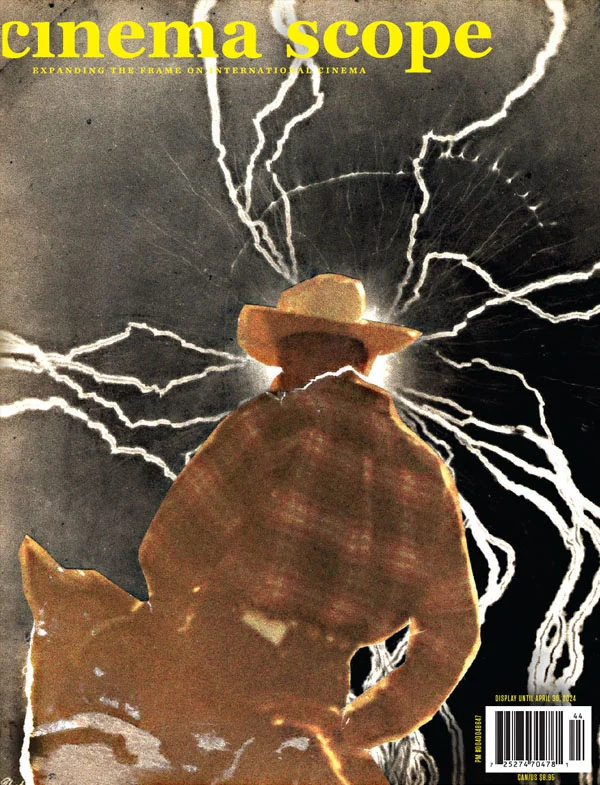
The release of Cinema Scope Issue 97 serves as more than just a periodical update for cinephiles; it acts as a critical barometer for the state of global cinema. As the industry grapples with the lingering effects of the post-pandemic landscape, the shift toward streaming, and the evolving dialogue between auteurism and commercial viability, this latest edition offers a robust, multi-faceted examination of contemporary moving-image culture. From deep-focus interviews with legendary directors to elegiac tributes to departed masters, Issue 97 encapsulates the tension between the ephemeral nature of modern media and the enduring power of the cinematic form.
Main Facts: A Diverse Editorial Scope
The current issue, helmed by editor Mark Peranson, maintains the publication’s signature commitment to high-level film theory and rigorous criticism. The table of contents is categorized into four primary pillars: Interviews, Features, Columns, and Currency.
The editorial decision-making behind Issue 97 reflects a desire to bridge the gap between high-art festival staples and the more nuanced corners of independent and experimental film. By juxtaposing big-budget auteur projects like David Fincher’s The Killer and Martin Scorsese’s Killers of the Flower Moon with niche explorations of archival film and feminist film theory, the magazine asserts that the "value" of a film is not derived from its market reach, but from its ability to provoke discourse.
Chronology of Content: From Vision to Reflection
The editorial progression of Issue 97 follows a deliberate arc. It begins with "Interviews," providing direct access to the creative processes of filmmakers currently shaping the festival circuit. It then moves into "Features," which contextualize cinema within broader sociopolitical and historical frameworks. The "Columns" section provides a space for intellectual reflection and eulogy, while the "Currency" section grounds the entire issue in the immediate, often heated, critical debate surrounding recent theatrical releases.
H3: The Auteur Spotlight
Central to this issue is the feature interview with Ryusuke Hamaguchi regarding his latest work, Evil Does Not Exist. Following the global success of Drive My Car, Hamaguchi has become one of the most studied voices in contemporary Japanese cinema. Beatrice Loayza’s conversation with the director highlights his meticulous approach to narrative structure and his philosophical inquiry into the nature of "evil"—a term he treats with a complexity that defies simple moral binaries.
Similarly, the issue explores the intersection of art and institutional critique in Antoine Thirion’s piece on Dimitris Athiridis’s exergue – on documenta 14. By examining the massive, multi-part documentary project, the magazine invites readers to consider the logistics and internal politics of the art world as a subject for cinematic exploration.
Supporting Data: Examining the "Currency" of Modern Criticism
The "Currency" section of Issue 97 provides a vital snapshot of critical reception for some of 2023 and 2024’s most discussed films. By gathering insights from a diverse pool of critics, the magazine provides a comparative analysis that is rare in modern online media.
- Genre Deconstruction: Adam Piron’s analysis of The Killer suggests a departure from traditional procedural tropes, focusing instead on the sterility of professional violence.
- Historical Reckoning: Robert Koehler’s review of Killers of the Flower Moon emphasizes the film’s role in reshaping the American Western, focusing on the systemic exploitation of the Osage Nation.
- Aesthetic Innovation: Deragh Campbell’s critique of Poor Things unpacks Yorgos Lanthimos’s hyper-stylized world-building, situating it within the tradition of feminist gothic cinema.
These reviews do not exist in a vacuum. When read alongside the editorial columns—specifically those covering the "Deaths of Cinema" (a moving tribute to Terence Davies and Vincent Grenier)—the reader is reminded of the cyclical nature of film history. The magazine does not merely review new content; it contextualizes the current moment as a continuation of a legacy that requires both preservation and critique.

Official Responses and Editorial Philosophy
Mark Peranson’s "Editor’s Note" functions as the moral and intellectual compass for the issue. In an era where many publications are folding or shifting toward "listicle" formats, Cinema Scope remains committed to the long-form essay. The official stance of the magazine, as evidenced by the diversity of its contributors (including Erika Balsom, Thom Andersen, and Jonathan Rosenbaum), is that film criticism is an active, ongoing project.
The inclusion of the "First International Women’s Film Seminar" in Erika Balsom’s Deep Cuts highlights the magazine’s proactive role in championing underrepresented histories. By providing a platform for these discussions, the publication is not just reporting on cinema; it is helping to write its history in real-time.
Implications for the Future of Film Criticism
The implications of Issue 97 are significant for the broader film community. By dedicating space to "TV or Not TV" (Kate Rennehbohm on Joe Pera) and "Global Discoveries on DVD" (Jonathan Rosenbaum), the magazine acknowledges that the "cinema experience" is no longer confined to the theatrical window.
H3: The Challenge of the Digital Age
The inclusion of experimental work, such as the films of Ross Meckfessel and the videos of Tulapop Saenjaroen, serves as a challenge to the mainstream reader. It implies that the future of film culture is not just in the multiplex, but in the gallery, the archive, and the digital fringe.
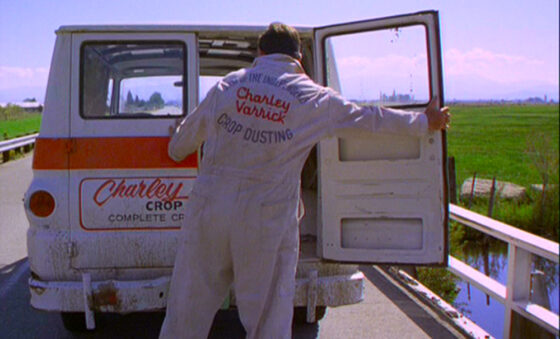
The magazine’s commitment to the "Last of the Independents," as seen in the roundtable on Charley Varrick, underscores a longing for the gritty, auteur-driven cinema of the 1970s. However, this is not mere nostalgia. By inviting contemporary filmmakers like Veronika Franz and Severin Fiala to discuss the past, the magazine suggests a lineage of influence that connects the New Hollywood era to the modern European horror movement.
Conclusion: Why Issue 97 Matters
In an information ecosystem saturated with short-form social media critiques and algorithmic recommendations, Cinema Scope Issue 97 stands as a bastion of sustained attention. Its value lies in its refusal to be hurried. It treats a documentary about a major art exhibition with the same gravity as a Scorsese epic, and it treats the passing of an experimental filmmaker like Vincent Grenier with the same reverence as the passing of an industry titan like Terence Davies.
For the reader, this issue offers a roadmap through the noise. It provides the tools necessary to analyze not just what we watch, but how we watch it. As the magazine continues to evolve, its focus remains fixed on the intersection of the personal and the political, the historical and the avant-garde. Issue 97 is not just a collection of articles; it is a testament to the fact that, despite the shifting sands of the film industry, the necessity for deep, rigorous, and passionate criticism remains as vital as ever.
Whether you are a scholar, a filmmaker, or a casual enthusiast looking to expand your cinematic vocabulary, the contributions within these pages offer a profound reminder that cinema is a living, breathing entity. Through the lenses of its contributors, Cinema Scope proves that even as some forms of exhibition change or fade, the art of the film—and the art of writing about it—will continue to endure, provided there are voices willing to face the music and record the rhythm of the medium.
