
The Devil’s Chord: How Ludwig Göransson and Ryan Coogler Conjured the Supernatural Sound of ‘Sinners’
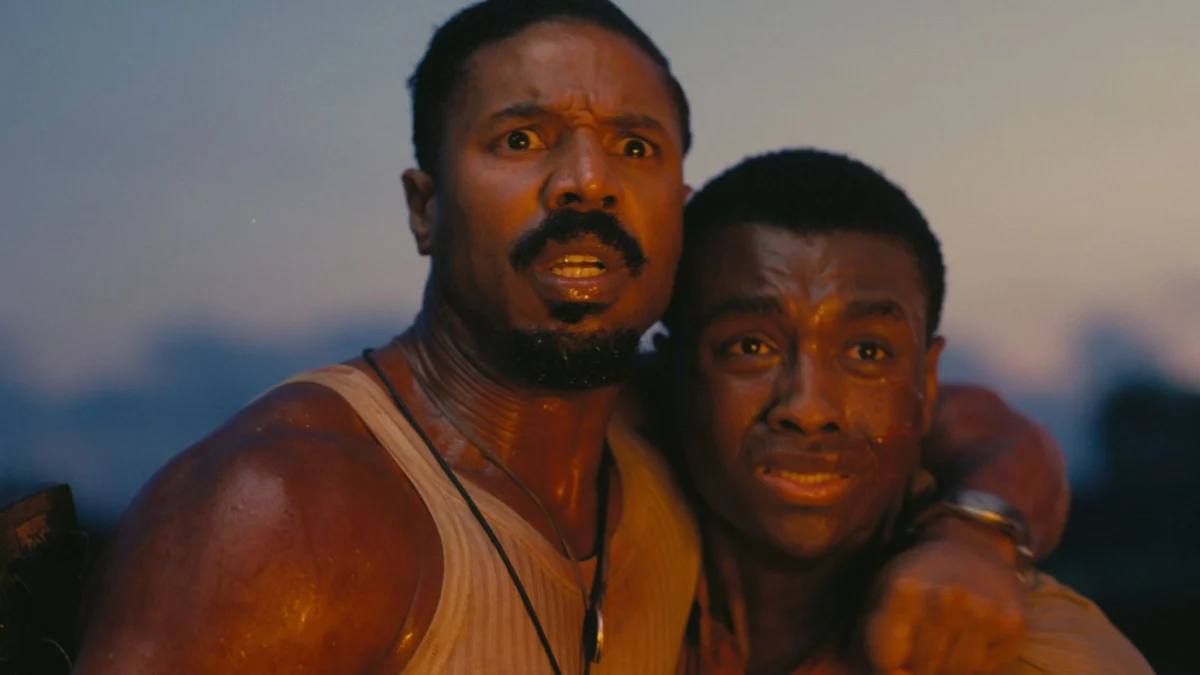
The Mississippi Delta in 1932 was a landscape defined by humidity, hardship, and a sound that would eventually define American music: the blues. For Academy Award-winning composer Ludwig Göransson, the challenge of capturing this atmosphere for Ryan Coogler’s genre-bending vampire film Sinners was not just a technical hurdle—it was a homecoming.
Tasked with scoring a film that bridges the gap between historical Southern folklore and supernatural horror, Göransson found himself looking backward to move the audience forward. The result is a sonic tapestry that weaves the raw, jagged edges of early 20th-century blues with the expansive, modern sensibilities of a blockbuster film score.
The Genesis of a Delta Nightmare
The collaboration between Coogler and Göransson has long been one of Hollywood’s most fruitful partnerships, but Sinners demanded something entirely new. The film centers on Sammie Moore, a young blues musician played by newcomer Miles Caton, whose debut performance at a juke joint in Clarksdale, Mississippi, triggers an unforeseen awakening of both benevolent and malevolent spirits.
Coogler, who possesses personal family ties to Mississippi, sought to explore the cultural weight of the blues and its intrinsic link to the supernatural. The script draws heavy inspiration from the myth of Robert Johnson—the legendary guitarist who allegedly sold his soul to the devil at a crossroads in exchange for unparalleled musical prowess.
For Göransson, the project hit a personal chord. "I grew up with the blues around me," he told IndieWire. "My father is a blues guitar player who put a guitar in my hands when I was six and actually wanted to name me Albert after the great Albert King. So, this hit close to home."

Chronology: A Pilgrimage to the Roots
To ensure the authenticity of the soundscape, the creative team didn’t just study archival recordings; they went to the source. Göransson, Coogler, members of the music team, and even Göransson’s father traveled from Memphis to the heart of the Mississippi Delta.
The research phase was pivotal in changing their perception of the genre. Göransson noted a stark disconnect between how we perceive vintage blues today and how it was experienced at the time. "When you hear it today on the old recordings, it sounds like dog shit," the composer admitted. "But these were not old men singing at the time. They were young guys. They were dangerous. Their music was edgy. It was ‘the devil’s music.’ If you’re listening to this music, you’re bonding with the devil."
Mastering the Hero Instrument
Central to the film’s authenticity was the "hero guitar"—a resonator model that would have been common in 1932 before the prevalence of electric amplification. Seeking the perfect resonance, Göransson embarked on a globe-spanning scavenger hunt. He eventually located a 1932 Dobro Cyclops in Los Angeles. To account for potential on-set accidents, he sourced two additional vintage instruments from Nashville and London.
For actor Miles Caton, the process was an immersive three-month masterclass in slide guitar techniques, ensuring that every frame of Sammie Moore playing felt earned and visceral.
The "Surreal Montage": A Technical Feat
The film’s centerpiece is a sprawling, single-take sequence—a "oner"—that defies conventional storytelling. In this scene, Sammie Moore’s performance at the juke joint evolves into a surreal, dimension-bending spectacle.

The Composition Process
Göransson collaborated with Grammy-winning songwriter Raphael Saadiq to develop "I Lied to You," the song that acts as the bridge between the film’s grounded 1932 setting and its supernatural shift. The montage, titled "Magic What We Do," functions as a whirlwind tour of musical evolution.
"I had goosebumps reading the script," Göransson recalled. "I had never even thought of that idea. But it could only be done because we were on set, living in New Orleans."
The sequence required months of meticulous choreography between the camera department, the actors, and the musicians. Because the scene was filmed using a 65-pound IMAX camera on a Steadicam, there was no room for error. The music had to be written to a rough cut, and then the cast had to perform to that music live on set in a single, high-stakes day of shooting.
A Global Musical Tapestry
The montage is a deliberate collision of eras and cultures. As the camera weaves through the juke joint, the soundscape shifts:
- The Origins: An African Griot plays a precursor to the banjo.
- The Evolution: A 1970s guitarist (portrayed by legendary bluesman Eric Gales) introduces a Hendrix-inspired electric fire.
- Modernity: A DJ at a table lays down an 1980s hip-hop beat, while the floor sees a clash between an African ancestral dancer and a modern hip-hop artist.
- Cross-Cultural Fusion: The addition of Chinese dance and ballet creates a visual and auditory mosaic that emphasizes the universality of the blues.
Supporting Data: The Science of Sound
While the film is rooted in 1932, the post-production process embraced the bleeding edge of audio technology. Göransson utilized Dolby Atmos to ensure the audience felt enveloped by the music. "In post, with the mix, we could really play with the Atmos of music panning around you," he explained.

This juxtaposition of 1932 resonator guitars with modern digital sound design creates a "haunted" quality. The score is predominantly acoustic in the film’s opening, mirroring the small-town, period-accurate tension of Clarksdale. However, as the supernatural elements take hold, the instrumentation expands, utilizing the spatial audio to make the music feel like a living, breathing entity that is physically occupying the theater with the audience.
Official Responses and Creative Intent
Ryan Coogler’s vision for Sinners was to treat the blues not as a dusty relic of the past, but as a living, dangerous, and transformative power. By enlisting Göransson, he ensured that the film would avoid the tropes of a standard period piece.
"You had little pieces of musical histories coming at you, depending on where the camera is," Göransson said, reflecting on the montage. "And it was all happening live the moment we created it." The collaboration highlights a rare instance where the director’s narrative vision and the composer’s technical mastery are so deeply intertwined that the music acts as the primary engine for the film’s pacing and emotional arc.
Implications: The Future of Genre Filmmaking
The success of Sinners in blending historical drama with high-concept horror sets a new precedent for how music can be utilized in cinema. By refusing to let the music sit in the background, Göransson has crafted a score that is an active participant in the film’s plot.
The film raises questions about the legacy of American music—specifically how the blues has been co-opted, repurposed, and evolved through generations. By explicitly connecting the "devil’s music" to modern hip-hop beats and ancestral rhythms, the film argues that the blues is not a static genre, but a continuous conversation across time.

For the audience, Sinners is more than a horror movie; it is a sonic journey. It challenges the viewer to listen closer to the history behind the music, reminding us that the most powerful art often comes from the most difficult places.
As Sinners continues its run in theaters, it stands as a testament to the idea that with the right combination of historical reverence and technological innovation, a simple resonator guitar can be just as terrifying—and as beautiful—as any monster on the screen.
