
The Soul of the Rockstar: How Sam Reid Crafted the Immortal Performance of Lestat de Lioncourt
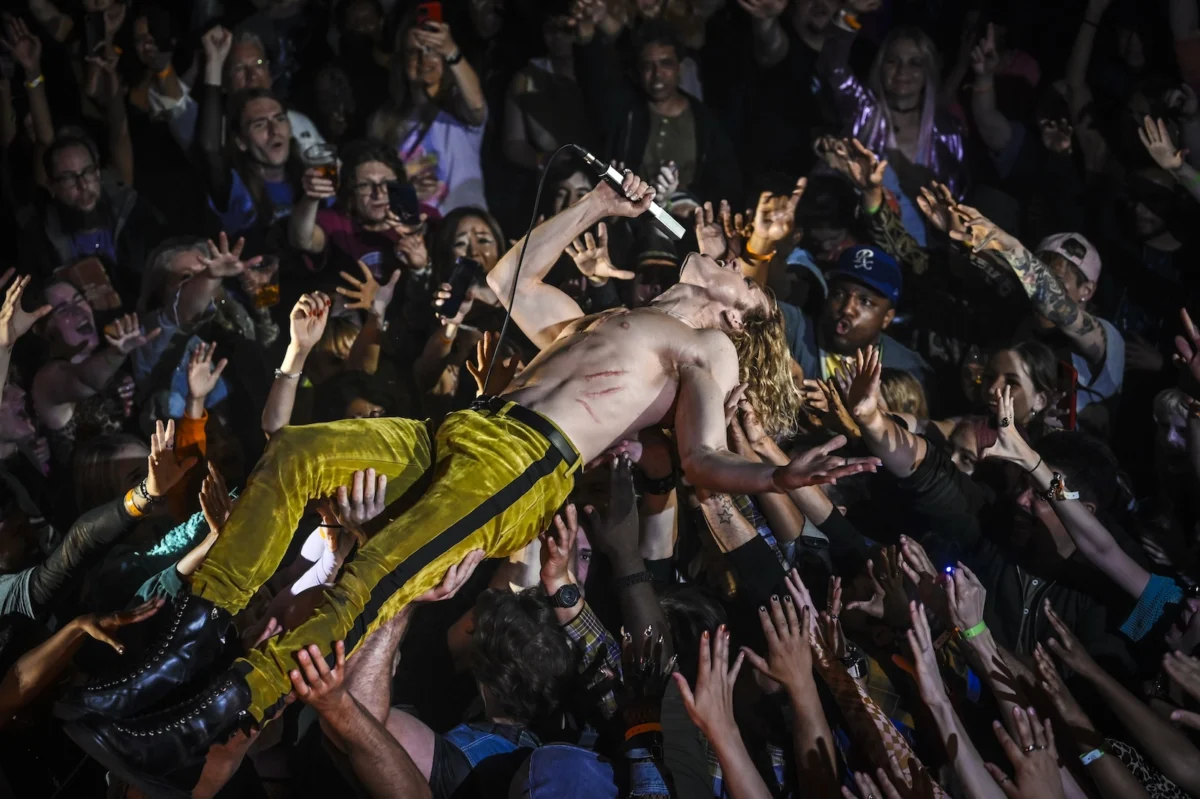
The anticipation surrounding the upcoming season of AMC’s The Vampire Lestat has reached a fever pitch. With fans already treated to a tantalizing array of trailers and a hauntingly atmospheric soundtrack—including the original tracks "Long Face" and "All Fall Down"—the series is poised to redefine the iconic vampire anti-hero for a new generation. Central to this transformation is actor Sam Reid, whose portrayal of the titular rock-star vampire has become the subject of intense critical and fan fascination.
In a recent press conference hosted by the Television Critics Association, Reid offered a rare, intimate look into the creative machinery behind his performance. By synthesizing centuries of historical performance art with the raw, nihilistic energy of 20th-century glam rock, Reid has moved beyond mere imitation, breathing a complex, tragic life into one of literature’s most enduring characters.
The Architecture of an Immortal Performer
For Sam Reid, the challenge of playing Lestat de Lioncourt was never just about wearing the leather pants or masterfully commanding a stage; it was about understanding the fundamental impulse that drives an immortal being to seek the spotlight.
“His onstage persona is built in the 18th century,” Reid explained to the press. “It is the French iteration of the Commedia dell’arte, and that’s where I place him as a performer. Anything that goes beyond that—the stadium lights, the electric guitars, the pyrotechnics—is merely an extension of that ancient character. That is where he built his stage presence, and that foundation remains the bedrock of his identity, regardless of the era.”
This insight suggests that the show’s creative team has treated Lestat’s evolution not as a series of disconnected phases, but as a continuous, centuries-long performance. By rooting his rock-star persona in the traditions of masked comedy and theatrical exaggeration, Reid bridges the gap between the aristocratic, velvet-clad dandy of the 1700s and the leather-clad icon of the modern stage.
A Chronology of Artistic Evolution
To fully grasp the magnitude of Reid’s performance, one must look at how the production team approached the narrative arc of the character. The show’s timeline is meticulously structured to reflect Lestat’s internal shifts, mapping his journey from an introspective, often lonely predator to a global cultural phenomenon.
Phase 1: The Theatrical Foundation
In the early episodes, the performance is intentionally heightened. Lestat is not just a musician; he is an actor playing the part of a human musician. Reid notes that during this phase, he worked closely with showrunner Rolin Jones to ensure the "theatricality" was front and center. Lestat is consciously performing the idea of a rock star, projecting a curated image that hides the hollow reality of his vampiric existence.
Phase 2: The Blurring of Reality
As the narrative progresses, the lines begin to dissolve. Reid describes a deliberate shift in his acting style mid-season: "As the show progresses, the performance starts to disappear. I stopped focusing on the ‘rock star’ and really focused on the books, on Rolin’s writing, and on the songs Daniel Hart wrote. I wanted to try and hone in on that, to pull the man out of the myth."
This shift marks the transition from performance to vulnerability—a hallmark of the upcoming season that promises to surprise even the most dedicated fans of Anne Rice’s original novels.
Supporting Data: The Bowie Connection and Creative Influences
One of the most revealing aspects of the press conference was Reid’s candid discussion of his influences. To capture the "otherness" of a creature that has lived for centuries, Reid looked to none other than David Bowie. Specifically, he studied footage of Bowie performing "Cracked Actor" during live concerts in the 1970s.
"I watched those performances to remind myself that [Lestat] is not human," Reid admitted. "I have to make sure I don’t forget that. There is a lot more vulnerability in this season than we’ve had before, and it’s very easy for that to make him seem too grounded, too relatable. I wanted to make sure we maintain the idea that he is a kind of ‘other’ thing. David Bowie just does that extraordinarily well—he exists in a space that feels both deeply human and completely alien."

This influence extends to the musical production as well. Under the guidance of composer Daniel Hart, the music of The Vampire Lestat is designed to sound like a bridge between eras. The songs are not mere pastiches of 1980s rock; they carry a gothic, timeless weight that reflects Lestat’s own perspective—a blend of ancient sorrow and modern defiance.
Official Responses and Creative Vision
The creative team behind the series has been vocal about the importance of this specific season. Showrunner Rolin Jones has frequently described this iteration of the character as the most ambitious project the production has undertaken. By leaning into the source material’s more surreal and operatic elements, the show is aiming for a tone that is distinct from the more grounded, gothic horror of the previous season.
AMC’s investment in this vision is evident in the production design and the promotion of the soundtrack. The decision to release the music—"Long Face" and "All Fall Down"—well ahead of the premiere serves as a form of world-building, allowing the audience to engage with the character’s emotional state before the first frame of the show airs.
Implications for the Genre
The portrayal of Lestat as a rock star is not merely a stylistic choice; it is a commentary on the nature of fame, immortality, and the human condition. By presenting a character who uses music as a way to "come out" to the world as a vampire, the series explores themes of visibility and the dangerous allure of the spotlight.
The implication here is that for an immortal being, fame is the only true form of legacy. If you have forever to live, you eventually run out of things to prove to individuals; instead, you seek to imprint yourself upon the collective consciousness of humanity.
As Reid’s performance demonstrates, this is a dangerous game. The more Lestat performs, the more he exposes his own vulnerabilities. The audience is invited to watch not just a rock concert, but the unraveling of an ego that has survived for centuries. This high-stakes approach to character study is what separates The Vampire Lestat from standard genre television, positioning it as a profound exploration of identity.
Looking Toward the June 7 Premiere
As the countdown to the June 7, 2026, premiere on AMC and AMC+ begins, the conversation surrounding Sam Reid’s performance is likely to intensify. The early buzz suggests that the series is not afraid to take risks, moving away from the expected tropes of vampire media to embrace a more psychological, music-driven narrative.
Reid’s ability to balance the "sexy rockstar energy" with the profound, existential angst of a centuries-old vampire is the linchpin of the entire production. Whether through his carefully studied stage movements or his quiet, vulnerable moments away from the cameras, Reid has crafted a version of Lestat that feels both iconic and startlingly new.
Fans can expect a season that is as much about the music as it is about the blood—a high-octane, emotionally charged journey that challenges our understanding of what it means to be a monster. With the foundation laid by the Commedia dell’arte and the spectral influence of David Bowie, Sam Reid has prepared the stage for a performance that, like the character himself, will likely prove to be immortal.
The premiere of The Vampire Lestat is not just a television event; it is an invitation to witness a transformation. As the lights go down and the first chord strikes, the audience will finally see the man, the monster, and the rock star—all wrapped in the tragic, beautiful performance of a man who has lived long enough to know that the greatest performance is the one that destroys you.
