
A Tartan-Tinted Jukebox: Assessing the Cultural Impact of ‘Sunshine on Leith’
Main Facts: A Cinematic Celebration of Scottish Spirit
Sunshine on Leith, directed by Dexter Fletcher and adapted from the hit stage musical of the same name, serves as a cinematic love letter to Edinburgh. Built entirely around the folk-pop songbook of brothers Charlie and Craig Reid—better known as The Proclaimers—the film is an unashamedly sentimental, boisterous, and heart-on-sleeve musical. While its narrative follows a trajectory that feels as if it were scripted by the Scottish Tourist Board, its primary objective is to evoke a sense of communal joy, charting the lives of two soldiers returning home to the reality of civilian life in the capital.
For those who lean into its whimsical, often saccharine charms, the film is a rousing, foot-tapping experience. However, for those seeking narrative complexity or cinematic innovation, Sunshine on Leith may prove "highly resistible." It is a production that prioritizes populist appeal over grit, functioning as a "chirpy confection" that, while undeniably catchy, occasionally suffers from a lack of genuine, lived-in depth. With its U.K. release slated for October 4, the film’s performance on the global stage remains a point of speculation, as its specific cultural flavoring may struggle to translate beyond British borders.
Chronology: The Journey from Stage to Screen
The narrative arc of Sunshine on Leith begins in the rugged, high-stakes environment of Afghanistan, where lifelong best friends Davy (George MacKay) and Ally (Kevin Guthrie) serve in the British military. Their return to Edinburgh is framed by the trauma of a road mine explosion, an event that haunts their re-entry into the "everyday business" of Scottish life.
Upon arrival, the two friends are confronted with the mundane reality of the modern economy; telemarketing roles represent the bleak ceiling of their immediate career prospects. The film then moves into its central emotional conflicts:
- The Romantic Tension: Ally seeks a conventional, settled life with Davy’s sister, Liz (Freya Mavor). However, Liz’s ambitions reach far beyond the borders of Edinburgh, as she yearns to "see the world," creating an immediate, poignant friction between the couple.
- The New Romance: To facilitate her brother’s romantic prospects, Liz introduces Davy to her hospital co-worker, Yvonne (Antonia Thomas), a recent transplant from London. The two hit it off, providing a lighter contrast to the more strained dynamic of Ally and Liz.
- The Familial Crisis: The bedrock of the story is the 25th-anniversary celebration of Davy and Liz’s parents, played by Peter Mullan and Jane Horrocks. This milestone is upended when the father discovers the existence of an adult daughter from a previous liaison, throwing the household into emotional turmoil.
- The Reconciliation: True to the tropes of the "formulaic laughter-and-tears" genre, these disparate conflicts converge in a medical crisis. This conveniently timed event serves as the catalyst for all parties to put aside their grievances, leading to the necessary, feel-good resolution that defines the film’s final act.
Supporting Data: Music, Choreography, and Visuals
The musical backbone of the film, provided by The Proclaimers, is undoubtedly its most potent asset. The songs—folk-inflected, anthemic, and deeply rooted in a Scottish identity—are capably performed by a young, energetic cast. The musical direction, overseen by Paul Englishby, ensures that the numbers are accessible, though some critics argue that the original background score adds a layer of "syrupy" sentimentality that occasionally threatens to overwhelm the narrative.
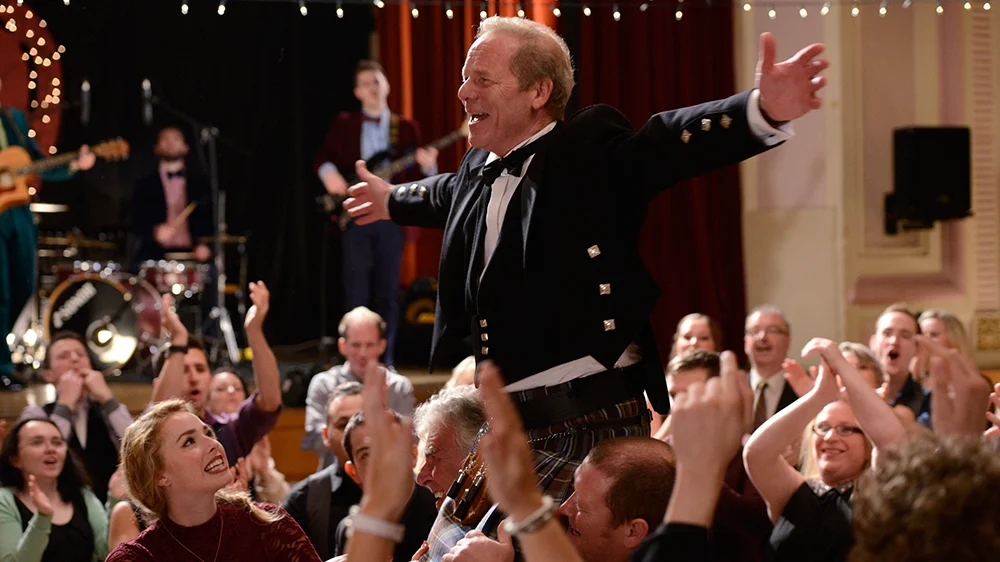
The film’s centerpiece, the climactic performance of the global hit "I’m Gonna Be (500 Miles)," acts as the movie’s most ambitious setpiece. Yet, even here, the limitations of the production are visible. Choreographer Rosie Kay avoids complex movement, opting instead for a style that mimics the simplicity of a school pageant. While this decision aligns with the film’s "unpretentious, working-class vibe," it also highlights a certain calculated, prepackaged quality to the musical numbers.
Visually, Dexter Fletcher’s production relies heavily on the natural beauty of Edinburgh. The city is showcased extensively, yet the cinematography often lacks the depth or texture required for a major feature film. The high-definition widescreen lensing, while crisp, leans toward a "televisual" aesthetic, failing to capture the expansive, cinematic grandeur of the city’s vistas in a way that feels truly distinctive or artistic.
Official Responses and Cast Dynamics
The ensemble cast, led by the gravitas of Peter Mullan, provides the film’s strongest tether to reality. Mullan’s performance is the exception to the broadly drawn characterizations, offering a moment of genuine emotional weight in a screenplay that otherwise relies on "banal dialogue" and predictable outcomes. Jane Horrocks delivers a performance heavy on "cutesiness," which will delight some audiences while alienating others. The younger cast members—MacKay, Guthrie, Mavor, and Thomas—are described as "pleasant enough," carrying the energy of the film with a youthful, if slightly surface-level, vigor.
In terms of critical reception, the film has been categorized as a "rote crowdpleaser." The consensus suggests that the film is a "decent" effort that banks heavily on the audience’s willingness to forgive its clichés. There is a clear tension between the film’s desire to be a heartfelt exploration of family and love and its tendency to fall back on the comfortable, reassuring rhythms of a musical-theater factory.
Implications: The Global Future of the Jukebox Musical
The release of Sunshine on Leith highlights a broader trend in the British film industry: the attempt to replicate the success of stage-to-screen musical adaptations like Mamma Mia!. The implications for this specific film are twofold.
First, it raises questions about the "portability" of hyper-local content. While the film is undeniably Scottish in its humor, music, and setting, the reliance on these markers may act as a barrier for international viewers who do not share a cultural connection to the source material. The "biz" of the film outside the U.K. is expected to be "spotty," suggesting that without a global recognition factor for The Proclaimers’ catalog, the film lacks the broad, universal appeal required for international box-office dominance.
Second, the film serves as a case study in the risks of the "formulaic" approach. By prioritizing a "reassuring familiarity," the filmmakers have created a product that is undoubtedly watchable and arguably successful as a piece of populist entertainment. However, by adhering so strictly to the conventions of the genre, the film limits its own potential to be viewed as a significant piece of cinema. It settles for being a "confection"—something sweet, fleeting, and ultimately designed for immediate consumption.
Ultimately, Sunshine on Leith is a film of contradictions. It is a work that champions the working class while using a "calculated" approach to evoke emotion. It is a film about the messy realities of life—infidelity, war, and family separation—that resolves those issues with a simplicity that borders on the fantastical. For the target audience, it succeeds in being "rousing" and "catchy." For others, it remains a "generic" exercise in sentimentality. Whether or not it achieves longevity as a cult classic will likely depend on the enduring, infectious power of the Reid brothers’ songbook, which, for many, remains the true heart of this cinematic endeavor.
