
The Unbroken Benchmark: Michael J. Fox’s Historic Emmy Legacy at 40
Introduction: The Night That Changed Television History
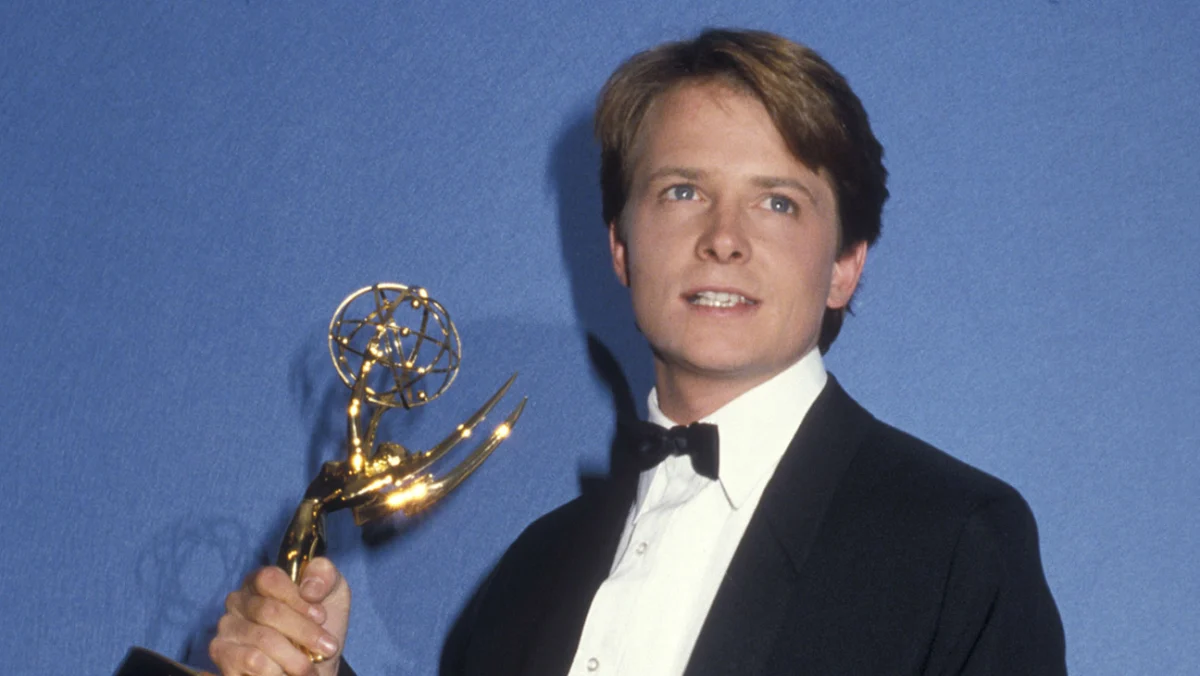
Forty years ago, the television landscape was undergoing a seismic shift. As the 1986 Primetime Emmy Awards ceremony unfolded, the industry was witnessing the meteoric rise of a young Canadian actor who would go on to define a generation. Michael J. Fox, then only 25 years old, stepped onto the stage to accept the Emmy for Outstanding Lead Actor in a Comedy Series for his iconic portrayal of Alex P. Keaton on NBC’s Family Ties.
This was not merely another award win; it was a record-breaking moment that, four decades later, remains an untouched benchmark in the annals of the Television Academy. By besting industry stalwarts like Harry Anderson, Ted Danson, and Bob Newhart, Fox became the youngest performer ever to capture the top comedy acting honor—a title he holds to this day. His victory signaled the arrival of a new archetype for the television star: the multi-hyphenate talent capable of dominating both the small screen and the global box office simultaneously.
Chronology of a Career Defining Moment
1985–1986: The Peak of the "Fox-mania"
To understand the magnitude of Fox’s 1986 win, one must consider the sheer velocity of his trajectory at the time. By 1986, Fox was not just a successful sitcom star; he was arguably the biggest movie star on the planet. The summer of 1985 saw the release of Back to the Future, which became a cultural phenomenon, while his performance in Teen Wolf cemented his status as a bankable lead.
Balancing the rigorous shooting schedule of a network sitcom with the demands of blockbuster film promotion was a feat of stamina that few performers have ever replicated. His performance in Family Ties as the buttoned-up, Reagan-era conservative Alex P. Keaton provided a perfect foil to his real-life charm, creating a character that felt both satirically sharp and deeply human.
The Winning Episode: "The Real Thing"
The episode that secured the Emmy, titled "The Real Thing," holds a unique place in television lore for reasons beyond the acting accolades. It marked the debut of Tracy Pollan, who joined the cast as Ellen Reed. On screen, the chemistry between the characters was palpable, sparking a romance that would transition into a lifelong partnership in real life. The episode serves as a time capsule for the series—showcasing the perfect blend of comedic timing and narrative heart that defined the show’s legacy.
The Legacy of Consecutive Wins
Fox’s 1986 win was not a singular stroke of luck; it was the commencement of a dynasty. He would go on to secure three consecutive Emmy wins for his work on Family Ties, proving that his initial victory was the product of a singular, sustained excellence. This streak solidified his standing in the industry, transitioning him from a "breakout star" to an "institutional actor."
Supporting Data: The Longevity of the Record
Comparing the Benchmarks
The longevity of Fox’s record is statistically remarkable. While the industry has seen many talented young actors rise to prominence, none have managed to crack the lead actor category with the same speed and success as Fox.
For context, consider the second-youngest winner in this category: Jeremy Allen White. When White took home the Emmy for his raw, visceral portrayal of Carmy Berzatto in FX’s The Bear in 2023, he was 32 years old—a full seven years older than Fox was in 1986. This seven-year gap highlights the sheer difficulty of winning the award during the formative years of a career, particularly when competing against the veteran titans of the craft.
Career-Long Excellence
Fox’s history with the Emmys is a testament to his versatility:
- 1986, 1987, 1988: Three consecutive wins for Family Ties.
- 2000: An Emmy win for Outstanding Lead Actor in a Comedy Series for Spin City, showcasing his ability to lead a show in a different creative era.
- 2009: A guest acting honor for Rescue Me, demonstrating his range in darker, more dramatic material.
With 18 career nominations spanning four decades, Fox’s record is not just about the wins; it is about his persistent relevance in a medium that is notoriously fickle toward aging stars.
Implications: A Life of Advocacy and Art
The Pivot to Advocacy
While his acting career remains the primary lens through which the public views him, Fox’s impact has arguably been even greater in the arena of medical research. Since his diagnosis with Parkinson’s disease at age 29, Fox has become the face of a global movement. He has channeled his public profile into the Michael J. Fox Foundation for Parkinson’s Research, raising billions of dollars and fundamentally changing the way the scientific community approaches the disease.
Shrinking and the New Frontier
Fox’s recent turn on Apple TV+’s Shrinking proves that he remains a formidable creative force. Playing Gerry, a character navigating a Parkinson’s diagnosis, allowed Fox to blur the lines between his personal struggle and his professional craft. The performance was widely praised for its honesty and humor, and he is currently in contention for another guest acting Emmy. This potential nomination would be a bookend to a career that began four decades ago, underscoring that his ability to captivate an audience has not diminished, even as he faces his greatest personal challenge.
Official Responses and Industry Sentiment
The industry has long viewed Fox as an anomaly—an actor who possesses the rare combination of immense screen presence and technical precision. Fellow actors and producers often cite his work ethic as the gold standard.
In recent reflections on his 1986 win, former colleagues have noted that Fox’s success was never about ego. "He was the hardest working person on the set," a former producer noted. "He approached every line of dialogue like he was a journeyman actor, not a global superstar." This reputation for professionalism is why, even decades later, his peers continue to nominate him for awards. The Television Academy’s repeated recognition of his work, both in his prime and during his later career, indicates that his legacy is deeply woven into the fabric of the industry.
Analysis: Why the Record Remains Unbroken
The fact that Michael J. Fox’s record has held for 40 years is not merely a coincidence; it is a reflection of how the industry has changed.
- The Shift in Casting: In the 1980s, the "sitcom star" was a specific, highly refined archetype. Today, the lines between "comedy" and "drama" are blurred, and actors often spend their 20s in independent films or streaming dramas before moving into the high-profile sitcom roles that typically garner Emmy attention.
- The Competitive Landscape: The sheer volume of television content today—the "Golden Age of TV"—means that the competition for Emmy nominations is fiercer than it was in 1986. With hundreds of series competing for limited slots, it is statistically harder for a 25-year-old to stand out above the veteran crowd.
- The "Star" Factor: Fox was a unique convergence of talent, timing, and charisma. His ability to anchor Family Ties while simultaneously starring in Back to the Future created a halo effect that few performers today can replicate in such a condensed window.
Conclusion: A Living Legend
As we look back at the 1986 Emmy Awards, we see more than just a young man clutching a gold statuette. We see the emergence of a career that would span generations and a life that would inspire millions.
Michael J. Fox’s record as the youngest Emmy winner in his category stands as a monument to his early brilliance, but his true legacy lies in his evolution. From the quick-witted Alex P. Keaton to the courageous advocate and resilient performer of today, Fox has navigated the pressures of fame with grace. Whether or not his record is eventually broken, the narrative of his career—one defined by early triumph, sustained excellence, and unyielding strength—is a blueprint for what it means to be a true television icon. As he continues to work and advocate, he remains a vital, central figure in the entertainment industry, proving that his most enduring performance has always been himself.
