
The Architecture of Memory: How Pola Maneli Transformed Apart into a Cinematic Masterpiece
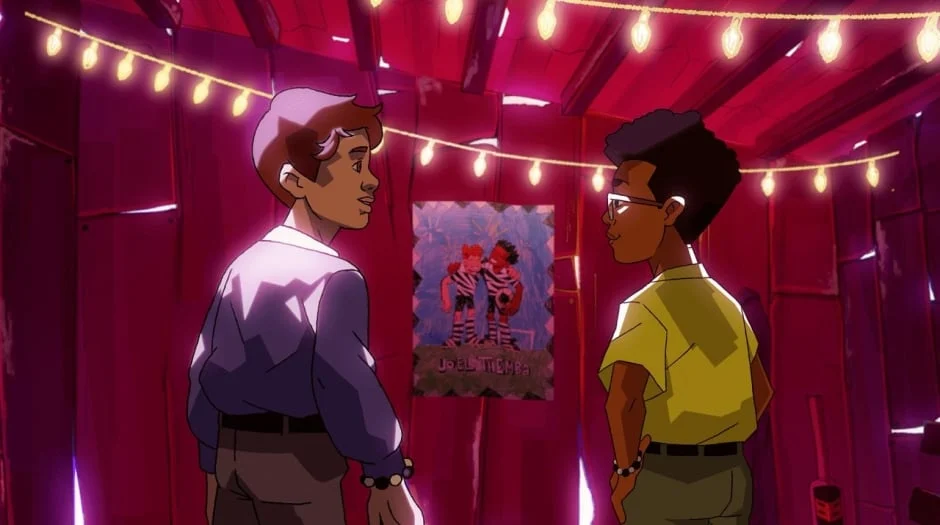
In the annals of animated storytelling, few projects manage to bridge the chasm between historical gravity and the boundless, kaleidoscopic imagination of childhood. Apart, a visually arresting short film that captures the fragile innocence of two boys navigating the oppressive shadow of South African apartheid, does just that. What began as a commission for a simple promotional poster evolved into a monumental directorial debut for acclaimed illustrator Pola Maneli. Through a blend of 2D frame-by-frame, cut-out, and 3D techniques, the film stands as a testament to the power of artistic collaboration and the enduring necessity of empathy.
The Genesis: From Poster Art to Visionary Direction
Pola Maneli, an artist whose portfolio boasts covers for The New Yorker and inclusion in the National Museum of African American History and Culture, was initially recruited for his illustrative prowess. The production team, which included heavyweights like Spike Lee, Tim Jones, Jeff Leisawitz, and Lubabalo Mtati, had a clear vision for the story, but the visual language remained a blank canvas.
"I didn’t get a lot of details about the story when I was first brought on," Maneli recalls. "But as the writers and producers started to see more of my work, they wanted me to become more involved in world-building and in creating the film’s visual language. And the more I got involved, the more adamant I became about wanting to direct."
This transition was not merely a career pivot; it was a profound alignment of personal experience and creative ambition. Maneli, having spent his entire life in South Africa, possessed an intimate, lived-in knowledge of the environments and historical weight of the setting. The team recognized that his artistic fingerprint was not just an aesthetic choice, but the very soul of the narrative.
A Chronology of Creation: 600 Days of Craft
The production of Apart was an industrial feat of animation. Spanning approximately 600 days, the film was the result of a massive collaborative effort involving 266 professionals. The scale of the production is reflected in the raw data: 18,000 individual frames of animation, 157 dedicated animation artists, and 50 members of the art department.
The Production Timeline
- Phase 1: Conceptualization & World Building: Maneli begins as a poster artist, quickly pivoting to director as he builds the visual framework for the film.
- Phase 2: Architectural Research: The team conducts field research, documenting real-world, working-class neighborhoods that have remained largely unchanged since the era of apartheid.
- Phase 3: Technical Execution: Over 600 days, the production utilizes 14 distinct software tools to blend traditional 2D, cut-out, and 3D techniques.
- Phase 4: Post-Production & Soundscape: Grammy-winning South African musician Black Coffee is brought on to score the film, ensuring the audio identity matches the visual intensity.
For Maneli, the process of seeing his illustrations move for the first time was transformative. "I’ve always tried not to pit different disciplines against one another," he explains. "But there is something to be said for seeing your images moving for the first time. It’s undeniable, like fireworks going off in your head."
Authenticity as an Art Form: The "Apartheid" Landscape
One of the most striking aspects of Apart is its uncompromising commitment to historical accuracy. Rather than relying on stylized, abstract depictions of the past, Maneli insisted on grounding the film in the physical reality of the South African landscape.
"We showed a level of reverence toward the scenery, backgrounds, settings, and characters so that everything felt as authentic and real as possible," Maneli notes. "For the scenes set in a hospital, for example, that was based on an actual hospital within walking distance of where I was staying during production. Not much about the main architecture has changed in 30-odd years."

This commitment to the "real" provides a stark, unsettling contrast to the vivid, imaginative world the protagonists, Themba and Joel, construct for themselves.
The Fort: A Sanctuary of Pop Culture and Resistance
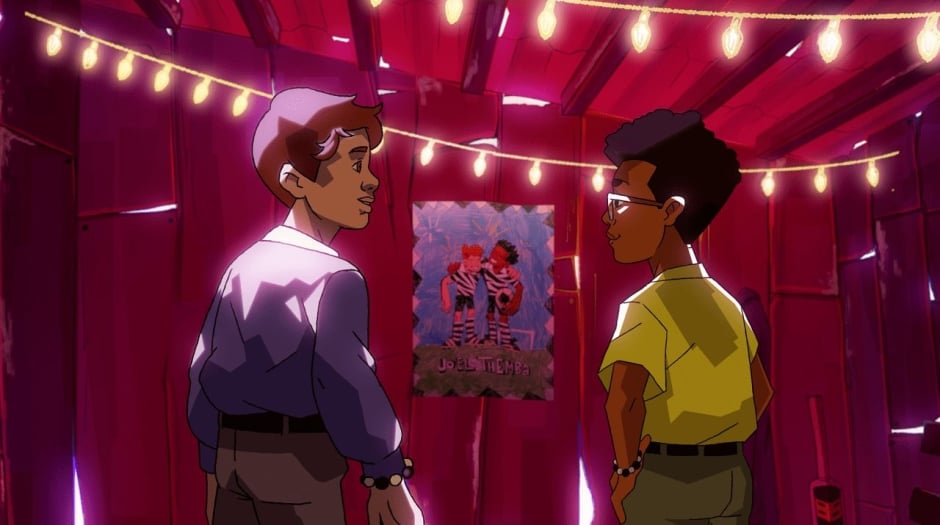
Central to the film is the boys’ secret "fort," a sanctuary where the horrors of the outside world are momentarily suspended. Maneli describes this space as the emotional anchor of the film.
"The interior of the fort is filled with pop culture Easter eggs—posters of films popular at the time, football pinups—that anyone familiar with that era would recognize," he explains. "We wanted that space to feel like an extension of their friendship, something magical, colorful, and warm. It had to be a place separate from the systemic pressures outside."
This vibrant use of color and detail serves a dual purpose. It highlights the boys’ innocence and, by extension, the tragedy of a system that seeks to destroy such unburdened connections. It also aligns with Maneli’s signature art style—bold, multidimensional, and deeply expressive.

Cultural Synthesis: The Sound and Fabric of History
The authenticity of Apart is bolstered by a team of South African collaborators who brought their own cultural expertise to the table. Fashion designer Laduma Ngxokolo was instrumental in crafting the characters’ wardrobes, utilizing the "isiXhosa" style to root the characters in their heritage. Meanwhile, music supervisor Black Coffee curated a soundscape that pulses with the rhythm of the environment, providing a sonic texture that complements the 2.5D visual style.
This interdisciplinary approach ensures that the film does not merely "talk about" South African history, but rather "inhabits" it. It is a work created by those who understand the nuance of the landscape, the rhythm of the speech, and the weight of the history.
The Implications: Seeing the World Through a Child’s Eyes
Ultimately, Apart is a reflection on the universal, yet deeply personal, experience of loss and resilience. For Maneli, the film served as a mirror.
"I was surprised by how much I learned about myself on this production," he admits. "When we talk about bonds, relationships, and friendships that are threatened or pulled apart, I think about that in my own life. There are parts of myself I’ve cleaved away because of external perceptions—parts that were idealistic, hopeful, and imaginative."

The film acts as a cautionary tale about the cost of growing up under an institutionalized system of hate, but it also serves as an invitation to reclaim one’s own sense of wonder. By channeling the perspective of a child, Apart forces the viewer to confront the stark realities of segregation while simultaneously mourning the innocence that is lost when children are forced to understand the mechanics of prejudice.
Conclusion: A Legacy of Moving Images
As Apart makes its way through the festival circuit—including screenings at the Tribeca Shorts Program—it stands as a significant milestone in animation. It proves that the medium is capable of handling the most delicate and heavy of historical subjects, provided the creators possess both the technical skill and the emotional, cultural proximity to the story being told.
Pola Maneli’s journey from a poster designer to a director of an internationally recognized short film is not just an inspiring professional trajectory; it is a testament to the necessity of artistic risk. By pouring 18,000 frames of labor and a lifetime of personal experience into this project, Maneli has created something that transcends the screen—a reminder that even in the most divided of worlds, the act of creating a shared, imaginative space is a radical and necessary form of resistance.
Apart does not just document the past; it breathes life into it, ensuring that the stories of those who lived through the shadow of apartheid continue to resonate with a new generation. Through the eyes of Themba and Joel, we are reminded that empathy is not a luxury—it is the very architecture of our humanity.
