
Kinefinity Redefines Entry-Level Cinema: A Deep Dive into the New Vista Full-Frame 6K Camera
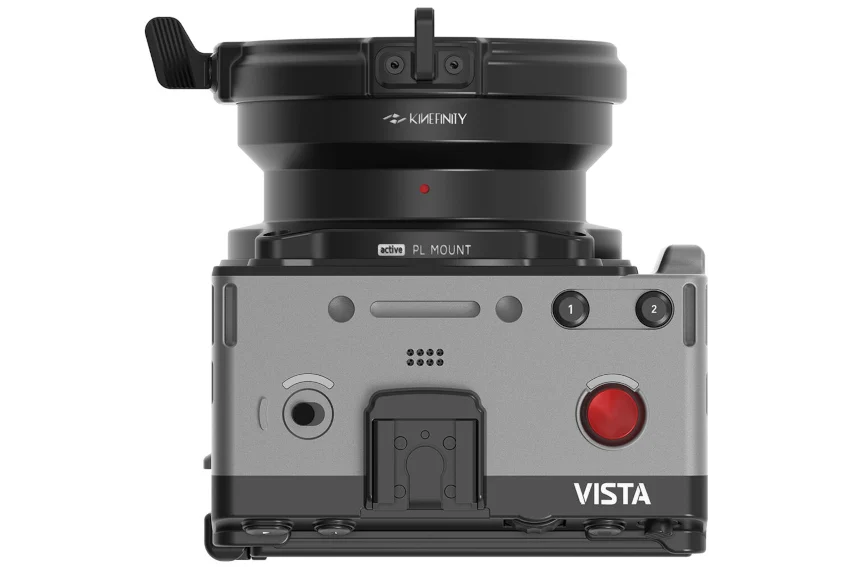
In an industry where the barrier to entry for high-end cinematic imaging has historically been defined by exorbitant price tags and cumbersome, heavy rigs, Kinefinity has consistently sought to disrupt the status quo. With the official unveiling of the Vista Full-Frame 6K Digital Cinema Camera, the company is taking its most aggressive step yet toward democratizing professional-grade filmmaking. Designed specifically for the modern independent filmmaker, content creator, and owner-operator, the Vista promises to merge the aesthetic quality of full-frame large-format sensors with a compact, affordable, and highly versatile form factor.
Main Facts: The Anatomy of the Vista
At its core, the Kinefinity Vista is built around a robust full-frame CMOS sensor capable of capturing 6K resolution at up to 50 frames per second. For those prioritizing high-speed capture, the camera offers a Super 35 crop mode, enabling UHD 4K recording at up to 100 fps. This combination ensures that users are not forced to compromise between resolution and frame rate, providing the flexibility needed for both narrative storytelling and high-intensity action sequences.
Beyond raw resolution, the sensor is designed to provide 14 stops of dynamic range, bolstered by a dual native ISO architecture—rated at ISO 800 and ISO 5120. This allows filmmakers to navigate challenging lighting conditions with confidence, knowing that shadow recovery and highlight roll-off are handled with the finesse expected from much larger cinema systems. Furthermore, the camera utilizes Kinefinity’s proprietary KineLOG3 color science, which ensures a wide color gamut and skin tone accuracy that integrates seamlessly into professional post-production color grading pipelines.
A Chronology of Innovation: Kinefinity’s Evolution
To understand the significance of the Vista, one must look at Kinefinity’s trajectory over the past decade. Originally known for niche, high-performance cameras like the TERRA and MAVO series, the company spent years refining its sensor technology and image processing algorithms.
- The Early Years: Kinefinity established itself by offering high-end raw recording capabilities in modular bodies, often challenging the dominant players in the industry by undercutting them on price while maintaining a commitment to "cinema-first" image quality.
- The MAVO Era: The transition to the MAVO and MAVO Edge series marked the company’s maturation, introducing internal ProRes recording and sophisticated color science that won over independent production houses globally.
- The Vista Milestone: The launch of the Vista represents a strategic pivot. Rather than focusing solely on the high-budget cinema market, Kinefinity has synthesized the best elements of its previous hardware into a streamlined, "all-in-one" chassis. This shift signals an attempt to capture the "prosumer" and mid-tier professional market, directly competing with the likes of the Sony FX3, Blackmagic Cinema Camera 6K, and the Sigma fp L.
Supporting Data: Technical Capabilities and Workflow
The Vista is not merely a sensor in a box; it is a holistic ecosystem designed for efficiency. Below are the core technical specifications that define the camera’s performance:
Optical Versatility
The most striking feature for working professionals is the interchangeable lens mount system. By offering native Kinemount, Sony E-mount, and ARRI PL-mount configurations, Kinefinity has ensured that the Vista can accommodate everything from vintage glass to high-end cinema primes. This modularity is a rarity at this price point and significantly expands the camera’s utility across diverse genres, from low-budget documentaries to high-end commercial productions.
Media and Connectivity
Recording workflows are streamlined through support for CFexpress Type B media and an internal 220GB SSD. By providing an internal storage solution, Kinefinity eliminates the "hidden costs" of proprietary media, allowing creators to get up and running immediately.

For connectivity, the camera is surprisingly well-appointed. Dual full-size HDMI outputs, 3.5mm microphone inputs, a headphone jack, and USB-C allow for professional-grade audio monitoring and data transfer. Power is managed via the widely available, ubiquitous Sony NP-F battery ecosystem—a choice that demonstrates a clear understanding of the "run-and-gun" filmmaker’s need for affordable, accessible power solutions.
Wireless and Remote Control
In an era where remote production is becoming the norm, the inclusion of Wi-Fi 6 and Bluetooth is essential. The Vista enables remote monitoring and control through dedicated smartphone applications, allowing operators to adjust settings, manage files, and even initiate livestreams without being tethered to the camera body.
Official Responses and Market Positioning
Kinefinity has made its intentions clear: the Vista is designed to be the "most accessible" full-frame cinema camera the company has ever produced. While official pricing details confirm the unit sits below the $3,000 USD threshold, the company emphasizes that it has not sacrificed build quality to reach this price point.
"Our goal with the Vista was to remove the barriers of entry for independent creators," a company spokesperson noted. "By combining the 6K full-frame aesthetic with an open-gate recording format, we are giving filmmakers the tools they need to deliver content that looks like it belongs on the big screen, regardless of their budget."
Industry analysts observe that this pricing strategy puts Kinefinity in a unique position. By providing features like internal SSD recording and interchangeable mounts, they are effectively offering a "mini-cinema" experience that larger manufacturers often gate-keep behind more expensive, higher-tier product lines.
Implications for the Industry
The launch of the Vista creates significant ripples in the compact cinema camera market.
1. The Death of the "Compromise" Camera
For years, independent filmmakers had to choose between "pro-style" features (like PL mounts and internal RAW recording) and "convenience" features (like compact size and low-light performance). The Vista attempts to merge these two worlds. If it performs as advertised, it could push competitors to reconsider their feature sets at the sub-$3,000 price point.

2. The Rise of the Owner-Operator
The portability of the Vista, combined with its high-end specifications, empowers the "one-person crew." Creators who do not have the budget for a 1st AC or a dedicated DIT can now rely on the camera’s internal SSDs, reliable autofocus (assisted by the OLED touchscreen), and robust color science to deliver high-quality assets with minimal post-production friction.
3. Open-Gate and Future-Proofing
The inclusion of open-gate recording is a major nod to modern delivery requirements. With social media platforms increasingly favoring vertical or varied aspect ratios, the ability to capture the full sensor and crop in post-production is a massive advantage for creators who need to deliver for TikTok, YouTube, and traditional cinema simultaneously.
Conclusion: Is the Vista for You?
The Kinefinity Vista is an intriguing proposition. It is a camera that respects the craft of cinematography while acknowledging the realities of modern, fast-paced production. By focusing on the essentials—dynamic range, flexible lens options, and reliable recording formats—Kinefinity has created a tool that feels less like a gadget and more like an instrument.
While it enters a crowded arena, the Vista’s specific blend of KineLOG3 color science, compact dimensions, and professional I/O makes it a standout. For the filmmaker who is tired of the limitations of consumer mirrorless cameras but intimidated by the costs of high-end cinema systems, the Vista may well be the middle ground they have been searching for.
As the industry moves toward higher resolutions and more demanding color workflows, the Kinefinity Vista serves as a reminder that professional performance no longer requires a professional budget—only a willingness to embrace the new standard of the independent cinema era.
For those interested in exploring the system further, Kinefinity has provided comprehensive documentation on their official website, including lens compatibility charts and workflow tutorials for the KineRAW format.
