
The Eternal King: Why Ayrton Senna’s 1990 Monaco Masterclass Remains the Pinnacle of Motorsport
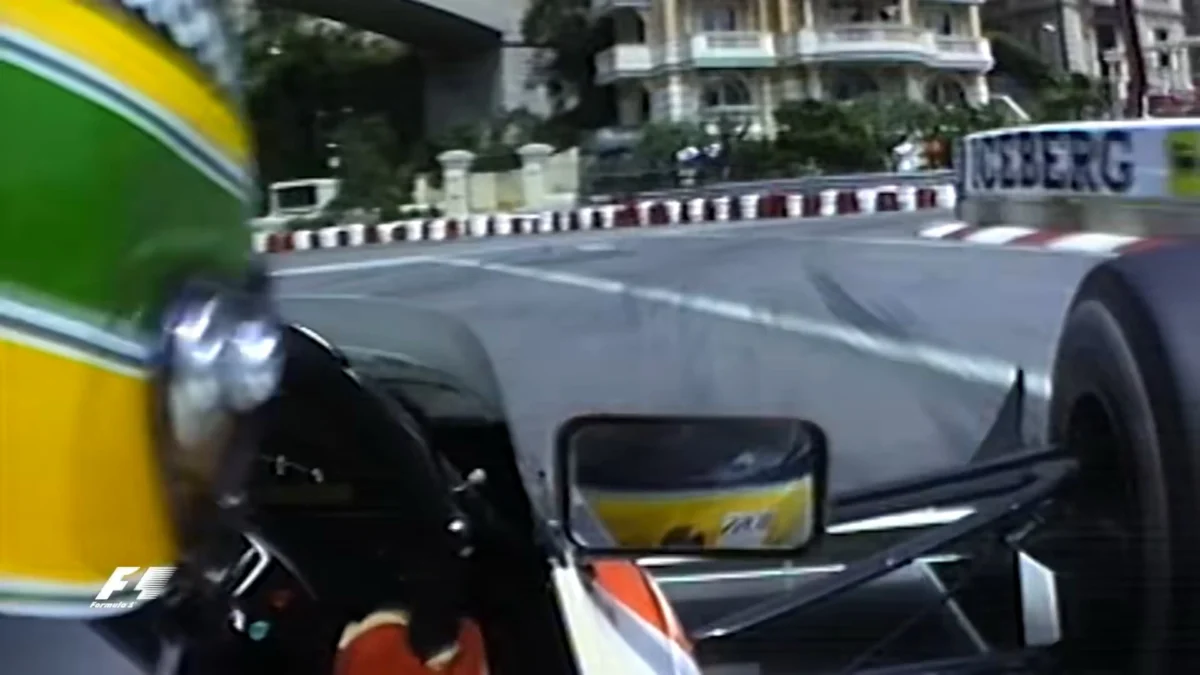
As the Formula 1 circus descends upon the Principality for the Monaco Grand Prix this weekend, the shimmering Mediterranean light reflecting off the azure harbor will inevitably cast long shadows toward the past. For over three decades, the streets of Monte Carlo have served as the ultimate proving ground for the world’s fastest drivers, yet one name remains etched into the asphalt more deeply than any other: Ayrton Senna.
To mark this year’s race, we are looking back at 100 seconds of pure, unadulterated genius—a 1990 hot lap that serves as a visceral reminder of why Senna remains the undisputed "King of Monaco." In an era of high-tech telemetry and computerized perfection, revisiting Senna’s raw, analog defiance of physics offers a necessary perspective on the evolution of the sport.
The Sovereign of the Streets: A Statistical Legacy
Ayrton Senna’s relationship with Monaco was more than professional; it was symbiotic. Between 1984 and 1993, the Brazilian competed in the Monaco Grand Prix ten times. He walked away with the winner’s trophy on six occasions—a record that remains untouched and, given the parity of the modern grid, appears increasingly insurmountable.
To contextualize this dominance, one must look at the modern era. Lewis Hamilton, one of the greatest drivers in the history of the sport, holds three Monaco victories. Max Verstappen and Fernando Alonso each have two. While the 2024 season saw Charles Leclerc finally exorcise his home-race demons to take an emotional victory, and Lando Norris converted pole position into a stunning win in 2025, the shadow of the Brazilian looms large. Even with new names rising to prominence, the sheer efficiency of Senna’s win rate—60% across a decade—remains a statistical outlier that defies modern performance metrics.
A Chronology of Brilliance: The Monaco Chapters
Senna’s tenure at the Principality was defined by moments that transcended racing. It was here that he announced his arrival as a generational talent and where he solidified his reputation as a master of car control.
1984: The Arrival of the Rainmaster
In his rookie season, driving the chronically underpowered Toleman-Hart, Senna arrived at the rain-drenched streets of Monte Carlo. In conditions that would have seen most novices retire, Senna carved through the field, catching the leaders at a staggering rate before the race was red-flagged. He finished second, a result that sent a tremor through the paddock: the world had found its new rain-master.
1988: The 1.4-Second Gap
Perhaps the most famous qualifying lap in F1 history occurred in 1988. Driving the McLaren MP4/4, Senna pushed his machinery to a level that even his teammate, the legendary Alain Prost, could not fathom. When the dust settled, Senna was 1.4 seconds faster than Prost—in the exact same car. It was a display of psychological and physical dominance that arguably broke his teammate’s spirit for the remainder of the season.
1992: The Defensive Masterclass
By 1992, Senna was the veteran defender. Facing a charging Nigel Mansell in a technologically superior Williams, Senna held the lead despite his tires being far beyond their optimal life. For the final laps, he placed his car with surgical precision, blocking every line and denying Mansell a path forward, proving that pure race craft could still overcome superior engineering.
Technical Analysis: The 1990 Onboard Experience
The footage of Senna’s 1990 pole lap is a masterclass in sensory overload. From a technical perspective, the video is a time capsule of an era when F1 was as much about mechanical sympathy as it was about speed.
The Camera Overload
Unlike the stabilized, 4K, gimbal-mounted cameras used in modern broadcasts, the onboard cameras of 1990 were rudimentary. They struggled to process the vibration, the sonic frequency of the V10 engines, and the violent vertical accelerations of the car. The result is a grainy, shaking, and distorted visual experience that feels infinitely more "real" than modern high-definition feeds. The image clips, the audio distorts, and the viewer is left with a visceral, jagged impression of the car’s fury.
The Human Element: H-Pattern Mastery
The most striking aspect of this footage is the physical labor required to pilot the McLaren MP4/5B. Modern F1 cars utilize semi-automatic, paddle-shift gearboxes that allow drivers to keep both hands on the wheel at all times. Senna’s car featured a traditional 6-speed H-pattern manual transmission.
Over the course of a race, a driver in 1990 would execute approximately 3,600 gear shifts. Every shift required the driver to lift one hand from the steering wheel, operate the clutch (when necessary), move the gear lever through the gate, and return their hand to the wheel—all while navigating the tight, unforgiving confines of the Monaco street circuit. Seeing Senna accelerate out of the Sainte-Dévote corner and navigate the Beau Rivage climb at 258 km/h (160 mph) with one hand on the shifter while inches away from the steel barriers is a testament to a level of multitasking that is largely absent in the modern sport.
Official Perspectives and Industry Implications
The longevity of Senna’s legacy is a subject of frequent discussion among team principals and current drivers. While modern F1 has achieved unprecedented safety standards and technical refinement, the consensus remains that the "Senna era" represented a peak in driver-machine integration.
In recent discussions regarding the evolution of the sport, technical directors have noted that while current cars are approximately 10 seconds per lap faster than their 1990 counterparts due to aerodynamics and tire technology, the perceived speed of the 1990 cars remains higher. This is largely due to the lack of driver aids—no traction control, no power steering, and no complex electronic differential mapping.
"When you watch the 1990 footage, you see the driver fighting the car," says one veteran race engineer. "Today, the driver is managing the car’s systems. Senna was wrestling a wild animal. That is the fundamental difference in the narrative of the sport."
The Implications for Future Generations
As Formula 1 moves toward a future defined by electrification, artificial intelligence, and remote data analysis, the importance of keeping the Senna legend alive becomes paramount. His Monaco performances serve as a benchmark for "pure" driving—an aspirational standard that reminds us why the sport exists in the first place.
The 1990 pole lap is not merely a piece of archival footage; it is a curriculum for what a driver can achieve when talent, bravery, and mechanical intuition converge. While Lewis Hamilton may one day overtake Senna’s win records or Max Verstappen may rewrite the history books on consistency, the "King of Monaco" title carries a weight that statistics alone cannot quantify.
Conclusion: The Ghost in the Machine
It has been over three decades since the world lost Ayrton Senna, yet his presence at Monaco is felt every May. When the cars roar through the tunnel and the brakes glow red at the chicane, the ghost of the yellow helmet is always there, steering through the barriers with a grace that has yet to be replicated.
For those who wish to understand the essence of Formula 1, there is no better starting point than those 100 seconds in 1990. It is a reminder that, no matter how much the technology evolves, the race is ultimately won by the human spirit—a spirit that, in the case of Ayrton Senna, proved to be absolutely indomitable. As we watch this year’s Grand Prix, we do so with the knowledge that while records are made to be broken, legends are forged in a way that time cannot touch.
