
A Bittersweet Finale: Karen O and Roger Alan Wade Reimagine “We’ll Meet Again” for Jackass: Best and Last
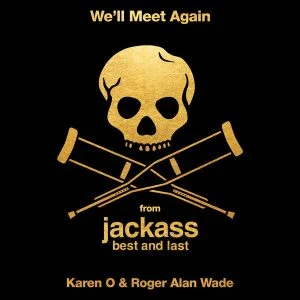
The era of high-octane chaos, self-inflicted bodily harm, and genuine camaraderie is reaching its final destination. As the Jackass franchise prepares to bow out with its latest and purportedly final installment, Jackass: Best and Last, the production team has opted for a musical swan song that contrasts sharply with the frantic energy of the stunts on screen. Rockers To Swallow has officially released a cover of the wartime classic “We’ll Meet Again,” performed by indie rock icon Karen O and longtime Jackass musical fixture Roger Alan Wade.
This haunting, stripped-back rendition serves as the emotional anchor for the film, bridging the gap between the franchise’s anarchic roots and the poignant reality of a group of friends who have spent over two decades risking their lives for our collective amusement.
Main Facts: The Musical Eulogy for a Franchise
The track, originally penned by songwriters Ross Parker and Hughie Charles and famously popularized by Dame Vera Lynn, has long been associated with themes of longing and farewell. By placing this nostalgic standard at the center of Jackass: Best and Last, director Jeff Tremaine and his team are signaling a departure from the high-decibel punk rock soundtracks that defined the early 2000s MTV era.
The collaboration between Karen O—best known as the frontwoman of the Yeah Yeah Yeahs—and Roger Alan Wade, a songwriter whose gritty, country-infused tracks have been a staple of the Jackass soundtracks since the beginning, creates a unique auditory texture. The single is currently available across all major digital streaming platforms, including Amazon Music, Spotify, and Apple Music.
Jackass: Best and Last is set to hit theaters nationwide on June 26, distributed by Paramount Pictures. The film features the complete ensemble of the new-era Jackass crew, including Johnny Knoxville, Steve-O, Chris Pontius, Jason “Wee Man” Acuña, Ehren “Danger Ehren” McGhehey, Dave England, and Preston Lacy, alongside newer faces such as Jasper, Dark Shark, Rachel Wolfson, Sean “Poopies” McInerney, and Zach Holmes.
Chronology: From MTV Stunts to the Silver Screen
To understand the weight of this musical choice, one must look back at the trajectory of the Jackass phenomenon.
The Genesis (2000–2002)
When the original Jackass series debuted on MTV in 2000, it was a cultural shock to the system. The show’s aesthetic was defined by lo-fi camcorder footage, skate-punk rebellion, and an utter disregard for professional safety. The music reflected this: tracks by CKY, Slayer, and various skate-punk bands underscored the madness.
The Cinematic Expansion (2002–2010)
With Jackass: The Movie (2002), the franchise successfully transitioned to the big screen. The music became more cinematic, yet it retained its rebellious edge. Roger Alan Wade became a permanent fixture of this era, providing the "soul" of the franchise with his melancholic, often comedic country ballads that played during the crew’s downtime, humanizing the "stuntmen" in the eyes of the audience.
The Passing of the Torch (2011–2022)
Following the tragic passing of Ryan Dunn in 2011, the tone of the franchise shifted. Jackass 3D and Jackass Forever felt less like simple prank films and more like celebrations of a brotherhood that had survived decades of physical trauma. The focus moved from "how can we hurt ourselves" to "how long can we keep this family together."
The Final Chapter (2026)
Jackass: Best and Last marks the definitive end. The release of “We’ll Meet Again” in the lead-up to the premiere serves as a thematic bookend, acknowledging that the physical toll of these stunts can no longer be sustained by the aging cast.
Supporting Data: The Legacy of a Soundtrack
Music has always been the heartbeat of Jackass. While the visuals focus on the physical, the audio landscape dictates the emotional response of the audience.
| Era | Primary Musical Influence | Key Contributor | Emotional Tone |
|---|---|---|---|
| TV Series | Skate Punk / Hardcore | Various | High Energy / Chaos |
| Early Films | Alternative Rock | Roger Alan Wade | Irony / Grit |
| Later Films | Cinematic Orchestral | Various | Nostalgia / Brotherhood |
| Final Film | Folk / Standards | Karen O & Wade | Bittersweet / Closure |
The choice of “We’ll Meet Again” is particularly significant because it strips away the irony. In past films, music was often used to heighten the absurdity of a stunt. Here, it is used to ground the film in reality. By hiring Karen O—a performer known for her raw, emotive vocal delivery—the producers are elevating the Jackass brand from "stunt comedy" to "cultural documentary."
Official Responses and Creative Direction
In promotional interviews surrounding the film’s release, director Jeff Tremaine has emphasized that Jackass: Best and Last was never intended to be just another sequel.
"We wanted to make sure that the audience felt the weight of these twenty-five years," Tremaine noted in a recent press release. "When we started, we were kids in a garage. Now, we’re men with families, broken bones, and a shared history that few people will ever understand. Karen O brought a level of gravitas to the song that perfectly encapsulates that feeling of, ‘We did it, we survived, but it’s time to move on.’"
The collaboration between the Yeah Yeah Yeahs frontwoman and the veteran Jackass songwriter was facilitated by the film’s music supervisors, who sought to find a balance between the franchise’s past and its finality. Roger Alan Wade, often described as the "unofficial poet laureate of Jackass," reportedly felt that the cover was the only fitting way to close the curtain on the project.
Implications: The End of an Era in Pop Culture
The release of Jackass: Best and Last carries significant implications for the future of reality-based stunt media.
1. The Professionalization of Chaos
The franchise has survived for over two decades, transitioning from a controversial MTV show that politicians tried to ban, to a globally recognized brand that is now being analyzed for its emotional depth. The "professionalization" of the crew—many of whom are now producers and directors in their own right—is reflected in the care taken with the film’s soundtrack.
2. The Cultural Value of "The Boys"
There is a unique phenomenon occurring with the Jackass cast: they have become a surrogate family for a generation of fans. By featuring "We’ll Meet Again," the film validates the audience’s emotional investment. Fans aren’t just watching stunts; they are watching the conclusion of a long-form story about friendship, resilience, and the inevitability of change.
3. The Future of Stunt Cinema
As Jackass exits the stage, it leaves behind a massive void in the stunt-comedy genre. While many have tried to replicate the Jackass model—often with more budget and less heart—few have managed to capture the specific blend of sincerity and stupidity that defined this crew. The use of a classic song to signal the end suggests that the genre may be evolving toward more character-driven narratives rather than purely visceral spectacles.
Conclusion: The Final Curtain
As June 26 approaches, anticipation for Jackass: Best and Last is at an all-time high. The film promises to be a complex, often difficult viewing experience for long-time fans who have grown up alongside Johnny Knoxville and his cohorts.
The choice of Karen O and Roger Alan Wade’s “We’ll Meet Again” is more than just a marketing tactic; it is a promise. It promises that while the stunts will stop, the bond shared between the performers—and by extension, the audience—remains. In an industry that is obsessed with rebooting, remaking, and milking franchises until they are unrecognizable, Jackass: Best and Last appears to be doing something increasingly rare: it is choosing to end on its own terms, with grace, humor, and a song that reminds us that even when the cameras stop rolling, the memories endure.
Whether you are a fan of the high-stakes physical comedy or you are simply interested in the cultural history of the 21st-century media landscape, Jackass: Best and Last is poised to be one of the most significant cinematic farewells of the decade. Make sure to check your local listings for the June 26 premiere, and in the meantime, listen to the haunting, beautiful track that serves as the final note of a wild, chaotic, and unforgettable journey.
