
Scoring the Stars: How Rob Simonsen Crafted the Sonic Universe of Pixar’s ‘Elio’
When Pixar Animation Studios announced Elio, a sweeping intergalactic coming-of-age odyssey, the studio set a high bar for its sonic landscape. The task of capturing the vast, lonely, and wondrous nature of space—while grounding it in the deeply human emotion of a young boy searching for his place in the world—fell to composer Rob Simonsen. Known for his work on Deadpool & Wolverine and Ghostbusters: Afterlife, Simonsen brought his lifelong fascination with synthesizers and space exploration to the project. The result is a score that bridges the gap between the intimate, delicate piano melodies of a child’s imagination and the massive, echoing architecture of a cosmic civilization.
The Genesis of a Galactic Score
For Simonsen, the invitation to score Elio was more than a professional milestone; it was a personal dream. A self-described "alien and UFO nerd," the composer found himself instantly connected to the film’s premise after his first visit to Pixar’s Emeryville campus.
"They brought me up to Pixar and I sat down and heard what the film was all about, and I was very moved, I felt very connected," Simonsen told IndieWire. "They were looking for a sound that they found in my work that had a lot of spaciousness and warm piano melodies, but with a sense of expansiveness."
The core of the score lies in its duality. It must balance the singular, isolated perspective of the titular protagonist—a boy who feels out of place on Earth—with the overwhelming, multi-layered environment of the "Communiverse," an interplanetary organization where Elio is unexpectedly crowned as Earth’s leader.
A Chronology of Collaboration
The production of Elio saw a significant shift in leadership, transitioning from original director Adrian Molina to the duo of Madeline Sharafian and Domee Shi. For many composers, such a shift could lead to a fragmented musical identity; however, Simonsen characterizes the experience as a seamless evolution.

"I think in a lot of ways they expanded the world, but they held onto the heart that I felt was there at the beginning," Simonsen noted. "It was a fairly straight shot with Elio’s theme, and it drives the beginning to the end."
The thematic backbone of the score was established early in the process. Simonsen recalls writing the "Elio" theme shortly after being hired. The motif is built around a Major Seventh interval—a musical choice that provides an "aspirational leap," mirroring the character’s literal and figurative journey toward the stars. This theme became the heartbeat of the film, eventually serving as the sonic signature that accompanies the Disney logo at the film’s opening.
The Architecture of Sound: From Piano to Synths
The composition of Elio relies on a deliberate manipulation of space and silence. Simonsen’s process involves layering simple, grounded piano melodies beneath "synth-fueled expansiveness." This allows the music to expand alongside the narrative scope of the film.
However, the composer was careful not to overuse his musical arsenal. A prime example of this restraint is the film’s early planetarium scene. While the audience sees Elio watching the Golden Record Voyager leaving Earth—a moment brimming with longing—the main theme is intentionally withheld.
"They have great instincts, those clever Pixar animators," Simonsen said of the creative team. "They’re very deep studies of human emotion, so they know exactly the frame to release a theme and have the music turn."

To represent the vast, cold reach of space, Simonsen devised a specific one-note signal sound. This motif, played on a custom-created synth, acts as a sonic tether between Earth and the extraterrestrial entities. It reverberates and echoes, transforming into a more complex, multi-note motif once a signal is received from the universe. This "call and response" mechanism serves as the narrative engine for the film’s mystery, providing a sense of cohesion across the vast distances of the galaxy.
Technical Innovation: The Robot Choir
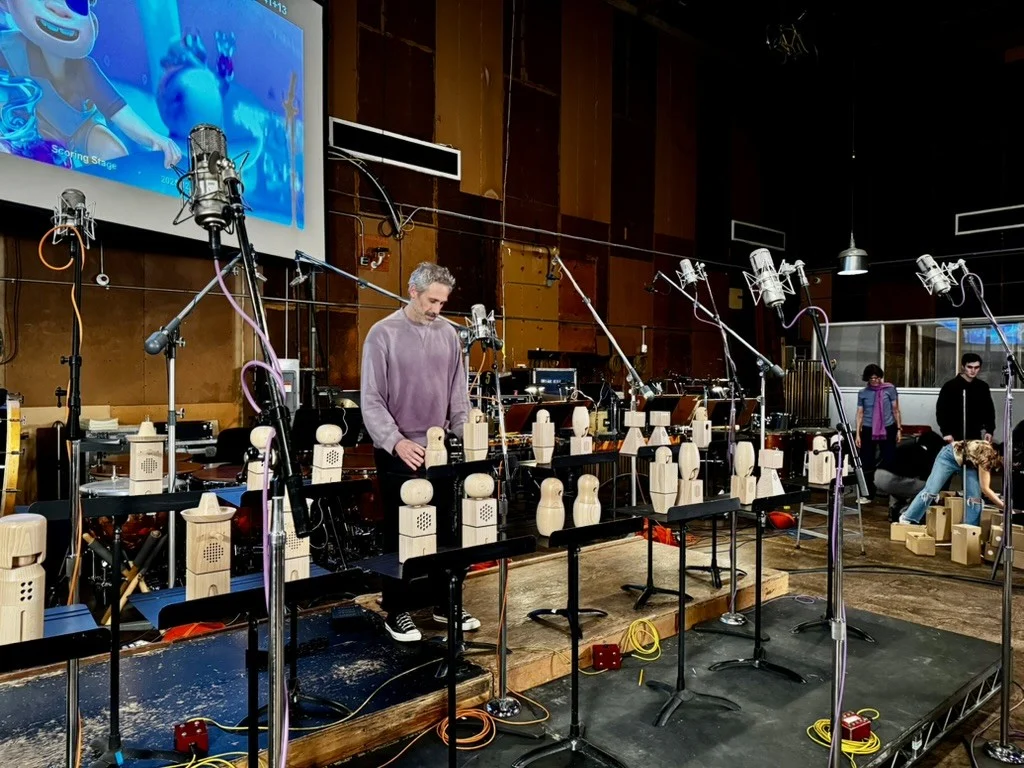
Perhaps the most ambitious aspect of the Elio score is the use of non-traditional instruments to represent the alien inhabitants of the Communiverse. Rather than relying on a standard human choir—which would have felt too earthly—Simonsen turned to "choir dolls" from the Swedish design firm Teenage Engineering.
These unique devices consist of tiny wooden figures with built-in speakers. "These little choir dolls have this very unique sound that I’ve never heard," Simonsen explained. "They sound human, but clearly not human. The shape of the wood gives a shape for their voice, and they function like a choir."
The implementation of these dolls required significant technical ingenuity. To achieve the desired level of musical complexity, Simonsen’s assistant, Tiger Lily, utilized Python coding to "hack" the dolls, creating custom functionality that allowed them to perform beyond their factory limitations. The production team eventually procured enough units to assemble a 30-voice robotic choir.
"We put these tiny wooden dolls on this cavernous Sony scoring stage, singing their hearts out," Simonsen remarked. This decision allowed the film to capture an "otherworldly texture" that feels both organic and deeply artificial, perfectly suiting the aesthetic of the Communiverse.

Implications for Future Scoring
The Elio score represents a broader trend in contemporary film music: the marriage of traditional orchestral warmth with highly experimental, tactile synthesis. By using physical, hacked hardware like the Teenage Engineering dolls in a professional scoring environment, Simonsen has demonstrated how composers can manipulate the physical properties of sound to evoke feelings of "otherness."
Moreover, the success of the transition between directors, with the musical themes remaining a constant, underscores the importance of the score as a narrative anchor. As the film industry continues to grapple with the shifting nature of storytelling in animation, the role of the composer has become increasingly vital in maintaining a sense of emotional continuity.
Official Perspective and Critical Reception
Pixar’s decision to pair a composer known for his synth-heavy work with an intergalactic coming-of-age story has been met with significant anticipation. The studio has long prioritized "the heart" of its stories, and by allowing Simonsen the freedom to experiment with the sound of the Communiverse, they have ensured that the music does not merely accompany the visuals but actively shapes the viewer’s understanding of the film’s alien environments.
As Elio prepares for its June 20, 2025 release, the score stands as a testament to the power of collaboration and technical curiosity. It is a work that manages to be simultaneously grand—with its orchestral bombast and synth-fueled scope—and profoundly small, focusing on the specific, singular desire of a young boy to be understood.
"Everything gets unfurled," Simonsen said of the film’s climax, where the signal sound is fully realized through a blend of orchestral support and experimental textures. In this final act, the music captures the culmination of Elio’s journey: a boy who started as a lonely observer of the stars finally becoming a participant in the infinite conversation of the universe.

By blending the mechanical, the synthetic, and the emotional, Rob Simonsen has crafted a soundscape that is uniquely suited to the Pixar brand of storytelling. Whether through the simple, poignant touch of a piano key or the haunting, wooden resonance of a hacked robot choir, the score of Elio promises to be a defining element of the cinematic experience, proving that even in the furthest reaches of space, the most important journey is the one that leads us back to ourselves.
