
A Cinematic Time Capsule: Unveiling the Intimacy of Making Marie Antoinette
By Tamara Khodova | October 7, 2026
In the annals of film history, few productions have been documented with the raw, unfiltered intimacy afforded to Sofia Coppola’s 2006 historical opus, Marie Antoinette. Twenty years later, that footage has emerged from the archives to become Making Marie Antoinette, a poignant documentary directed by the late Eleanor Coppola. Following its lauded premieres at the 2026 Telluride and New York Film Festivals, this 86-minute feature serves not merely as a "making-of" documentary, but as a profound meditation on creative lineage, the burdens of artistic ambition, and the indelible bond between a mother and a daughter.
The Genesis of an Unprecedented Archive
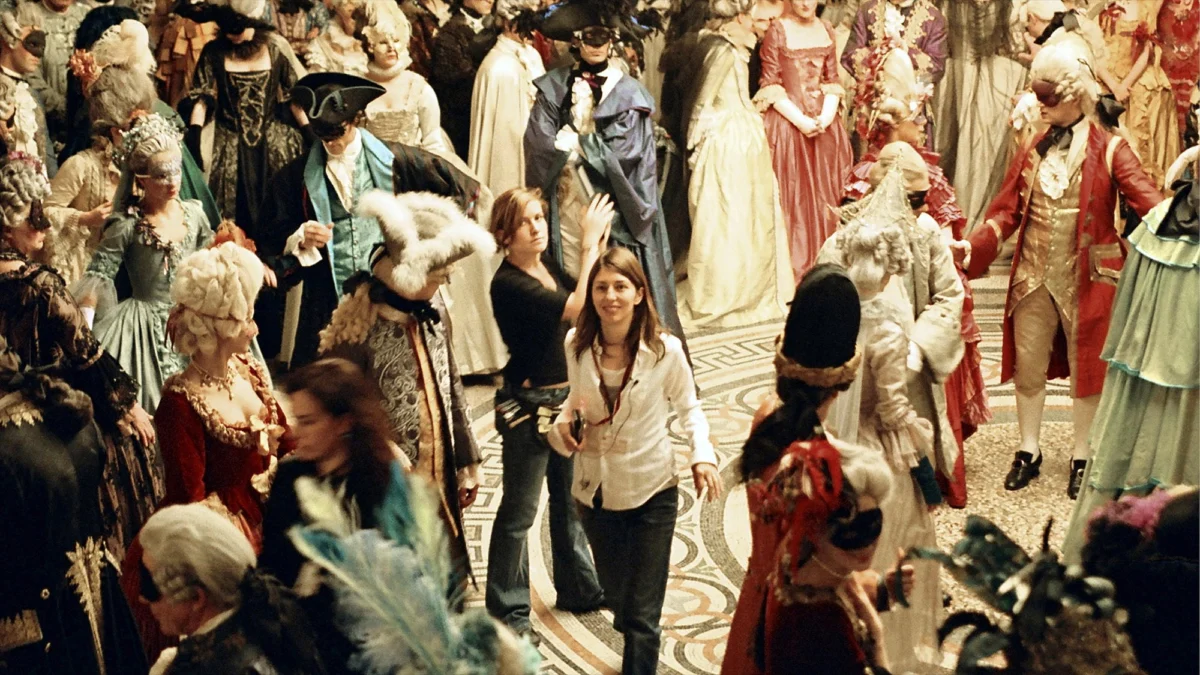
In 2005, the Palace of Versailles opened its doors to a film crew for the first time in history. Sofia Coppola, fresh off the massive success of Lost in Translation, was embarking on a $40 million reimagining of the ill-fated French Queen. Her mother, the documentarian and artist Eleanor Coppola, was there to witness it all. Armed with a camera and a keen observer’s eye, Eleanor captured over 80 hours of behind-the-scenes footage.
For years, this material sat in the Coppola family vaults. It was Eleanor’s long-held dream to shape the footage into a narrative of its own. Following Eleanor’s passing in 2024, Sofia Coppola undertook the delicate task of honoring her mother’s vision, editing the sprawling hours of tape into the finished documentary that audiences are seeing today. Narrated by Diane Lane, who provides voiceover readings from Eleanor’s personal diaries, the film is a hauntingly beautiful bridge between two generations of filmmakers.
Chronology of a Creative Leap
To understand the weight of Making Marie Antoinette, one must look at the climate of 2005. Sofia Coppola had carved out a niche as a master of the "intimate, low-budget drama." After the critical and commercial triumph of The Virgin Suicides and the Academy Award-winning Lost in Translation—which earned her a Best Director nomination, making her only the third woman in history to receive such a nod—her leap into the world of 18th-century French historical epics was, at the time, viewed as an inexplicable pivot.
- Pre-Production (Early 2005): The film documents the massive logistical hurdle of moving a modern production into a historical site that had never permitted such an endeavor.
- The Shoot (Mid-2005): Eleanor captures the daily pressures of managing hundreds of extras, the exhaustive hair and makeup schedules, and the sheer scale of the operation.
- Post-Production/Legacy (2006–2026): The film reflects on the initial confusion of critics—who struggled with Coppola’s inclusion of Converse sneakers, post-punk soundtracks, and anachronistic sensibilities—versus its eventual status as a cult classic that redefined the period drama genre.
Supporting Data: The Architecture of a Masterpiece
The documentary provides an unparalleled look at the craftsmanship required to bring Marie Antoinette to life. It is a testament to the "analog" nature of filmmaking before the total dominance of CGI.
The Artisanal Effort
The sheer scale of the production is laid bare in the documentary through the lens of dedicated professionals:
- Costume Design: Milena Canonero led a massive team that produced hundreds of gowns, period-accurate hats, and custom suits.
- Footwear: Hand-crafted shoes were sourced from luxury artisans Manolo Blahnik and L.C.P. di Pompei.
- Hair and Wig-work: Rocchetti & Rocchetti provided hundreds of intricate hair pieces, a process that demanded hours of daily preparation for the cast.
- The Physical Set: Unlike modern productions that rely on green screens, almost every element seen in the film—from the floral arrangements to the authentic French cuisine served during banquets—was real.
A Departure from Tradition
One of the most striking revelations in Making Marie Antoinette is Coppola’s refusal to use storyboards. While most directors of large-scale period pieces rely on rigid, pre-planned visuals, the documentary shows Sofia and cinematographer Lance Acord crafting the staging of scenes on the spot. It was, in the words of the production crew, a "high-wire act" performed in real-time.
The Coppola Family Enterprise
The documentary functions as a family portrait as much as a film analysis. The production of Marie Antoinette was a collaborative effort of the Coppola dynasty. Francis Ford Coppola, serving as executive producer, is a constant presence on set, offering support and counsel. Roman Coppola directed the second unit, while Gia Coppola appears as an extra. Cousin Jason Schwartzman’s performance as Louis XVI acts as the emotional tether for Sofia’s vision of the character.

However, the heartbeat of the documentary remains the relationship between Eleanor and Sofia. Through Eleanor’s diary entries, the audience catches glimpses of the mother’s internal landscape. There is a palpable sense of pride, but also a poignant undercurrent of envy—a reflection on the creative path not taken, and a wonder at what Eleanor’s own career might have yielded had she been able to pursue her art with the same total, unyielding focus that she observed in her daughter.
Implications: A New Lens on the Director
Making Marie Antoinette challenges the myth of the "authoritative" director. Sofia Coppola is captured not as a booming voice of command, but as a quiet, thoughtful presence. She is a woman operating in a male-dominated industry, yet she exerts control through a clear, singular vision rather than through force.
The documentary highlights how Coppola’s own life as an outsider in various environments informed her portrayal of Marie Antoinette. She viewed the Queen not as a historical monolith, but as a "modern teenager" navigating a stifling, unfamiliar environment. This realization—that Coppola was projecting her own feelings of isolation into the gilded cages of Versailles—gives the original 2006 film a new layer of emotional depth.
Official Responses and Industry Reception
The release of Making Marie Antoinette has been met with critical acclaim. Critics have noted that while the documentary is an act of love, it does not shy away from the exhaustion and the "chaotic" reality of the filmmaking process.
Industry Perspectives:
- The Telluride/New York Film Festival Response: Audiences have praised the film for its "intimacy and vulnerability." The inclusion of the personal diaries has been highlighted as a masterstroke, grounding the technical aspects of filmmaking in a very human narrative.
- The Legacy of the Genre: The documentary has prompted a reappraisal of the original 2006 Marie Antoinette. Critics now recognize that Coppola’s "disdain for tradition" was actually a blueprint for the modern, stylized period drama.
Conclusion: The Final Cut
As we look back at the footage from 2005, it is clear that Making Marie Antoinette is a rare artifact. It captures a moment in time where cinema was transitioning, where a family of artists was working at the peak of their collaborative powers, and where a daughter was cementing her place in history under the watchful, loving eye of her mother.
For those interested in the process of filmmaking, this documentary is essential viewing. It strips away the glamour of the red carpet to reveal the sweat, the sneakers, the long hours, and the quiet, persistent genius required to create art. Making Marie Antoinette will be released in theaters by Mubi this fall, offering the public a seat at the table of one of the most storied film sets in recent history.
Tamara’s Rating: 3.5 out of 5
Follow Tamara on Telegram at @shortfilm_aboutlove for more deep dives into the world of documentary and independent cinema.
