
The Inevitable Arrival: Cassandra Khaw Explores Mortality in Find Me Where It Ends
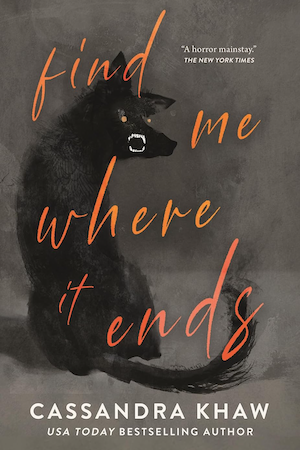
In the literary world, few authors balance the visceral horror of the physical world with the ethereal weight of the supernatural as deftly as Cassandra Khaw. With her latest release, Find Me Where It Ends—published by Nightfire on October 6th—Khaw returns to her signature themes of generational trauma, the fragility of the human condition, and the inescapable nature of destiny. The novel arrives alongside an immersive audiobook production narrated by Isaiah Nichols, offering a dual-format experience for readers eager to delve into a story that feels both intimate and mythic.
Find Me Where It Ends centers on Antigone, a woman whose lineage is marked by a peculiar, hereditary curse: the women of her family do not receive omens of their passing through stars or tea leaves, but through the manifestation of a black dog. When her own psychopomp—a sleek, iridescent hound—appears at her doorstep, it marks not just the beginning of the end, but a catalyst for a profound reckoning with a life spent hollowed out for others.
The Architecture of the Inevitable: Main Facts and Premise
The narrative hook of Find Me Where It Ends is deceptively simple: a woman discovers her Death has arrived, but it has not come to take her immediately. Instead, the dog serves as a silent, constant companion. This setup allows Khaw to pivot from a traditional ghost story into a character-driven study of exhaustion and the burden of living.
For Antigone, the black dog is a physical manifestation of a "bone-deep exhaustion." The novel posits that while mortality is a biological certainty, the act of living is a deliberate, often agonizing, choice. By inviting her Death inside, Antigone moves beyond the initial shock of the supernatural into a state of quiet, melancholic domesticity. The dog, which appears as a "negative space" in the world, becomes a mirror for the parts of herself she has sacrificed to meet the expectations of society, family, and past relationships.
A Chronology of a Curated End
To understand Antigone’s reaction, one must look at the history of her bloodline. As detailed in the opening chapters of the novel, the "gift"—or perhaps the curse—of seeing one’s Death began with Antigone’s great-grandmother. Before that, the women in her family were known for their practical, earthly wisdom: healers, veterinarians, and doctors. The transition from active healers to passive observers of their own demise serves as a sharp metaphor for the loss of agency that can permeate family legacies.
The novel provides a chilling chronology of how the previous generation navigated these visitations:
- The Grandmother: Faced with a cancer diagnosis, she was stalked by a terrier whose presence was marked by nightly baying. Despite the morbidity of the situation, the grandmother’s end was remarkably "tender," characterized by a single, stuttering breath.
- The Mother: The arrival of a massive, rust-eyed cane corso prompted a more violent reaction. Rather than accepting the presence of the psychopomp, Antigone’s mother chose to accelerate the timeline, resulting in a tragic, messy suicide that left a young Antigone feeling profoundly betrayed.
- The Present: At age forty, Antigone finds herself at a crossroads. Unlike her mother, she does not reach for a weapon; she makes a cup of tea and invites the dog onto the couch. This act of resignation, or perhaps acceptance, shifts the tone of the narrative from one of struggle to one of introspective transition.
Supporting Data: The Cost of a "Good Death"
Khaw’s prose emphasizes that there is a steep price for a "good death." Through Antigone’s phone conversations with her sister, Lisa, the reader is introduced to a worldview that treats the supernatural with a blasé, almost cynical detachment. Lisa, who lives in the desert and has taken up smoking—not because she expects to live forever, but because she knows her specific "end" will not be respiratory—represents the alternative response to the family curse.
The dialogue between the sisters highlights the central tension of the book: is it better to fight the inevitable, or to live life with the full knowledge of its conclusion? The "data" provided by their family history suggests that resistance—as seen with their mother—only leads to further chaos. Acceptance, however, as seen with their grandmother, allows for a measure of dignity.
Khaw uses the domestic imagery of "World’s Best Aunt" mugs, cold tea, and stray cats to ground the supernatural in the mundane. The dog itself, while a harbinger of death, behaves like a shelter puppy. This juxtaposition is deliberate; it forces the reader to reconcile the terrifying concept of one’s own mortality with the mundane comfort of a pet.

Perspectives and Official Responses: The Craft of Cassandra Khaw
Critics have long noted that Cassandra Khaw possesses a unique ability to make the uncanny feel tangible. In Find Me Where It Ends, she leans heavily into the idea that the "small things matter." By focusing on the texture of the dog’s fur, the temperature of the air, and the specific, idiosyncratic habits of her characters, Khaw creates an atmosphere that feels heavy with impending finality.
The audiobook edition, narrated by Isaiah Nichols, is reportedly a standout companion to the print version. Nichols captures the "rattly" anxiety of Antigone’s internal monologue, providing a cadence that mimics the stuttering, uncertain nature of life when one is waiting for a clock to stop. Early reviews suggest that the auditory experience enhances the "negative space" aesthetic Khaw describes in the text, where the silence between the words is as important as the dialogue itself.
Implications: The Choice to Live
The broader implication of Find Me Where It Ends is a philosophical inquiry into the nature of existence. If one knows their death is coming—and if that death is a physical presence—how does that change the way one spends their final days?
Antigone’s journey is not just about dying; it is about the "hollowing out" that occurs during a lifetime of service to others. By inviting the dog inside, she is essentially reclaiming her space. She is no longer living for her family’s legacy, her ex-boyfriend’s memories, or the expectations of her sister. She is living for the remaining duration of her own time.
The novel also touches upon the looming threat of environmental and societal collapse—climate change, the loss of "normal" life, and the anxiety of being the "last generation." These anxieties are woven into the conversations between the sisters, framing the personal story of Antigone against the backdrop of a world that also feels like it is waiting for its own end.
Conclusion
Find Me Where It Ends is a haunting, beautiful, and deeply human exploration of the inevitability of the finish line. Cassandra Khaw has crafted a story that refuses to provide easy answers, opting instead to sit in the discomfort of the "in-between."
For readers who appreciate dark, introspective fiction that lingers in the mind long after the final page is turned, this book is an essential addition to the autumn reading list. Whether you choose to read the physical text or experience the performance by Isaiah Nichols, Find Me Where It Ends asks a question we all must eventually face: when the dog finally comes to your door, will you be afraid, or will you offer it a place to rest?
Publication Details:
- Find Me Where It Ends
- Author: Cassandra Khaw
- Publisher: Nightfire
- Format: Hardcover, E-book, Audiobook
- Release Date: October 6, 2026
