
Transforming the Steam Frame: How the Arcturus Vision Camera Redefines Valve’s New VR Headset
Main Facts
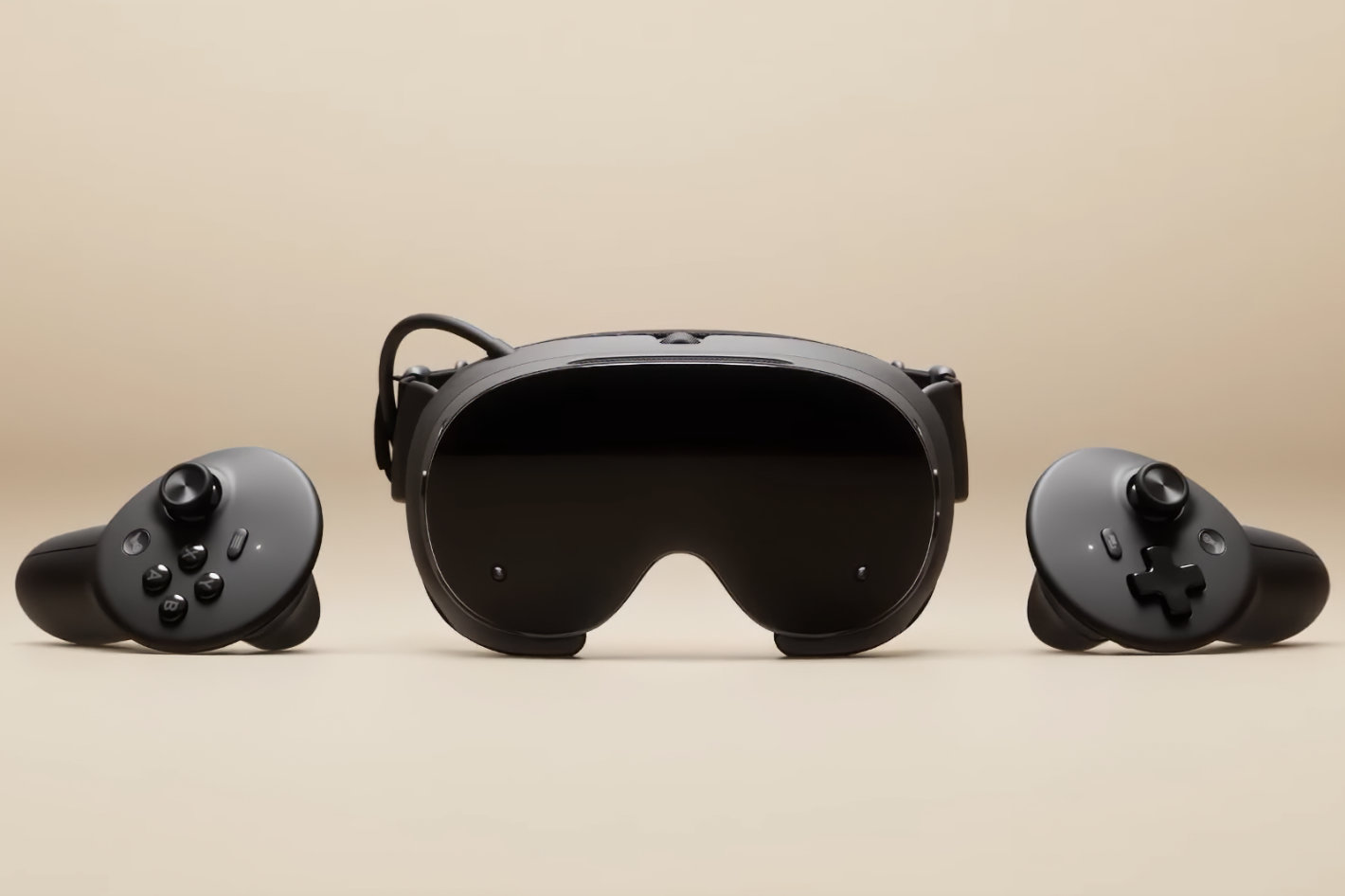
Valve’s highly anticipated Steam Frame VR headset has arrived to a mixed reception from the enthusiast community. Plagued by soaring memory costs that priced out the initially promised budget-friendly tier, the base model launches at a hefty $1,049. Worse yet, in an era where full-color mixed reality passthrough has become a baseline expectation for modern consumer headsets, Valve’s base unit ships with a purely monochromatic passthrough system—lagging behind competitors like the Meta Quest 3 and Pico 4 Ultra.
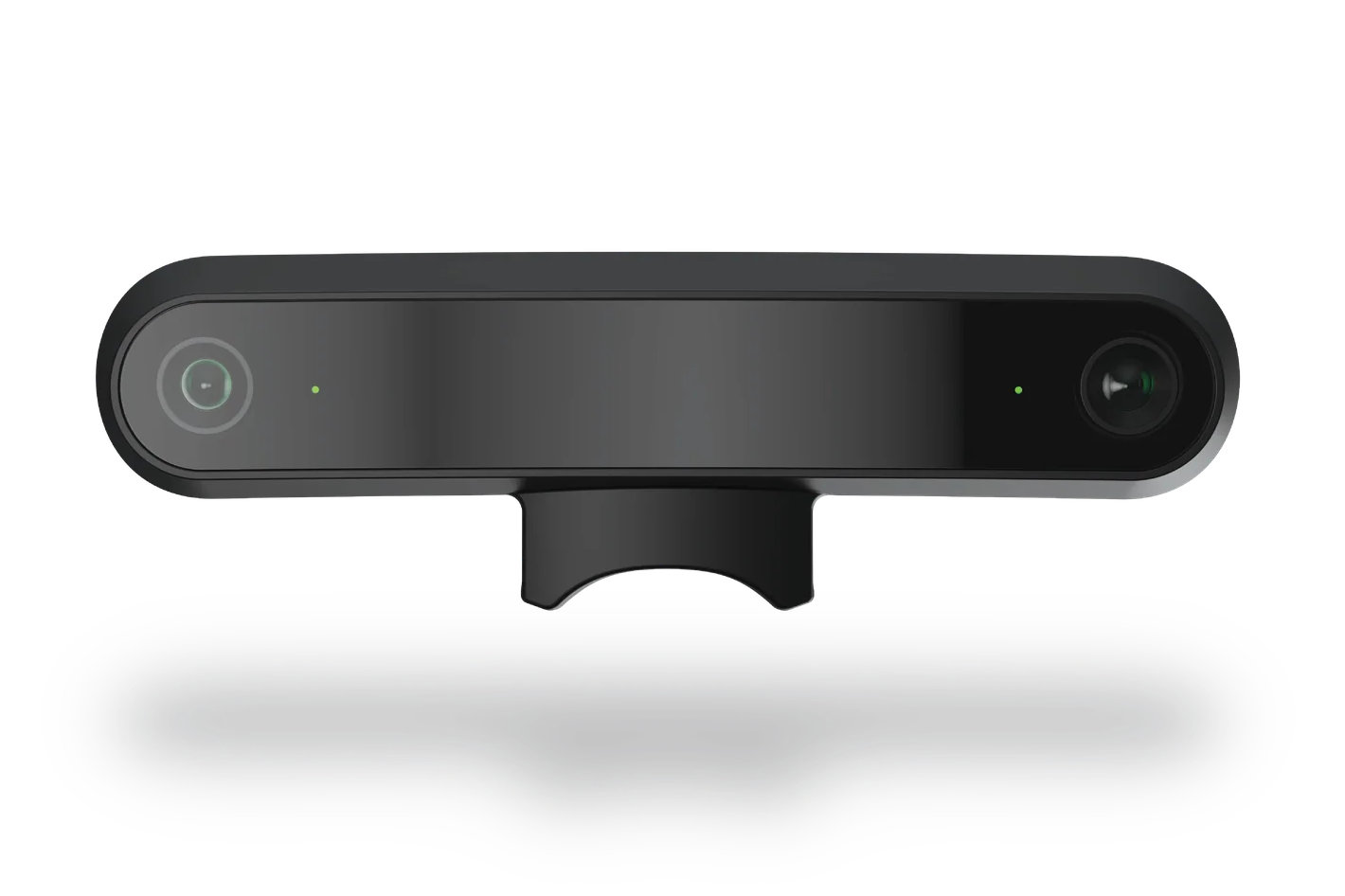
However, a hardware add-on is completely altering the value proposition of Valve’s latest hardware. Enter the Arcturus Vision Camera, a featherlight $150 plug-in accessory designed exclusively for the Steam Frame. Weighing a mere 10 grams and requiring less than 30 seconds to install, this compact device snaps directly onto the headset to instantly upgrade its capabilities.
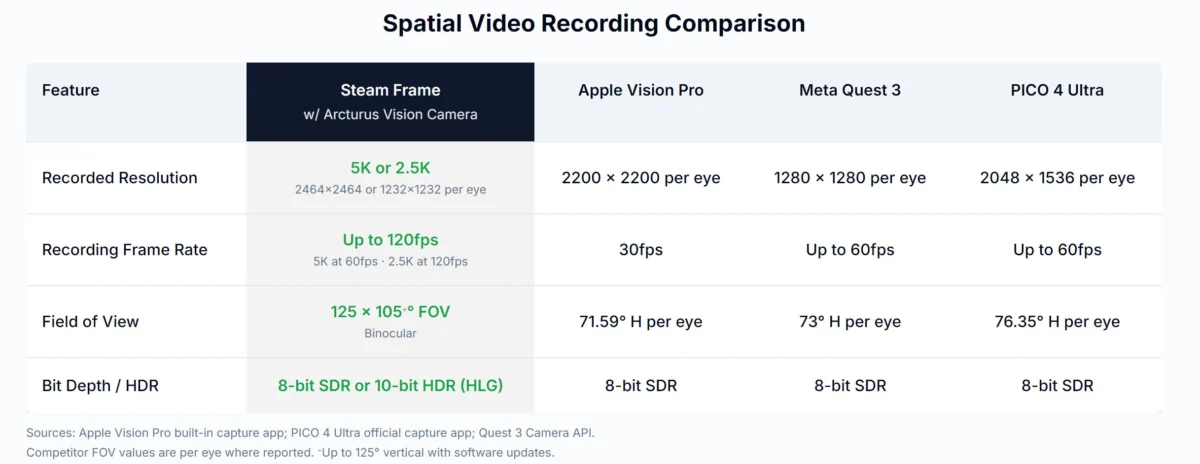
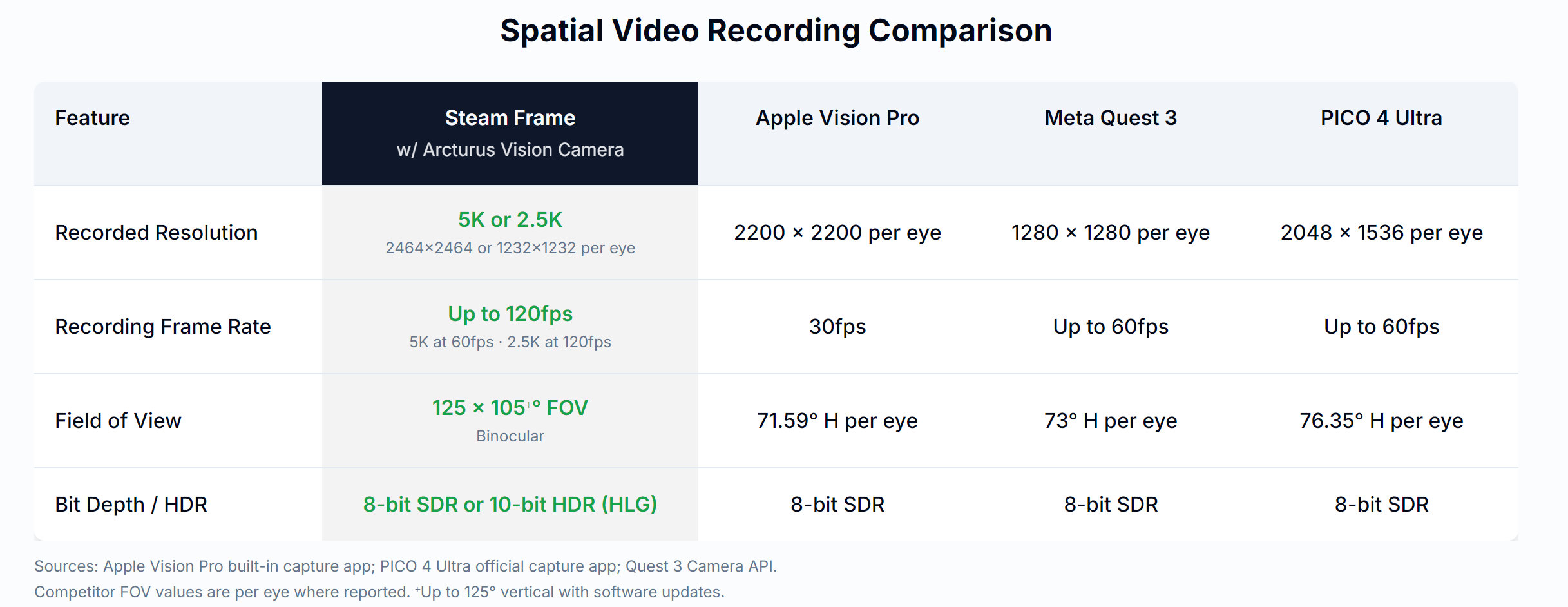
Crucially, the Arcturus Vision Camera injects color passthrough back into the Steam Frame natively, while unlocking bleeding-edge media creation tools. According to manufacturer specifications, the accessory transforms the Steam Frame into a powerhouse capable of outperforming the spatial video recording capabilities of the Meta Quest 3, Pico 4 Ultra, and even the high-end Apple Vision Pro.
By bridging the gap between standard virtual reality and advanced mixed reality tools—most notably the capture and exploration of 3D Gaussian Splats—the Arcturus Vision Camera fundamentally reshapes how industry analysts and consumers view Valve’s newest platform.
Chronology: From the Valve Index to the Steam Frame Ecosystem
To fully understand the significance of the Arcturus Vision Camera, one must look at the historical relationship between third-party hardware innovators and Valve’s ecosystem.
- 2019: Arcturus Vision establishes its footprint in the virtual reality community by releasing the market’s first color 3D passthrough system tailored specifically for the Valve Index. Distributed to thousands of enthusiasts, that pioneering accessory proved that third-party developers could successfully expand the native utility of Valve hardware.
- The Intervening Years: Throughout the early 2020s, the Valve Index maintained a status as a gold standard for PC VR enthusiasts, demonstrating remarkable hardware longevity in a rapidly shifting market.
- The Steam Frame Era (Present): Valve introduces the Steam Frame, aiming to merge standalone flexibility with the vast library of the Steam ecosystem. However, economic realities force compromises, resulting in a high entry price and a monochromatic default passthrough.
- Present Day: Recognizing the hardware’s hidden potential, Arcturus Vision strikes again. Releasing a dedicated ecosystem of companion software alongside the new camera hardware, the company delivers an immediate day-one upgrade path for early adopters of the Steam Frame.
Supporting Data: Technical Specifications and Performance
The technical metrics behind the Arcturus Vision Camera justify its bold performance claims. Far from being a simple cosmetic overlay, the accessory packs serious imaging hardware into its tiny 10-gram footprint.
Imaging and Optic Metrics
- Dual Sensors: Equipped with two high-resolution 32MP RGB Sony cameras.
- Interpupillary Distance (IPD): The lenses are spaced at precisely 64mm—matching the average human interpupillary distance—to ensure natural depth perception and eliminate spatial distortion.
- Video Capture Formats: Records H.265 stereo video at resolutions of 5K or 2.5K.
- Frame Rates: Supports smooth capture up to 60FPS at full 5K resolution, or up to 120FPS at 2.5K.
- High Dynamic Range (HDR): Utilizing Arcturus Vision’s free recording app, the system supports 10-bit HLG HDR video, mirroring the quality standards seen in modern flagship smartphones (iPhone and Android) for vibrant, lifelike playback. Additional support for 8-bit and 10-bit sRGB is also included.
Software Suite and Interoperability
The hardware is supported by a robust software ecosystem built specifically for the Steam Frame:
- Arcturus Vision Camera App: Handles the core recording and playback of 5K HDR spatial video.
- Arcturus Vision Gaussian XR: An exploratory environment dedicated to rendering and interacting with 3D Gaussian Splats in real time.
- Sync Utility: Facilitates frictionless file transfers to Windows or Mac systems, including automated format conversion utilities to ensure compatibility with standard third-party media players on macOS.
Official Responses and Developer Insights
The release of the Arcturus Vision Camera has sparked considerable discussion across the extended reality (XR) development community. While Valve has yet to officially mandate or bundle the peripheral, native passthrough support for Arcturus Vision hardware is pre-baked directly into the Steam Frame’s firmware, allowing the device to work seamlessly the moment it is plugged in.
Representatives from Arcturus Vision emphasize that their primary goal was to democratize high-end spatial capture without forcing users to buy an entirely separate, closed ecosystem headset like the Apple Vision Pro.
"By anchoring our technology to the open, versatile architecture of the Steam Frame, we are giving creators and enthusiasts a tool that doesn’t just record moments, but preserves spaces," notes the development team.
Early testers have echoed these sentiments, highlighting that the 64mm lens separation and 10-bit HLG HDR pipeline remove the "flat" or "distorted" feeling common in early generations of consumer-grade spatial video. By prioritizing biological accuracy in lens placement, Arcturus Vision has managed to curate a visual experience that feels remarkably organic to the human eye.
Implications for the VR and Mixed Reality Market
The synergy between the Steam Frame and the Arcturus Vision Camera carries profound implications for the future of virtual and mixed reality hardware:
1. Redefining Value and Modular Upgrades
The $1,049 price tag of the base Steam Frame initially alienated budget-conscious consumers who expected a more affordable entry point. By adding a $150 modular upgrade, users effectively bypass the limitations of the base model’s monochromatic limitation. This modular philosophy echoes the PC building culture that Valve’s user base historically champions—allowing consumers to pay only for the exact features they need rather than forcing an expensive, all-in-one SKU.
2. The Rise of 3D Gaussian Splatting in Consumer Media
While traditional stereoscopic video captures flat planes with depth cues, 3D Gaussian Splatting represents the next frontier in volumetric capture. By supporting Gaussian XR exploration directly on the headset, the Arcturus Vision ecosystem positions the Steam Frame not merely as a consumption device for gaming and media, but as a proactive capture node for the burgeoning metaverse and digital preservation industries.
3. Challenging Apple and Meta’s Hegemony
Until now, high-end spatial video recording has been heavily siloed within Apple’s ecosystem via the Vision Pro, while mainstream color passthrough was dominated by Meta’s Quest lineup. By uniting an open PC gaming library (via Steam) with professional-grade 5K HDR spatial capture and Gaussian splatting, the Steam Frame equipped with the Arcturus Vision Camera carves out a unique, highly specialized niche. It offers developers, content creators, and die-hard enthusiasts a powerful alternative that punches well above its weight class—proving that sometimes, the most innovative hardware leaps happen at the intersection of open platforms and third-party ingenuity.
