Beyond the Silver Screen: A Real-Life Exorcist Dims the Lights on Hollywood’s Possession Tropes
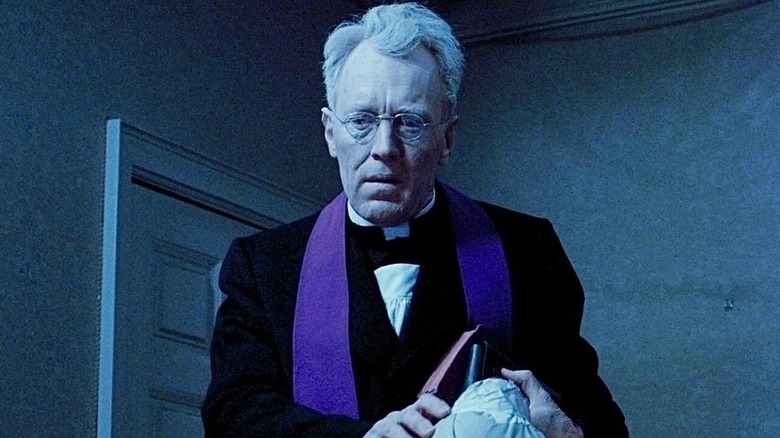
NEW YORK — For over half a century, public perception of the supernatural has been inextricably bound to the chilling sights and sounds of the cinema. When William Friedkin’s cinematic masterpiece The Exorcist premiered in 1973, it permanently ingrained a specific visual vocabulary into the global consciousness: a snarling demon puppeteering a contorted body, green bile, heads spinning 360 degrees, and terrified priests screaming, "The power of Christ compels you!" as furniture shatters around them.
Subsequent decades of horror blockbusters—from The Exorcism of Emily Rose to Russell Crowe’s recent outings in The Pope’s Exorcist—have doubled down on these high-octane tropes, depicting exorcisms as supernatural heavyweight bouts fought with brute spiritual force, Latin prayers, and holy water.
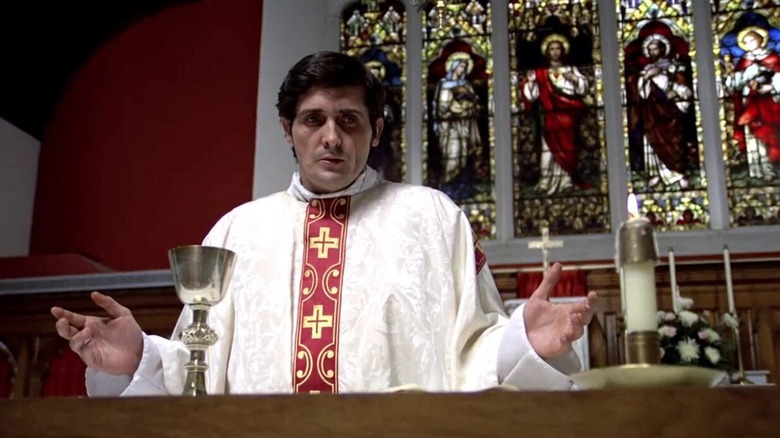
However, according to those who practice the rite within the strict confines of the Catholic Church, Hollywood’s terrifying tales bear almost no resemblance to reality. To bridge the vast chasm between cinematic fiction and theological fact, Film & Faith consulted with Father Carlos Martins, a prominent Canadian Catholic priest, real-life exorcist, best-selling author of The Exorcist Files: True Stories About the Reality of Evil and How to Defeat It, and co-host of the hit podcast The Exorcist Files.
By examining the actual mechanics of the rite—ranging from institutional protocols and the prolonged chronology of spiritual liberation to the profound theological misunderstandings perpetuated by pop culture—experts reveal that the true nature of an exorcism is far less about flying furniture and far more about quiet, methodical reconciliation.
Main Facts: Stripping Away the Hollywood Glitz
The foundational premise of an exorcism rests on the belief in a spiritual realm where unseen forces continually vie for human souls. Sanctioned by the Catholic Church, which employs designated and specially trained priests to perform the rite, genuine exorcisms are treated with the utmost solemnity, medical caution, and administrative oversight.
Yet, the imagery popularized by Hollywood creates fundamental misconceptions about who holds the power, how long the process takes, and what an actual demonic presence looks like.
According to Father Martins, the most egregious error committed by the entertainment industry is framing the ritual as an epic battle between equal opposites.
"An exorcism is not a contest between a priest and a demon. It is an exercise of the authority of Jesus Christ over a fallen angel. The priest possesses no supernatural power of his own," Martins explains. "And the Devil is not Christ’s equal. He is a creature, infinitely inferior to his Creator. The fight is absolutely unequal."
Furthermore, while films rely on jaw-dropping physical manifestations to keep audiences gripped—such as the iconic head-twist executed by Linda Blair’s character, Regan MacNeil—Father Martins notes that such spectacular displays are rare. "Although unusual physical phenomena defying the laws of physics can occur, these spectacular manifestations are neither necessary nor characteristic of most exorcisms," he states, adding that the proceedings are frequently "surprisingly uneventful" on the surface.
Chronology: The Multi-Year Process vs. The 120-Minute Climax
In the realm of narrative storytelling, dramatic tension requires compression. A horror film typically introduces a victim, escalates the terror over a few days, and culminates in a single, high-stakes nocturnal showdown where the demon is definitively cast out.
In actual ecclesiastical practice, however, a single-event exorcism is virtually unheard of.
The Long Road to Liberation
Initial Investigation (Months 0–6): Before any rite of major exorcism is even considered, the Church implements a rigorous vetting process. Diocesan authorities work in tandem with medical doctors, psychiatrists, and psychologists to rule out natural physical or mental illnesses.
Establishment of Protocol (Months 6–12): Once psychological and medical explanations are exhausted, the bishop must grant explicit permission for the rite to proceed. The afflicted individual begins preliminary pastoral counseling and spiritual stabilization.
The Exorcism Sessions (1.5 Years Average): Rather than a single night of terror, an "average exorcism case" spans approximately a year and a half, consisting of regular, often weekly, sessions of prayer and interrogation.
Ongoing Spiritual Reconciliation: The ultimate goal is not merely expelling an entity, but repairing the soul. Weekly sessions are paired with the individual making profound daily lifestyle changes, chief among them being sacramental confession.
"One sacramental confession is more exorcistic than 10,000 exorcisms," Father Martins asserts. He points out that an exorcist’s primary job is not simply barking Latin commands at a spirit, but detective work: figuring out why the entity has legal claim to the person.
"Demons are the most legalistic entities in the universe," Martins explains. In his extensive clinical experience, vulnerabilities that permit demonic attachment are most frequently opened through voluntary engagement with the occult or severe transgressions of moral boundaries, particularly those governing sexuality.
Supporting Data and Procedural Realities: Discerning the Supernatural
The Catholic Church’s approach to potential possessions is defined by hyper-vigilance and skepticism. Far from rushing to a home with a crucifix the moment someone acts out, clergy adhere to strict diagnostic criteria to separate pathology from the supernatural.
The Diagnostic Thresholds
To move past the psychological screening phase and into the realm of suspected demonic affliction, the Church looks for specific, unexplainable phenomena that defy natural laws. Historically and practically, exorcists focus on three primary diagnostic indicators:
Xenoglossy: The sudden, fluent speaking or comprehension of languages the afflicted individual has never studied or been exposed to.
Hidden Knowledge (Omniscience-lite): The revelation of secrets, hidden objects, or intimate details about strangers that the victim could not possibly have known through natural means.
Superhuman Strength: The display of physical power vastly disproportionate to the individual’s age, size, and medical condition, often requiring multiple grown adults to restrain a slight frame.
Even when these signs are present, the procedure remains deeply structured. Exorcists do not operate as "lone spiritual gunslingers," operating outside the hierarchical boundaries of religion—a trope frequently embraced by pop-culture antiheroes like DC Comics’ John Constantine. Instead, every action is legally and spiritually bound to the local diocesan bishop, without whose explicit authorization no priest can legally initiate a major exorcism.
Official Responses and Perspectives
The friction between cinematic portrayals and religious realities highlights a broader cultural fascination with the macabre. While Hollywood views demonic possession through the lens of pure entertainment—maximizing box office returns via shock value and moral ambiguity—the institutional Church views it through a pastoral lens centered entirely on human redemption and divine mercy.
Critics and theologians alike point out that cinematic exorcisms frequently promote spiritual hubris. By depicting priests as "spiritual superheroes" wielding personal willpower and magical formulas, movies risk leading believers into dangerous misconceptions about spiritual warfare.
Father Martins cautions strongly against this archetype:
"The moment [an exorcist] begins thinking that he is personally powerful, that demons fear him because of who he is, or that his success depends upon his own abilities, he has fundamentally misunderstood his ministry. An exorcist has no power of his own. His authority is powerful because it belongs to Christ."
Implications: Re-evaluating How We View Evil and Healing
The stark contrast between the silverscreen and the rectory carries profound implications for how modern society understands mental health, spiritual wellness, and the nature of evil itself.
By medicalizing what was once considered demonic and, conversely, spiritualizing what is often clinical pathology, popular culture creates a false dichotomy. The rigorous protocols enforced by modern exorcists—mandating psychiatric evaluations alongside theological reviews—demonstrate that science and faith are not mutually exclusive in these rare crises.
Ultimately, the true tragedy of cinematic exorcisms is how they mischaracterize the victory. As Father Martins summarizes:
"Hollywood is fascinated by the power of evil. It measures an exorcism by the violence of the confrontation. The Church measures it by the liberation of the person, now free to be truly human by loving and serving God."
As long as audiences crave the adrenaline rush of midnight terrors and rotating heads, horror cinema will continue to churn out sensationalized spectacles. But for those walking the real-life path of spiritual restoration, the quiet, painstaking work of healing remains far removed from the flashing lights and roaring thunder of Hollywood—proving once again that reality, in all its subtle complexity, is far more profound than fiction.