
Sinking Its Teeth Into 4K: Director Neil Jordan Reflects on 32 Years of ‘Interview with the Vampire’
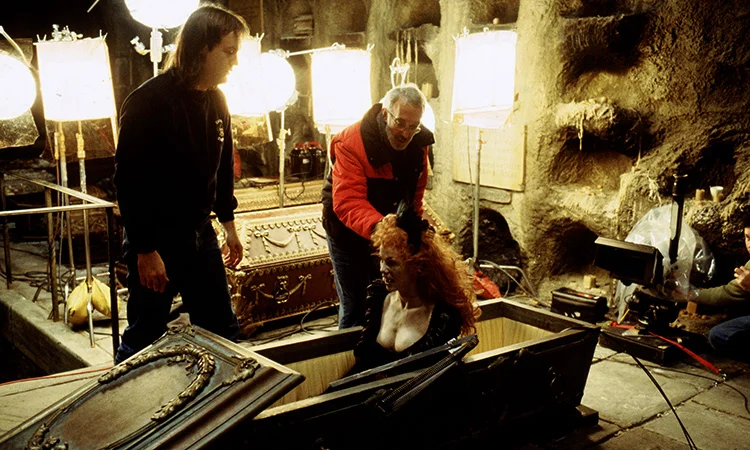
More than three decades after Tom Cruise and Brad Pitt first bared their fangs on the silver screen, Neil Jordan’s sumptuous gothic horror masterpiece Interview with the Vampire is finally rising from the graves of standard-definition media. For the first time, the 1994 adaptation of Anne Rice’s seminal novel is making the leap to 4K Ultra HD, offering home cinema enthusiasts a chance to experience the opulent, blood-soaked tragedy in unprecedented visual fidelity.
For director Neil Jordan, revisiting the monumental production has unlocked a flood of memories—chief among them, the sheer physical and creative toll required to bring Rice’s darkly romantic underworld to life.
"I forgot how hard it was," Jordan laughs when speaking about the new home video release. "It was tough, you know. But it was beautiful."
And beautiful it undeniably remains. From candlelit New Orleans mansions to the macabre, theatrical spectacle of Paris’s Théâtre des Vampires, Interview with the Vampire stands as one of the most lavishly realized vampire films ever committed to celluloid. Yet, achieving that timeless aesthetic required months of grueling night shoots, elaborate practical effects, the physical suspension of two of Hollywood’s biggest movie stars upside down, and—at one point—burning a simulated New Orleans to the ground.
Main Facts: Bringing the Undead to 4K UHD
The release of Interview with the Vampire on 4K UHD marks a watershed moment for physical media collectors of horror cinema. Supervised and restored to maximize the capabilities of modern displays, the new release highlights the film’s rich, tactile cinematography by Philippe Rousselot and the baroque production design of Dante Ferretti.
Alongside the pristine visual upgrade, the 4K release grants fans a glimpse into the cutting-room floor, unearthing deleted sequences that never made it into the 1994 theatrical cut. Among these is a striking, controversial scene featuring Brad Pitt’s Louis visiting a Catholic confessional. In the cut sequence, Louis confesses his monstrous nature to a priest, whose horror is so absolute that he flees the box, leaving Louis to consume his blood beneath the crucifix in a New Orleans church.
Despite the passage of 32 years, Jordan admits he remains baffled as to why certain sequences were trimmed, pointing to this lost confessional scene as a prime example of the film’s rich religious and moral subtexts.
Chronology: From Rice’s Page to the Silver Screen
The journey of Interview with the Vampire from page to screen was fraught with creative negotiations, script revisions, and logistical hurdles.
The project initially landed on Jordan’s desk via producer David Geffen, who handed the director a screenplay written by Anne Rice herself. At the time, Jordan had not yet read the source novel. However, upon diving into the book, he realized that much of the novel’s psychological depth had been ironed out in Rice’s initial draft.

"I read the book and I thought, wow, there’s so much in the book that she left out," Jordan recalls. "I asked him if I could do my own take, my own passage, which he said I could, and I did."
Jordan felt Rice’s script leaned "quite theatrical" and lacked the subterranean darkness of the novel. To combat this, he negotiated to treat the massive studio production with the creative autonomy of an independent film.
What followed was a sprawling, exhausting production schedule that spanned New Orleans, San Francisco, London, and Paris. True to the nocturnal nature of its subjects, the vast majority of the film was shot under the cover of darkness.
"We were shooting at night for probably five or six months, which would drive everybody crazy," Jordan says. "लेकिन I loved it because I like doing that kind of thing."
Supporting Data: Practical Magic vs. Early CGI
Watching Interview with the Vampire today, its tangible, richly atmospheric world serves as a stark rebuttal to the overly polished, sterile digital aesthetics of modern blockbusters. Paradoxically, Jordan notes that the production benefited immensely from its timing at the very precipice of the digital revolution.
Computer-generated imagery existed in 1994, but it was strictly in its infancy. Consequently, Jordan, Rousselot, and Ferretti had to engineer their terrifying illusions through old-school movie magic.
"If you wanted to see New Orleans burn, you had to burn New Orleans," Jordan laughs. "I had to build a set of New Orleans and burn it. If you wanted to see teeth growing on a vampire, you had to grow them. If you wanted to see blood pouring from Lestat’s neck after he’d been cut, you had to build an animatronic image of Tom Cruise, fill it with blood and let it spill across the floor."
Digital effects were deployed with extreme parsimony—primarily utilized for Claudia’s perpetually regrowing hair and the fiery, cinematic destruction of the Parisian coven. Everything else was built, painted, or performed live.
Perhaps the most grueling practical technique involved rendering the vampires themselves. Rejecting the traditional, powdered-face look of classic cinematic vampires, Jordan sought inspiration from an unexpected source: the translucent skin of his infant son.

"You see the way their veins are almost visible through their skin," he explains. "I thought this would be a beautiful texture for the vampires’ faces. It would give them a kind of realism we’d never seen before."
To achieve this vascular realism without digital enhancement, makeup artists subjected Tom Cruise and Brad Pitt to a deeply undignified process.
"The best way to do it, really, in the end, was to hang them upside down," Jordan reveals. "When you’re hung upside down, the blood goes to your head and the veins become prominent, and the makeup artist would trace all the veins."
Official Responses and Casting Controversies
Few casting choices in cinematic history have sparked as much public debate prior to release as Tom Cruise stepping into the role of the flamboyant, aristocratic vampire Lestat de Lioncourt.
Brad Pitt had already secured the role of the eternally tortured, brooding Louis when the search began for his charismatic maker. When Cruise was cast, the decision drew swift public backlash, most notably from author Anne Rice herself. Rice openly questioned whether the quintessential American action star possessed the theatricality and gothic allure required for her beloved character, publicly advocating for actors like Rutger Hauer or Daniel Day-Lewis.
Jordan, however, never shared those reservations.
"I hadn’t lived with the book for 20 years the way a lot of fans had," Jordan explains. "Anne had an image in her mind of Rutger Hauer and strange people… She was talking about Daniel Day-Lewis, and I knew Daniel wouldn’t want to play a vampire. I felt it in my bones somehow—my teeth, probably!"
Upon meeting Cruise, Jordan identified a distinct artistic facet of the actor that had remained largely untapped on screen.
"I always loved him as an actor," he says. "I thought there was an icy quality to him that I’d never quite seen before in his performances. We met once, then twice, and we decided to just go for it, really. I was confident that he would shine in the role, as was everybody else, it seemed, except Anne."

Ultimately, the completed film silenced Rice’s objections entirely. "When she saw the movie in the end, she retracted all her objections," Jordan confirms.
Simultaneously, the film served as a launching pad for a young Kirsten Dunst. Cast at just 11 years old to play the eternally trapped child-vampire Claudia, Dunst delivered a tour-de-force performance that earned her a Golden Globe nomination. Jordan admits to a natural trepidation when casting minors in complex roles.
"I always feel very trepidatious casting a kid," he admits. "What you do to this child in the movie will define them for a long period of their lives. They may grow older and they may not want it."
Those fears evaporated on set. "Kirsten was so obviously an actress and a wonderfully talented actress that she was obviously going to follow that for the rest of her life… Everything came from her, really. Her whole performance came from her. She just inhabited that role and took it to the world."
Implications: A Total Love Story and the Road Not Taken
Beyond its gothic spectacle and technical achievements, Interview with the Vampire has endured because of its emotional core: the volatile, co-dependent relationship between Louis and Lestat. When asked if he explicitly viewed the narrative as a love story, Jordan responds without hesitation.
"A total love story."
Jordan notes that this romantic and homoerotic tension—crucial to Rice’s text—had been somewhat diluted in Rice’s initial screenplay drafts.
"Everybody was talking about the eroticism of the movie—the homoeroticism of the movie, let me put it that way," he says. "When I went back to the book, that element had been kind of deadened in Anne’s script, really. So I did a lot of work trying to reintroduce it… I do think it absolutely reflects what Anne wrote in that novel. It really does."
This emotional logic informs the narrative’s darkest turn: Lestat’s decision to transform the orphan Claudia into a vampire. Trapped in a toxic domestic cycle, the pair are "like a gay couple stuck together," according to Jordan. Unable to leave Louis, Lestat creates Claudia "to create a family for them," effectively cementing their eternal bond.

Reflecting on the film’s legacy three decades later, Jordan reveals one final "what-if" from the production. Given that the film was made at the height of the AIDS epidemic, Jordan originally envisioned the framing device—the modern-day interview between the vampire Louis and Christian Slater’s reporter—taking place inside an AIDS hospital ward.
"I wanted the interview to happen in a hospital, in an AIDS wing of a hospital," Jordan says. He envisioned the reporter in the final stages of the disease when Louis appears. "I wanted him to wake up and see this vampire looking at him, and I wanted the conversation to begin from there. But it wasn’t in the book, and nobody would have agreed to it… There would have been great logic to him wanting eternal life from those circumstances, wouldn’t there?"
Despite studio oversight hurdles—including an initial preview screening where audiences correctly flagged an overlong rough cut, prompting a swift re-edit by Jordan and editor Mick Audsley—Warner Bros. ultimately granted the director creative freedom.
"It wasn’t hard at all," Jordan concludes of the studio dynamic. "Once they had given us the green light, they left us alone. They literally left us alone."
More than thirty years later, that uninterrupted vision endures. Interview with the Vampire remains gloriously excessive: romantic, bloody, tragic, and defiantly tactile—now preserved in 4K UHD for a new generation of mortals and immortals alike.
