
From Gridiron to Gunfire: Peter Berg’s ‘The Mosquito Bowl’ Captures the Ultimate Sacrifice
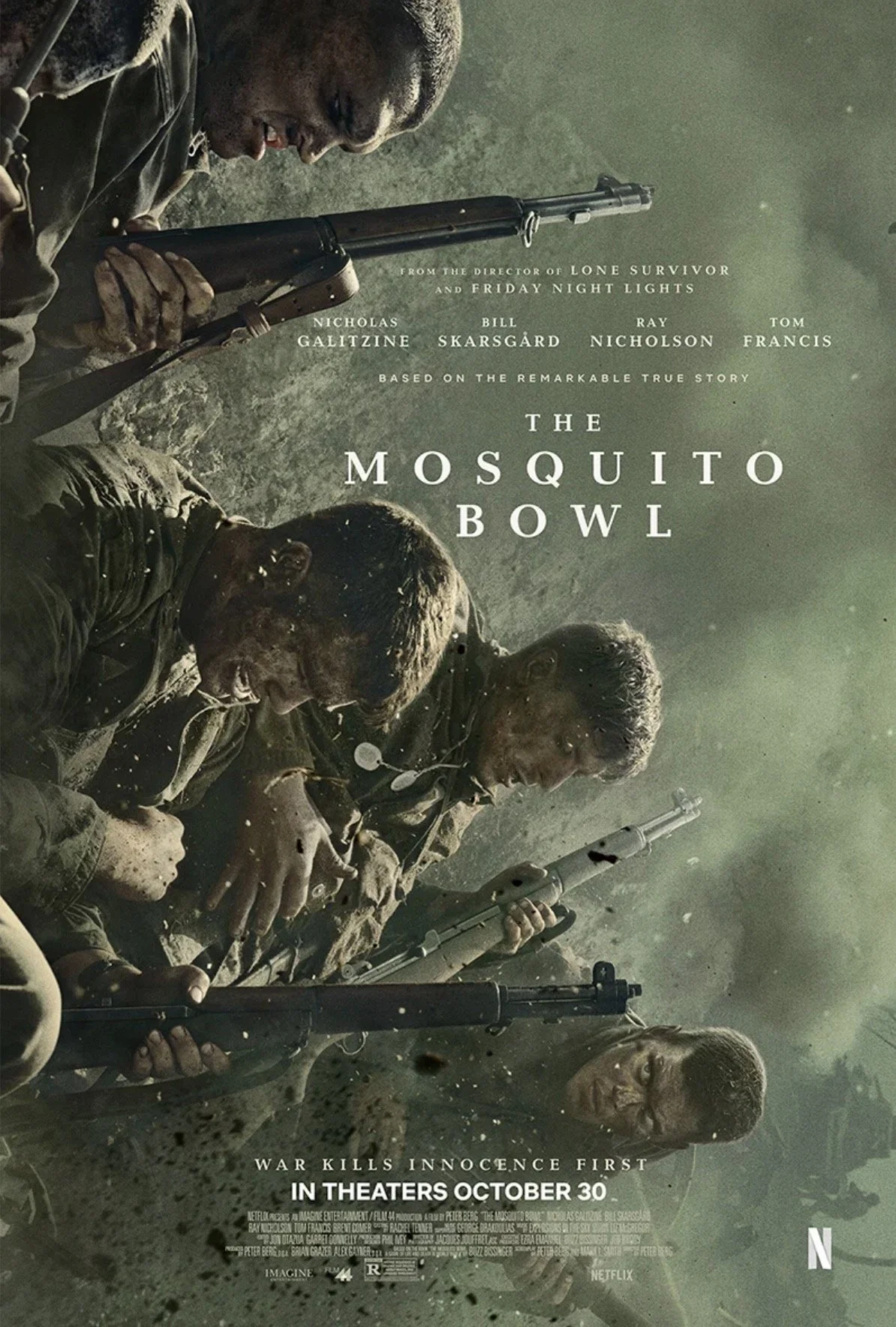
In a cinematic landscape often saturated with fictionalized heroism, Netflix’s upcoming feature The Mosquito Bowl promises a visceral return to historical reality. Directed by Peter Berg—a filmmaker whose career has been defined by the intersection of high-stakes tension and human resilience—the film chronicles the harrowing true story of college football stars who traded the roar of the stadium for the deafening silence of the Pacific theater during World War II.
With a star-studded cast and a narrative grounded in the documented history of the 4th and 29th Marine Regiments, the film is poised to be one of the most anticipated war dramas of the 2026 season.
Main Facts: The Intersection of Glory and Sacrifice
At its core, The Mosquito Bowl explores the transformation of America’s elite youth. Following the Japanese attack on Pearl Harbor on December 7, 1941, the cultural fabric of the United States shifted overnight. Among the first to answer the call were the nation’s brightest athletic prospects.
The film centers on four prominent college football players who walked away from lucrative athletic futures to enlist in the U.S. Marine Corps. By late 1944, these men—alongside former All-Americans and team captains from storied programs such as the University of Wisconsin, Brown University, and the University of Notre Dame—found themselves stationed in the Pacific, bracing for the brutal, inevitable invasion of Okinawa.
The title itself, The Mosquito Bowl, refers to a legendary, impromptu football game played between these Marines on the eve of their deployment. It was a contest held not for scouts or national rankings, but for camaraderie, serving as a final act of normalcy before they faced the industrialized carnage of the Pacific front. For many of the participants, this game served as their final memory of peace.
Chronological Context: The Road to Okinawa
To understand the weight of The Mosquito Bowl, one must look at the timeline of the Pacific Campaign.
The Call to Arms (1941–1942)
The immediate aftermath of Pearl Harbor saw a massive surge in volunteerism. College campuses across the United States were emptied as students, particularly those in fraternities and athletic programs, sought commissions or enlisted in the infantry. The narrative of the film begins in this period of transition, capturing the shift from the structured, competitive environment of the football field to the rigid, life-or-death discipline of Marine Corps boot camp.
The Training Ground (1943–1944)
As the war dragged on, the military’s need for hardened troops intensified. The 4th and 29th Marine Regiments spent months undergoing grueling preparation. It was during this period of "hurry up and wait" that the idea for the Mosquito Bowl was conceived. The game was held on Christmas Eve 1944, a date that serves as a poignant bookmark in the film. The soldiers, far from home and facing an uncertain future, sought to reclaim a piece of their past.
The Crucible (1945)
The climax of the historical arc—and the inevitable turning point of the film—is the Battle of Okinawa. Known as the "Typhoon of Steel," it was one of the largest and bloodiest amphibious assaults in the Pacific. The film tracks the transition of these athletes from teammates on the gridiron to fire-team members in the trenches, where their athletic conditioning was tested by the primal realities of jungle warfare.
Supporting Data: A Proven Creative Force
The production of The Mosquito Bowl is significant not only for its subject matter but for the personnel involved. Peter Berg’s filmography suggests a specific aptitude for this material.
The Berg Connection
Peter Berg is a director who specializes in "the anatomy of intensity." Having directed Lone Survivor (2013), Deepwater Horizon (2016), and Patriots Day (2016), he has developed a signature style that prioritizes sensory immersion. Furthermore, his seminal work on the television series Friday Night Lights cemented his ability to capture the soul of American football.
By combining these two distinct narrative strengths, Berg is uniquely positioned to bridge the gap between the "Friday Night Lights" mentality—where the stakes feel like life and death—and the reality of actual life-and-death combat.
Cast and Crew
The film features an ensemble cast designed to portray the diverse backgrounds of these collegiate athletes:
- Nicholas Galitzine
- Bill Skarsgård
- Ray Nicholson
- Tom Francis
- Brent Comer
- Dominic Bogart
These actors are tasked with portraying real-life figures, a challenge that requires balancing the bravado of youth with the looming shadow of mortality.
Official Responses and Artistic Vision
In an official statement regarding the film’s mission, director Peter Berg reflected on the dual nature of the protagonists:
"This is a film about young men who were sports heroes at home and became war heroes on the shores of the Pacific. The Mosquito Bowl honors the humanity of those who fought, mourns those who never came home, and reminds us of the true cost of war."
Berg’s vision is clearly rooted in a desire to humanize the statistical data of war. By highlighting the specific, individualized dreams these men gave up, he aims to make the historical loss of the Pacific campaign feel personal to a modern audience. The film’s tagline, "Trained for glory. Called to war," serves as a sobering reminder that for the Greatest Generation, the transition from civilian life to soldier was not a choice, but an existential necessity.
Implications: The Legacy of the Greatest Generation
The release of The Mosquito Bowl arrives at a time when the cultural memory of World War II is transitioning from living history to archival record. As the last veterans of the conflict pass away, the responsibility of cinema is to ensure that the scale of their sacrifice is not forgotten.
Beyond the Field
The film’s implications reach beyond the surface-level story of a football game. It serves as a commentary on the nature of American identity in the 1940s—a time when athletic prowess was seen as a prerequisite for military leadership and physical endurance. The film asks the viewer to consider the trade-off: the loss of a generation of potential leaders, artists, and innovators who never returned from the beaches of Okinawa.
Cinematic Impact
By releasing the film in select theaters on October 30, 2026, followed by a streaming debut on November 25, 2026, Netflix is positioning The Mosquito Bowl for both critical awards consideration and high viewership during the Thanksgiving holiday window. This strategy mirrors the release patterns of prestige dramas, suggesting that the studio views this project as a cornerstone of their 2026 slate.
The Cost of War
Ultimately, the film succeeds if it challenges the romanticization of war. By showcasing the intense, often brutal reality of combat alongside the camaraderie of the locker room, Berg is attempting to strip away the "glory" of war to reveal the raw humanity underneath. The football game is not a distraction from the war, but a mirror of it—a testament to the fact that even in the darkest hours, human beings cling to the structures and passions that define their lives.
Conclusion
The Mosquito Bowl is more than a sports movie or a war film; it is a historical document brought to life with modern intensity. Peter Berg has spent his career refining the art of the "real-life drama," and this project appears to be the culmination of his experiences.
As the calendar approaches November 2026, audiences should prepare for an experience that is as emotionally taxing as it is visually arresting. It is a story about the intersection of youth and destiny, reminding us that behind every name on a monument, there was once a young man who played a game, dreamed of a future, and ultimately paid the highest price to ensure that others could continue to do the same.
