
Beyond the Veil: KC Jones’s House Haunters Blends Paranormal Chills with Corporate Satire
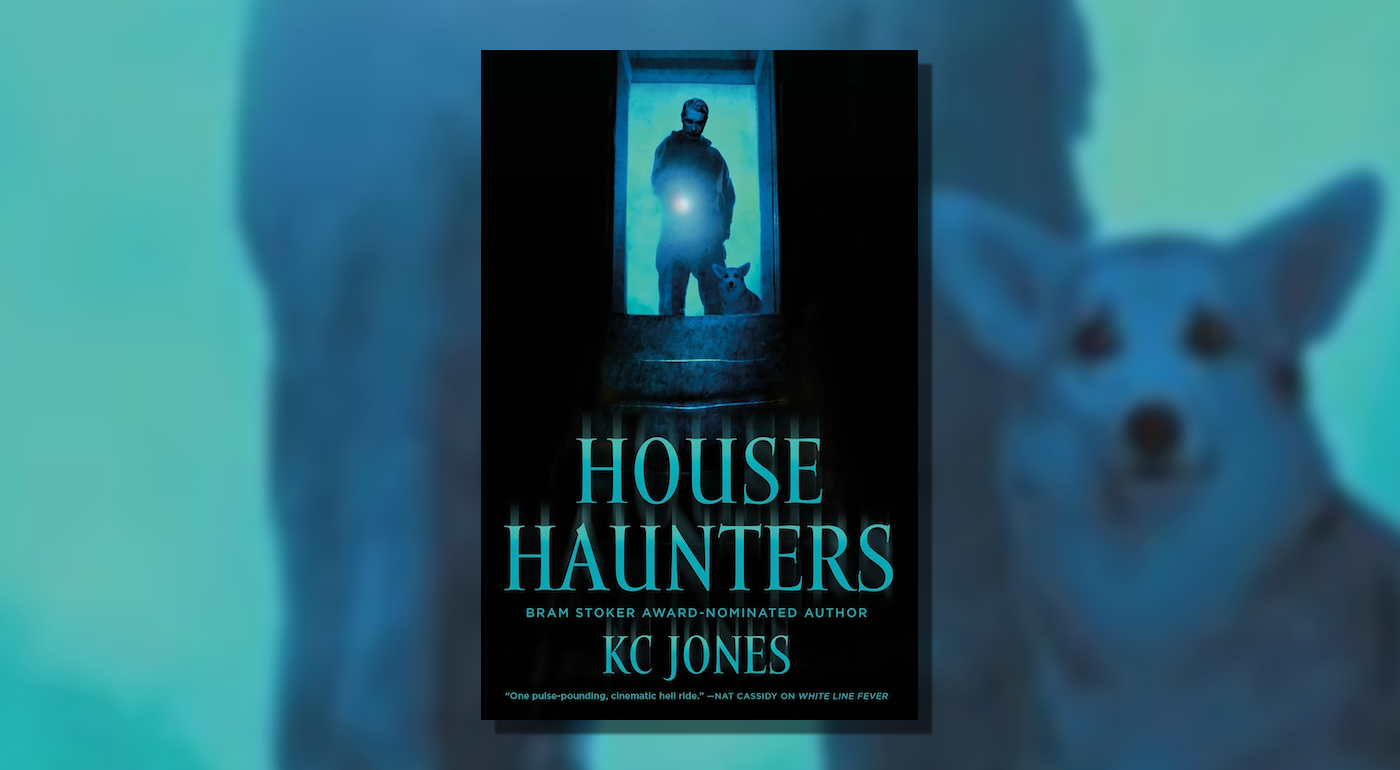
In the rapidly evolving landscape of contemporary horror, few authors manage to balance the claustrophobic dread of a traditional ghost story with the sharp, cynical bite of modern workplace malaise. With the October 6th release of House Haunters from Nightfire, author KC Jones appears to have achieved exactly that. The novel, which serves as a searing critique of the entertainment industry’s reliance on data-driven production, introduces readers to a world where the supernatural is not just a mystery to be solved, but a commodity to be captured for streaming audiences.
Main Facts: A High-Stakes Haunting
The narrative centers on Grace, a television producer whose career—and sanity—are hanging by a thread. In an industry increasingly governed by opaque AI algorithms that dictate which projects are "greenlit," Grace finds herself desperate for a breakout hit. Her gamble: a reality series centered on Frank Pendleton, a man who is as enigmatic as he is abrasive.
Frank is a professional ghost hunter with a unique, unsettling qualification: he claims to be incapable of feeling fear. This physiological—or perhaps psychological—anomaly makes him uniquely attuned to the paranormal, yet it leaves him perpetually detached. Is he a master of theatrical fraud, or is he the real deal? Grace hopes to answer this question by filming a proof-of-concept pilot. However, as the production progresses, the line between staged drama and genuine terror dissolves, forcing Grace to confront the chilling reality that the ghosts they are hunting are all too real, and that their only hope for survival lies in the hands of a man who cannot comprehend the danger they are in.
Chronology of a Nightmare
The journey begins at an unassuming, dilapidated house, the setting for the pilot episode. The excerpt provided by Nightfire paints a vivid picture of the dynamic between Grace and Frank:
- Arrival: The pair approaches the property under the cover of night. While Grace is busy framing the perfect shot, attempting to capture the atmospheric tension of the location, Frank displays his characteristic pragmatism. Rather than looking for spirits, he assesses the home’s structural integrity, noting poorly graded patios and a need for hose bib insulation.
- The Investigative Method: Frank’s process is distinctively dry. He operates without the owners present, preferring a sterile environment to avoid the "high emotions" that typically plague such investigations. His interaction with his corgi, Fish Stick—who serves as a biological detector—highlights his commitment to a methodology that is more akin to a home inspection than a seance.
- The "Gray Lady": The conflict is established through the testimony of the current owners, specifically their son, who reports the mysterious opening of windows. Frank, ever the skeptic, posits that these are not merely "ghostly" occurrences, but potentially mechanical ones—though he admits that the specific behavior of the windows defies simple physics.
- The Crossing: The excerpt concludes with the duo finally breaching the threshold of the house. The atmosphere shifts from the professional tension of a film shoot to the visceral reality of a potentially haunted space, as Frank and Fish Stick lead the way into the darkness.
Supporting Data: The Intersection of Fear and Industry
House Haunters is grounded in a meta-commentary that elevates it above standard genre fare. The inclusion of AI-driven greenlighting processes reflects current real-world anxieties within Hollywood. By pitting a human producer against the cold, unfeeling metrics of an algorithm, Jones mirrors the cold, unfeeling nature of the supernatural entities Frank investigates.
The "data" of the novel is gathered through the camera lens. Grace, who rarely steps behind the camera, finds herself rediscovering her creative passion while filming Frank. The juxtaposition of her artistic intent with Frank’s literalist interpretation of the paranormal creates a thematic resonance: Grace is trying to create a "show," while Frank is simply trying to do a "job." This friction is where the horror truly lives, as the reader is forced to wonder whether the "ghosts" are manifestations of the haunting or merely the byproduct of a broken, decaying environment.

Official Responses and Literary Reception
While the book has yet to hit shelves, early buzz surrounding House Haunters suggests that KC Jones has tapped into a burgeoning sub-genre: the "professionalized paranormal." Unlike traditional ghost stories where protagonists are helpless victims, Frank Pendleton is a consultant. He treats hauntings like property damage, a perspective that resonates with readers tired of the "haunted house" trope.
Nightfire, a division of Macmillan, has positioned the novel as a "fast-paced horror novel," signaling a shift toward more kinetic, thriller-adjacent narratives. Early industry reviewers have highlighted Jones’s ability to create a "deadpan confidence" in his protagonist, a character trait that makes the eventual descent into chaos even more effective. By framing the supernatural as a "defect," Jones challenges the reader to look at their own surroundings with a sense of unease.
Implications: The Death of Authenticity
The deeper implications of House Haunters lie in the cost of content creation. Grace’s struggle to find a "breakout series" is the struggle of every modern creator trying to justify their existence in an automated economy. The title she brainstorms—Death and Other Defects—is a poignant summary of the novel’s core thesis: in a world where everything is a product, even death becomes a manageable, albeit dangerous, project.
As Grace and Frank move deeper into the "starless void" of the house, the reader is left to consider the consequences of turning tragedy into entertainment. Is it possible to document the impossible without becoming a part of the horror? The novel suggests that the answer is no. As Frank notes, he is not the only one who wants the show to happen—implying that whatever lies within the house may have its own agenda for the cameras.
For fans of horror who appreciate a mix of technical detail, sharp dialogue, and existential dread, House Haunters promises to be one of the most significant releases of the autumn season. It is a reminder that the scariest things are not necessarily the ones that go bump in the night, but the ones that require a work order and a professional assessment.
House Haunters will be available in bookstores and online on October 6th.
