
The Evolution of Desktop Production: RØDE Redefines Workspace Versatility with the DS3 Studio Arm
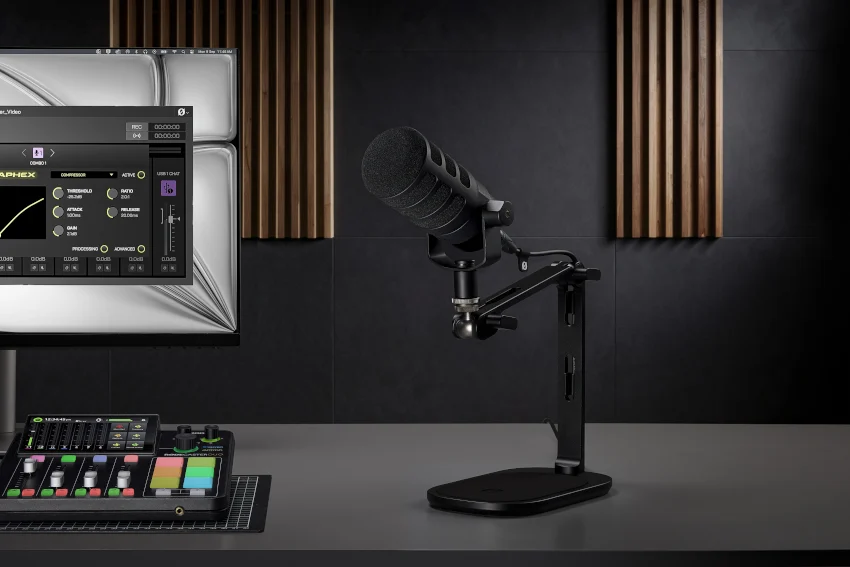
In the contemporary landscape of digital content creation, the desktop environment has become the nerve center for professional activity. Whether it is a podcaster recording an episode, a streamer engaging with a global audience, or a videographer managing a complex editing suite, space is at an absolute premium. As hardware becomes more sophisticated, the challenge of mounting, positioning, and managing that equipment within a confined footprint has grown significantly.
RØDE, a titan in the audio and broadcast industry, has long been at the forefront of solving these ergonomic puzzles. With the launch of the DS3 Pro Desktop Studio Arm, the company is directly addressing the limitations of traditional mounting hardware, offering a solution that prioritizes load capacity, fluid movement, and aesthetic integration. By iterating on the design of the popular DS2, the DS3 is not merely an update; it is a fundamental rethinking of how creators interact with their gear.
Main Facts: A Robust Foundation for Modern Creators
The RØDE DS3 enters the market as a high-performance, professional-grade desktop arm designed to handle the rigors of heavy-duty production. Its primary value proposition is the ability to support up to 1.5kg (3.3 lbs) of equipment. This represents a significant leap forward in utility, allowing the arm to move beyond lightweight USB microphones and support a diverse ecosystem of broadcast-grade hardware, including heavy XLR mics like the RØDE PodMic, mirrorless cameras, LED light panels, and various streaming accessories.
Unlike traditional "boom arms" that require a permanent desk-edge clamp, the DS3 utilizes a weighted base. This design choice grants users unprecedented freedom; the arm can be placed anywhere on a flat surface, allowing for dynamic adjustments during a shoot. With integrated thread adapters for 3/8-inch, 1/4-inch, and 5/8-inch, the DS3 is effectively a "universal" support tool that transitions seamlessly between audio recording, key lighting, and camera positioning.
Chronology: The Path to the DS3
To understand the significance of the DS3, one must look at the evolution of RØDE’s desktop solutions.
The Era of the DS2
The DS2 set the stage by introducing a compact, desktop-centric approach to microphone mounting. It proved that creators did not necessarily need to sacrifice half their desk space to a massive, cantilevered boom arm. However, as creator setups grew more ambitious—incorporating heavier cameras and lighting rigs—the DS2 hit a ceiling in terms of load capacity and reach.
The Development Phase
RØDE’s engineering team identified that the next generation of creators was not just recording audio; they were curating "multimedia stations." The transition from the DS2 to the DS3 involved a shift in materials and mechanics. The goal was to maintain a compact, desk-friendly footprint while increasing the structural integrity of the joints and the base.
The Official Launch
Announced in the third quarter of 2026, the DS3 arrived as the answer to user feedback calling for more versatility. The release strategy prioritized the "Classic Black" aesthetic for immediate, professional deployment, with a "Crisp White" variant slated for a future release to match the growing trend of white-themed minimalist studio aesthetics.
Supporting Data: Engineering Excellence
The technical specifications of the DS3 reveal why it has garnered attention from professional studios and home creators alike.
Precision Ball-Head Mechanics
The crown jewel of the DS3 is its integrated, precision-engineered ball head. In professional production, noise is the enemy. Standard arms often rely on locking teeth or friction knobs that can emit clicks, squeaks, or vibrations when adjusted. The DS3’s ball head allows for silent, fluid movement. Once the desired angle is achieved, a single, central locking mechanism secures the position with absolute rigidity. This is a game-changer for solo creators who need to adjust a microphone or light mid-stream without disrupting the broadcast.

Vibration Damping and Stability
A common failure point in desktop mounting is the transfer of vibration from the desk surface (typing, mouse clicks) into the equipment. The DS3 mitigates this through dedicated acoustic isolation pads.
- Classic Black: Features a high-density, soft-touch silicone pad on both the top and bottom of the base.
- Crisp White (Upcoming): Utilizes natural cork, which offers superior vibration dampening properties while providing a distinct, high-end tactile experience.
Cable Management
Clutter is the primary aesthetic hurdle in small studios. RØDE has integrated cable management clips along the length of the arm, ensuring that heavy XLR or USB-C cables do not snag or hang distractingly. This commitment to a "clean look" reflects the high production values now expected of even home-based creators.
Official Perspectives: RØDE’s Design Philosophy
In statements regarding the DS3’s development, RØDE emphasized the concept of "fluidity of movement." The engineering team noted that in a modern, limited-space studio, the ability to "re-task" a mounting point is essential.
"We designed the DS3 to be the most versatile partner in the studio," said a representative for the brand. "It isn’t just about holding a microphone. It’s about creating a production environment that reacts to the creator’s needs in real-time." By moving away from the edge-clamp design, RØDE acknowledges that modern desks are often occupied by large monitors, specialized keyboards, and control surfaces, leaving no room for traditional clamps. The DS3’s weighted base is, therefore, a strategic response to the changing topography of the modern workstation.
Implications for the Industry
The release of the DS3 signals a broader shift in the creator economy: the professionalization of the "home office."
The Rise of the Hybrid Workspace
As high-quality video conferencing, podcasting, and content creation merge, the distinction between a "studio" and a "work desk" has vanished. The DS3 supports this hybridity. Its ability to swap a microphone for a camera or a light means that a single desk can function as a recording booth in the morning, a live-streaming station in the afternoon, and a standard workspace in the evening.
Economic Efficiency
For the independent creator, the cost of specialized equipment is a major barrier. By purchasing one high-quality, flexible mounting solution like the DS3, a creator can consolidate their needs. Instead of buying a separate microphone stand, a separate lighting arm, and a separate camera mount, the DS3 offers a 3-in-1 capability that justifies its $109 price point.
The Aesthetics of Production
The inclusion of varied materials (silicone vs. cork) and colorways (Black vs. White) highlights that RØDE understands the "camera-ready" nature of modern studios. The gear is no longer just hidden in the background; it is part of the set. The DS3 is designed to look as good on camera as it performs behind the scenes.
Conclusion: A New Standard for Desk Ergonomics
The RØDE DS3 is more than a simple accessory; it is a manifestation of modern production requirements. By combining a 1.5kg payload capacity with a vibration-damping weighted base and a silent, locking ball head, RØDE has effectively bridged the gap between entry-level desktop stands and professional studio booms.
For those operating in tight spaces, the DS3 offers a sophisticated solution to the "clutter crisis." Its ability to be placed anywhere on a desk, coupled with its versatility in holding various types of equipment, makes it an essential tool for the modern professional. As creator setups continue to evolve and grow more complex, hardware that offers flexibility without compromising on stability or sound quality will define the next era of content production. With the DS3, RØDE has once again proven that even the most "mundane" part of the signal chain—the stand—is worthy of innovation.
