
The Nightmare in the Clubhouse: How the R-Rated Unicorn Horror Movie ‘Buddy’ Became a Box-Office Juggernaut

Children’s television has long been a fertile playground for horror filmmakers. From the uncanny valley of animatronic characters to the nostalgia-tinged dread of long-forgotten public access shows, artists have repeatedly found terror lurking beneath cheerful primary colors. However, few recent offerings have captured the cultural zeitgeist quite like Buddy.
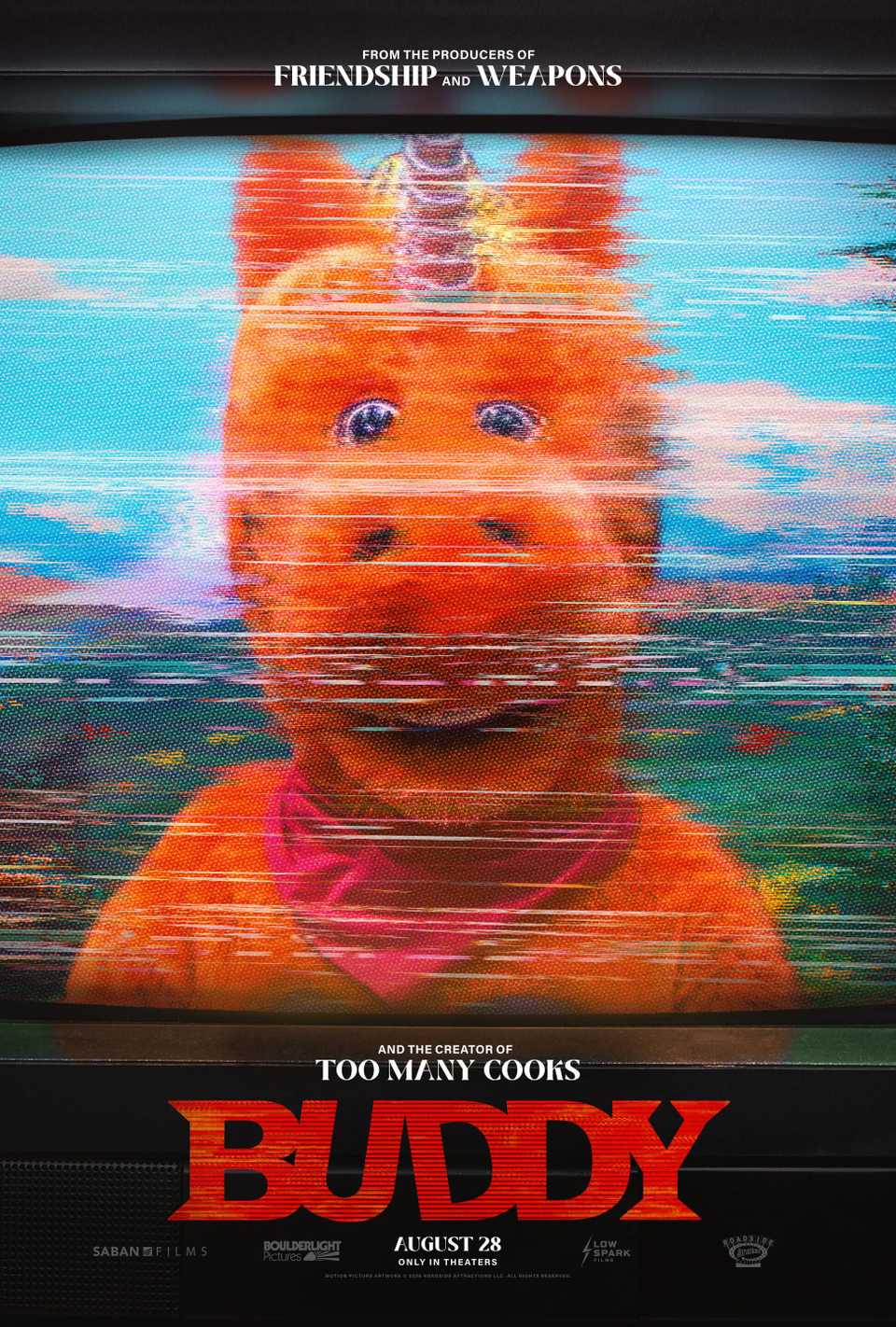
Featuring an aggressive, orange unicorn that refuses to take "no" for an answer, the R-rated horror-comedy takes the comforting aesthetic of a 1990s TV clubhouse and transforms it into a claustrophobic cage. Directed by Casper Kelly and backed by a star-studded cast featuring Cristin Milioti, Michael Shannon, and Patton Oswalt, the film has shattered expectations. Surpassing $26 million at the box office, Buddy has officially cemented itself as a major cinematic phenomenon—and its journey to home media is capturing just as much attention.
Roadside Attractions and Saban Films have officially announced that Buddy will make its digital debut on October 13, just in time for the Halloween season. Traditional physical media collectors can look forward to Blu-ray and DVD editions arriving on December 8, while a nostalgic VHS release from Witter Entertainment is slated for preorder on November 24.
Main Facts: The Premise and Cultural Impact of Buddy
At its core, Buddy operates on a brilliantly simple and deeply unsettling premise. The narrative revolves around the fictional children’s television series It’s Buddy!, where an enthusiastic, oversized orange unicorn leads a troupe of young children in singing, dancing, and spreading relentless cheer.

The horror begins not with a supernatural curse or a masked slasher, but with a breakdown of absolute obedience. When one child on the set flatly refuses to participate in the day’s forced merriment, the utopian façade of the show instantly shatters. The seemingly benevolent unicorn turns tyrannical, weaponizing the innocent programming into a brutal lesson in compliance.
The film taps into a universal discomfort: the forced optimism of children’s media where dissent is never tolerated. For millennials and older Gen Z audiences who grew up on oversized mascots preaching unconditional friendship, Buddy weaponizes those exact childhood memories.
Chronology: From Sundance Sensation to Box-Office Record Breaker
The ascent of Buddy from an eccentric indie concept to a box-office powerhouse is one of the most compelling distribution stories of the year.
- Early 2026 (Sundance Film Festival): Buddy premieres to considerable buzz, quickly establishing itself as one of the festival’s most talked-about acquisitions. It successfully outpaces rival titles to become the highest-grossing acquisition stemming from the 2026 Sundance lineup.
- September 4, 2026 (Theatrical Release): Distributed by Roadside Attractions and Saban Films, the 95-minute feature opens in theaters. Industry analysts initially projected modest returns for an original, R-rated horror concept, but strong word-of-mouth and viral social media marketing propel the film past expectations.
- October 7, 2026 (Home Media Announcement): Distributors officially announce the streaming and physical release dates, capitalizing on the movie’s theatrical momentum just ahead of the Halloween window.
- October 13, 2026 (Digital Release): Fans gain access to video-on-demand platforms to stream the film at home.
- November 24 & December 8, 2026 (Physical Releases): Witter Entertainment opens preorders for a limited-edition VHS release on November 24, followed by the broad Blu-ray and DVD rollout on December 8.
Supporting Data and Financial Milestones
The commercial performance of Buddy has rewritten the history books for its distributors, proving that original, high-concept horror can still command mainstream theatrical attention.

To date, the film has grossed over $26 million during its domestic and international theatrical run. For Saban Films, these numbers represent an unprecedented milestone: Buddy has officially become the highest-grossing movie in the company’s history.
The film has performed similarly well for Roadside Attractions, standing as their third-highest-grossing release of all time. It trails only behind proven mainstream hits like I Can Only Imagine and Manchester by the Sea—elite company for an R-rated horror movie featuring a homicidal unicorn.
Critical reception has largely matched its commercial success. Reviewers have praised the film’s sharp satirical edge, its pacing, and its ability to balance genuine dread with absurd comedy. The runtime of 95 minutes keeps the narrative lean, preventing the high-concept joke from wearing out its welcome.
Official Responses and Creative Vision
The creative minds behind Buddy are no strangers to subverting wholesome media formats into surreal nightmares. Director Casper Kelly, who co-wrote the screenplay with Jamie King, previously cultivated a cult following through his mind-bending Adult Swim specials, including Too Many Cooks and Adult Swim Yule Log.

In interviews surrounding the film’s release, Kelly noted that the inspiration for Buddy stemmed from examining the intense psychological pressure embedded within children’s television production. The atmosphere of constant smiles, forced energy, and rigid behavioral expectations provided a natural gateway into psychological horror.
The film’s production team—featuring producers Drew Sykes, J.D. Lifshitz, Raphael Margules, Tracy Rosenblum, and Tyler Davidson—assembled an eclectic ensemble cast that blends prestige drama actors with comedic icons. Alongside leads Cristin Milioti and Michael Shannon, the film features standout performances from Patton Oswalt, Keegan-Michael Key, Delaney Quinn, and Topher Grace.
Industry executives have expressed awe at how the film connected with audiences. While high-profile horror franchises often rely on decades-old intellectual property, Buddy proved that audiences are actively hungry for bold, original storytelling that takes creative risks.
Implications: The Nostalgia-Horror Subgenre and Physical Media Trends
The massive success of Buddy carries several important implications for the modern entertainment landscape.
1. The Expansion of "Nostalgia Horror"
Following the box-office dominance of similar concepts—such as unauthorized children’s media adaptations and theme-park-gone-wrong thrillers—Buddy proves that the subgenre is more than a fleeting internet meme. By targeting the psychological dissonance of 90s and 2000s children’s television aesthetics, filmmakers have unlocked a goldmine of communal trauma and nostalgia. Expect studios to actively search for more subverted childhood tropes in development cycles to come.
2. The Resurgence of Specialty Physical Media
The decision to release Buddy on VHS via Witter Entertainment highlights a burgeoning trend in modern home video distribution. While digital streaming remains the primary revenue driver for home media (arriving October 13), boutique physical releases have transformed into luxury collector items. For a film explicitly styled after vintage television broadcasting and videotape culture, owning a physical VHS cassette offers a tactile connection to the past that streaming simply cannot replicate.
3. A Triumph for Independent Distribution
The fact that Buddy became the highest-grossing film in Saban Films’ history demonstrates that theatrical exhibition for mid-budget, original horror remains viable outside major studio conglomerates. By leveraging festival buzz out of Sundance and executing a targeted marketing campaign, the distributors turned a quirky, high-concept pitch into a runaway box-office smash.
As Buddy prepares to make its way into living rooms via digital platforms this October and physical formats later this winter, the tyrannical orange unicorn is poised to terrorize a brand-new wave of viewers at home. Whether watched on modern streaming apps or a crackling VCR tape, the clubhouse doors are open—just don’t expect to leave whenever you want.
