
The True Cost of Play: Navigating the Gaming Console Market in 2026
In an era defined by economic volatility, supply chain disruptions, and the rapid escalation of hardware manufacturing costs, the landscape of home entertainment has shifted dramatically. For the modern consumer, the "sticker price" of a gaming console has become an increasingly deceptive metric. As we navigate 2026, the industry is grappling with a perfect storm of import tariffs and soaring memory component prices, forcing manufacturers to pass significant costs onto the end user.
While the allure of a low entry point remains a powerful marketing tool, savvy gamers are realizing that the total cost of ownership—factoring in software, subscriptions, and longevity—often tells a different story. In this analysis, we dissect the state of the 2026 console market to determine which devices offer the best value for your hard-earned money.
The Economic Climate: Why Gaming Has Never Been Pricier
To understand today’s market, one must look back at the shift that occurred over the last twenty-four months. The gaming sector, long considered a relatively accessible hobby, has seen its margins squeezed by global trade policies and the rising cost of high-bandwidth memory (HBM) and specialized silicon.
The most glaring example of this inflation is the PlayStation 5 Pro. When it debuted in 2024 with a $700 price tag, many questioned its necessity. By 2026, that same hardware has seen its official MSRP balloon to $900. In the secondary market, where supply remains constrained, resellers have been known to list these units for upwards of $1,400. For those anticipating the release of Grand Theft Auto VI, the financial barrier to entry has become a significant hurdle, potentially forcing some players to reconsider their hardware investments entirely.
Chronology: A Shift in Market Strategy
- 2023: The industry begins to feel the impact of shifting semiconductor supply chains, leading to initial price stability but whispers of upcoming hikes.
- 2024: The PS5 Pro launches at $700. Memory prices begin a steady, sharp incline.
- 2025: Economic headwinds and import tariffs cause a ripple effect. Sony and Microsoft adjust their pricing models to protect margins, effectively ending the era of the "$400 next-gen console."
- 2026: The current status quo. Mainstream consoles are firmly entrenched in the $500–$900 bracket, with Nintendo attempting to bridge the gap with the Switch 2, while the aging Switch Lite remains the budget king.
The "Cheap" Myth: Comparing Hardware Upfront
When shopping for a console in 2026, the distinction between "upfront cost" and "long-term investment" is paramount. If we look strictly at the lowest barrier to entry, the field narrows quickly.
The Exclusion of High-End Titans
Sony and Microsoft have effectively exited the budget space. The discless PlayStation 5 Digital Edition now sits at $600, while the entry-level Xbox Series S—once marketed as the affordable alternative—has climbed to $500. Beyond the hardware cost, these devices represent a "walled garden" economy. With no physical media drives, users are tethered to proprietary digital storefronts. When a AAA title launches at $80, there is no option to buy used, share a game with a friend, or trade in a completed title to offset the cost of the next one. While subscription services like Game Pass or PlayStation Plus offer a library of titles, the recurring monthly fees of $10 to $23 can exceed the cost of the console itself over a three-year period.
The Nintendo Paradox
The Nintendo Switch 2, priced at $500, occupies a middle ground. It is an expensive piece of hardware, but it retains the ability to utilize physical cartridges. In a market dominated by digital-only ecosystems, the secondary market for physical Switch games remains a vital lifeline for cost-conscious gamers.
The Undisputed Budget Champion: The Switch Lite
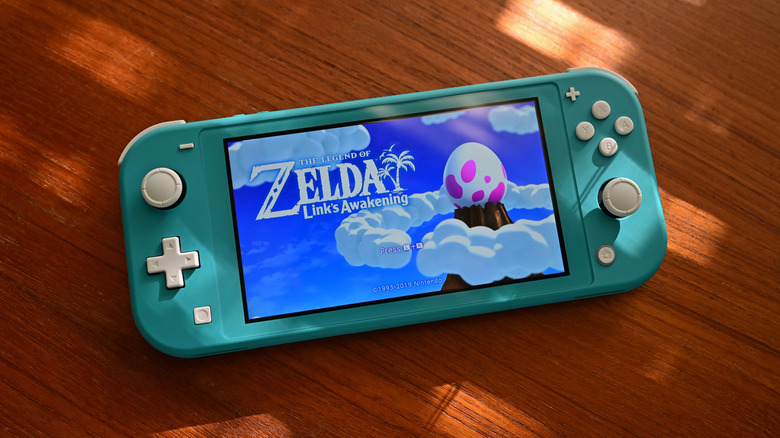
For the gamer who refuses to overextend, the Nintendo Switch Lite remains the outlier at $230. Despite being a legacy iteration of the 2017 design, its value proposition is unmatched for those who do not require high-fidelity docked play. Its library is vast, spanning from industry-defining masterpieces like The Legend of Zelda: Tears of the Kingdom to a deep catalog of indie gems. It is the only console that truly feels priced for the casual user in 2026.
The Handheld PC Revolution: A Different Economic Model
If the initial cost of the Switch Lite is the floor, the ceiling is occupied by handheld PCs like the Valve Steam Deck OLED ($789) and the ASUS ROG Ally X ($1,000). At first glance, these devices seem like a luxury indulgence. However, the economic argument for the PC ecosystem is rooted in software longevity and pricing competition.
Supporting Data: The Cost of Software
The primary advantage of the PC handheld market is the storefront. Steam, GOG, and the Epic Games Store operate in a highly competitive environment. Unlike Nintendo, which rarely discounts its major first-party titles, PC storefronts offer aggressive sales cycles. A title that launches at full price will often see a 30% to 50% discount within six months, and deep-catalog classics are frequently available for under $10.
Over the course of three years, a user who buys 20 games on a PC handheld will almost certainly spend less than a user who buys the same volume of games on a console with a locked ecosystem. When you add the availability of free-to-play powerhouses like The Finals, Genshin Impact, and Rocket League, the value proposition of a handheld PC begins to look less like a luxury and more like a prudent financial decision.
Implications: The Productivity Multiplier
Perhaps the most overlooked factor in the 2026 hardware debate is the "utility factor." A console is a single-purpose device; it is designed to consume media. A handheld PC, by contrast, is a fully functional computer.
For students or professionals on a budget, the ability to switch from a gaming session to a productivity application—or even a web-based workflow—adds intrinsic value that a dedicated console cannot match. The implication for the consumer is clear: if you are already in the market for a device that can handle computing tasks, the "cost" of the handheld PC is effectively subsidized by its utility as a computer.
Official Responses and Industry Outlook
While manufacturers remain tight-lipped regarding future price drops, industry analysts suggest that the current pricing plateau is unlikely to break. "The days of hardware being sold as a ‘loss leader’ to build an ecosystem are largely behind us," notes tech analyst Julian Vance. "Companies can no longer afford to subsidize hardware when the costs of logistics and memory are this high. We are entering a period where the hardware must be profitable on day one."
For the consumer, the takeaway is one of caution. Retailers like GameStop have seen demand for high-end consoles remain steady despite the price hikes, but the secondary market is becoming increasingly volatile. As we look toward the remainder of 2026, the recommendation remains the same: calculate the total cost of your library before you commit to the hardware.
If you are a casual gamer with a limited budget, the Switch Lite is your safest harbor. If you are a dedicated enthusiast who intends to build a vast collection, the upfront premium of a handheld PC will likely pay for itself in software savings before the end of the year. The cheapest console is no longer the one with the lowest price tag; it is the one that best fits the way you choose to play.
