
A Symphony of Chaos and Grace: Tony Gilroy’s ‘Behemoth!’ Defies Cinematic Convention
By FilmBook Editorial Staff
The 64th Annual New York Film Festival (NYFF) has long been a crucible for prestige cinema and experimental narratives, but few films at the 2026 iteration have generated as much impassioned discourse as Tony Gilroy’s Behemoth!. A masterclass in tonal shifting and character-driven storytelling, the film marks a significant departure for the Michael Clayton director, eschewing the sharp, corporate corridors of his past work for a messy, musical, and deeply human portrait of a life in flux. With a powerhouse performance from Pedro Pascal at its center, Behemoth! is not merely a movie; it is a sprawling, unapologetic exploration of the dissonance between who we are and who we hope to be.
The Core Narrative: A Man and His Cello
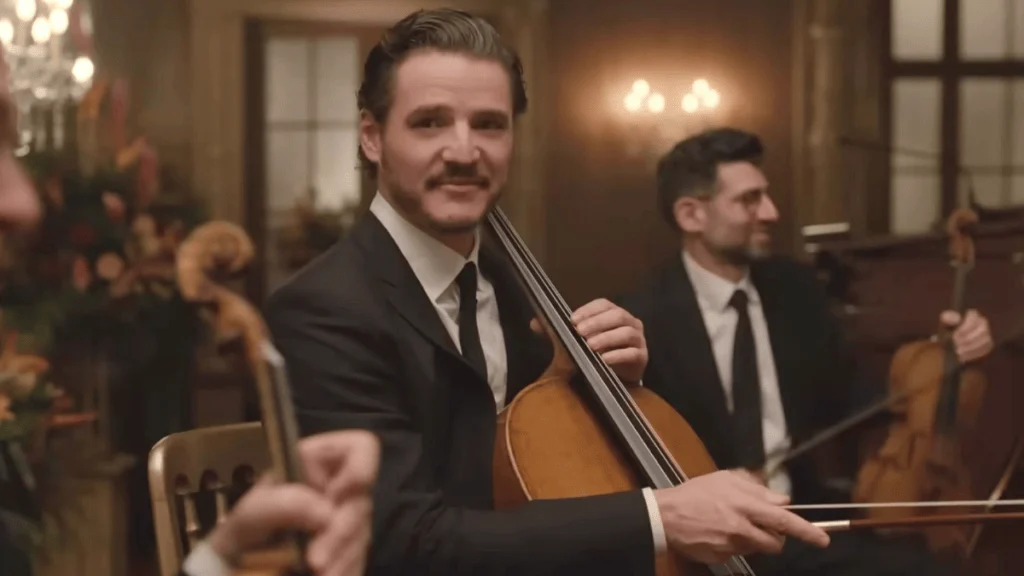
At the heart of the film is Alex Serian, played with aching vulnerability and rugged charm by Pedro Pascal. Alex is a middle-aged musician—a cellist whose life is defined by the instrument he carries like a shield. When we first meet him, he is attempting to flee the orbit of Carol Spedding, a character portrayed by Olivia Wilde with a chaotic, scene-stealing intensity that effectively anchors the film’s early, erratic pacing.
The narrative hook is swift and jarring: a car accident involving Alex and his cello. In the immediate, disorienting aftermath, a medical professional (played by Alia Shawkat) delivers the grim news that the other driver has perished. This moment serves as the catalyst for the film’s central conceit. Alex, already grappling with the stagnation of his middle-aged existence, is suddenly thrust into a state of existential emergency.
Behemoth! does not follow the traditional trajectory of a mid-life crisis film. There are no tidy resolutions or clear-cut moral victories. Instead, the film operates as a “slice-of-life” study that finds its rhythm in the unpredictable nature of human connection. Through the film’s runtime, music serves as the connective tissue, with a score and soundtrack that mirror Alex’s internal state—often utilizing raw, instrumental compositions that articulate the unspoken, far more effectively than any dialogue could.
Chronology of a Crisis: Unpacking the Plot
To detail the plot of Behemoth! is to rob the viewer of the film’s greatest strength: its refusal to adhere to formulaic storytelling. However, the progression of Alex’s journey is essential to understanding the film’s thematic weight.
Following the accident, the story drifts through the disparate elements of Alex’s life. We see the influence of his father, Peter (Hank Azaria, in a series of poignant, impressionistic flashback sequences), and the burden of caring for his ailing mother (a triumphant, resonant return for JoBeth Williams). The film balances these heavy family dynamics against the introduction of Nadia (Eva Victor), whose presence as a potential romantic interest adds a layer of quiet, understated tension.
As the film progresses, the interactions between Alex and the secondary cast become increasingly complex. A notable sequence involving Will Arnett, playing the brother of a character in the orbit of Wilde’s Carol, highlights the film’s ability to pivot from profound sadness to sharp, observational comedy. These moments serve as a reminder that the world continues to turn, regardless of the private tragedies unfolding within the frame. The film’s final act, centering on a paternity test and a pivotal encounter with a young, aspiring musician, provides a resolution that is as ambiguous as it is satisfying. It leaves the audience not with an answer, but with a question about the nature of legacy and the possibility of reinvention.
Supporting Data and Production Insight
The production of Behemoth! represents a high-water mark for contemporary independent-leaning studio films. Beyond the script, the film is a technical triumph. The cinematography captures the grit of the city alongside the intimate, wood-grain warmth of the cello, creating a visual language that feels tactile and immediate.
The ensemble cast—which includes Matthew Lillard, Zlatko Buric, Thomas Kretschmann, Margarita Levieva, and Max Adler—forms a complex web of supporting characters who represent the varied, often contradictory facets of Alex’s personality. The decision to cast actors of such high caliber in supporting roles suggests a script that demanded a depth of performance usually reserved for lead actors.
![Film Review: BEHEMOTH!: Pedro Pascal is Great in a Truly Original, Often Successful, Film [NYFF 2026]](https://film-book.com/wp-content/uploads/2026/10/Pedro-Pascal-Behemoth-02-1200x675-1.png)
Early buzz from the NYFF suggests that Pedro Pascal’s turn as Alex could be the defining role of his career. Observers have noted that his performance possesses a rare, lived-in quality—a quiet desperation that makes his character’s small victories feel monumental. There is already growing speculation that Pascal could make a significant run for the Academy Award for Best Actor, potentially displacing frontrunners from more traditional, big-budget projects like Digger.
The Creative Philosophy: An Interview with the Production Team
While Tony Gilroy has remained notoriously guarded regarding the specifics of the film’s development, early statements from the production indicate a desire to capture the “messiness of existence.” The film was designed to avoid the polished edges of modern dramatic cinema.
“We weren’t interested in the character’s growth in the traditional sense,” said one production source. “We were interested in his endurance. How does a man keep the music going when the world stops making sense?”
The use of instrumental music as a narrative device—rather than relying on pop song cues—was a deliberate choice by the directorial team to ensure the film remained grounded in the character’s perspective. By forcing the audience to listen to the same compositions that define Alex’s world, Gilroy bridges the gap between the viewer and the screen, creating an immersive, almost hypnotic experience.
Implications for Modern Cinema
The success of Behemoth! at the New York Film Festival signals a potential shift in audience appetite. In an era dominated by franchise films and high-concept spectacles, Behemoth! stands as a testament to the power of the character study. It proves that there is still a massive, hungry audience for films that are willing to take risks, avoid traditional third-act payoffs, and treat their characters with genuine, sometimes brutal, honesty.
Furthermore, the film’s reception suggests that the “prestige drama” is not dead, but rather evolving. By blending the sensibilities of a character-driven indie with the assured, tight pacing of a professional thriller, Gilroy has created a blueprint for the next generation of filmmakers.
Final Thoughts: A Recommended Masterpiece
Behemoth! is, at its core, a film about the struggle to find harmony in a discordant world. It is unapologetic in its pacing, brilliant in its casting, and deeply wise in its observation of human nature. It does not try to “fix” its protagonist, nor does it try to lecture its audience. Instead, it invites us to sit with Alex, to listen to the music, and to accept that some of life’s most profound questions are never meant to be answered—only lived.
For those looking to engage with a film that challenges, rewards, and lingers long after the credits roll, Behemoth! is an essential watch. It is, quite simply, one of the most accomplished and original pieces of cinema to emerge from the 2026 festival season.
Rating: 8.5/10
Do you have thoughts on the latest from Tony Gilroy? Join the conversation in the comments section below. To support our ongoing coverage of independent film and festival circuit reporting, consider visiting our Patreon page. For more in-depth reviews and industry analysis, explore our archives at the FilmBook Movie Review portal, or follow our updates on Twitter, Facebook, and Google News.
