
Time is Running Out for Zack Snyder’s Sucker Punch: Why the Divisive Cult Classic Is Leaving Netflix UK
As director Zack Snyder prepares to pivot back toward major franchise filmmaking with an upcoming reimagining of John Carpenter’s sci-fi classic Escape from New York, fans are taking a nostalgic, critical look back at his idiosyncratic filmography. While Snyder’s recent years have been defined by high-profile, big-budget ventures with streaming giant Netflix—yielding mixed commercial and critical results across franchises like Army of the Dead and Rebel Moon—the director’s earlier studio era continues to command conversation.
For audiences in the United Kingdom, time is rapidly running out to stream one of the most polarizing and fascinating relics of Snyder’s tenure at Warner Bros. Sucker Punch, the bombastic 2011 action-fantasy that has evolved over the last decade from a box-office misfire into a fiercely defended cult classic, is officially leaving Netflix UK on November 6.
Main Facts: The Imminent Departure and Cultural Legacy of Sucker Punch
Released during a transitional period in Snyder’s career—sandwiched neatly between his breakout adaptations (300, Watchmen) and his monumental entry into the superhero arena with the DC Extended Universe’s Man of Steel—Sucker Punch remains a singular cinematic artifact. Billed by its marketing campaign as “Alice in Wonderland with machine guns,” the film tells the story of Babydoll (Emily Browning), a young woman wrongfully institutionalized in a 1950s psychiatric asylum by an abusive stepfather. To cope with the grim, inescapable reality of her impending lobotomy, Babydoll retreats into a multilayered fantasy world alongside four fellow inmates: Rocket (Jena Malone), Blondie (Vanessa Hudgens), Amber (Jamie Chung), and Sweet Pea (Abbie Cornish).
Within these imaginative realms, the inmates transform into elite, heavily armed warriors battling everything from steampunk World War I soldiers and giant samurai to fire-breathing dragons and robotic armies. However, the film’s complex nesting doll structure—weaving reality, a cabaret-style brothel framing device, and high-octane action sequences together—confused mainstream audiences upon release.
Now, UK subscribers have only days remaining to experience or revisit the film on Netflix before its license expires. Despite its initial critical drubbing and commercial underperformance, Sucker Punch has experienced a significant critical re-evaluation in recent years, with segments of fandom arguing that the film was a misunderstood, ahead-of-its-time satire of male gaze exploitation rather than an uncritical indulgence of it.
Chronology: Zack Snyder’s Path From Warner Bros. Visionary to Streaming Pioneer
To fully understand the place Sucker Punch holds in contemporary pop culture, it is necessary to chart Snyder’s career trajectory, tracing how a high-stakes studio gamble turned into a divisive auteurist lightning rod.
The Early Studio Era (2004–2011)
Zack Snyder burst onto the Hollywood scene with his visceral, critically praised 2004 remake of George A. Romero’s Dawn of the Dead. He quickly established himself as a master of hyper-stylized visual fidelity with his adaptation of Frank Miller’s 300 (2007) and Alan Moore’s unfilmable graphic novel Watchmen (2009). Buoyed by these successes, Warner Bros. granted Snyder unprecedented creative control over an original concept he co-wrote with Steve Shibuya: Sucker Punch. It was his first foray into wholly original storytelling since his directorial debut, backed by a hefty $80 million production budget.
The DC Extended Universe Era (2013–2017)
Following the commercial underperformance of Sucker Punch—which grossed roughly $89 million globally—Warner Bros. entrusted Snyder with launching their cinematic universe. Man of Steel (2013) proved to be a financial success, paving the way for Batman v Superman: Dawn of Justice (2016) and his early work on Justice League (2017). This era cemented Snyder’s status as a polarizing figure, celebrated by a passionate fanbase for his distinct visual grammar while frequently drawing sharp criticism from mainstream reviewers.
The Netflix Partnership and Recent Years (2021–Present)
After parting ways with Warner Bros., Snyder forged a creative partnership with Netflix. This era saw the release of his heist-zombie hybrid Army of the Dead (2021) and the ambitious, two-part space opera Rebel Moon (Part One: A Child of Fire and Part Two: The Scargiver, 2023–2024). However, shifts in corporate leadership and underwhelming viewership metrics led to the abandonment of immediate plans for expanded universes in both franchises. Following a brief detour into the film festival circuit with his long-gestating passion project The Last Photograph, Snyder’s next major creative stop is his upcoming take on Escape from New York.
Supporting Data: Box Office Realities and Critical Reception
The commercial footprint of Sucker Punch tells the story of a high-risk studio gamble that failed to find mainstream equilibrium. Produced on a budget estimated between $80 million and $82 million, the film yielded a worldwide box office gross of approximately $89.8 million. When accounting for global marketing expenditures and theatrical revenue splits, the film resulted in a net financial loss for Warner Bros., effectively neutralizing any plans for subsequent cinematic sequels or expanded multi-media franchises.
Critical reception was similarly harsh. Sucker Punch holds a dismal 23% approval rating on the review aggregator website Rotten Tomatoes. The site’s official critical consensus summarizes the prevailing industry sentiment at the time:
"It’s technically impressive and loaded with eye-catching images, but without characters or a plot to support them, all of Sucker Punch’s visual thrills are for naught."
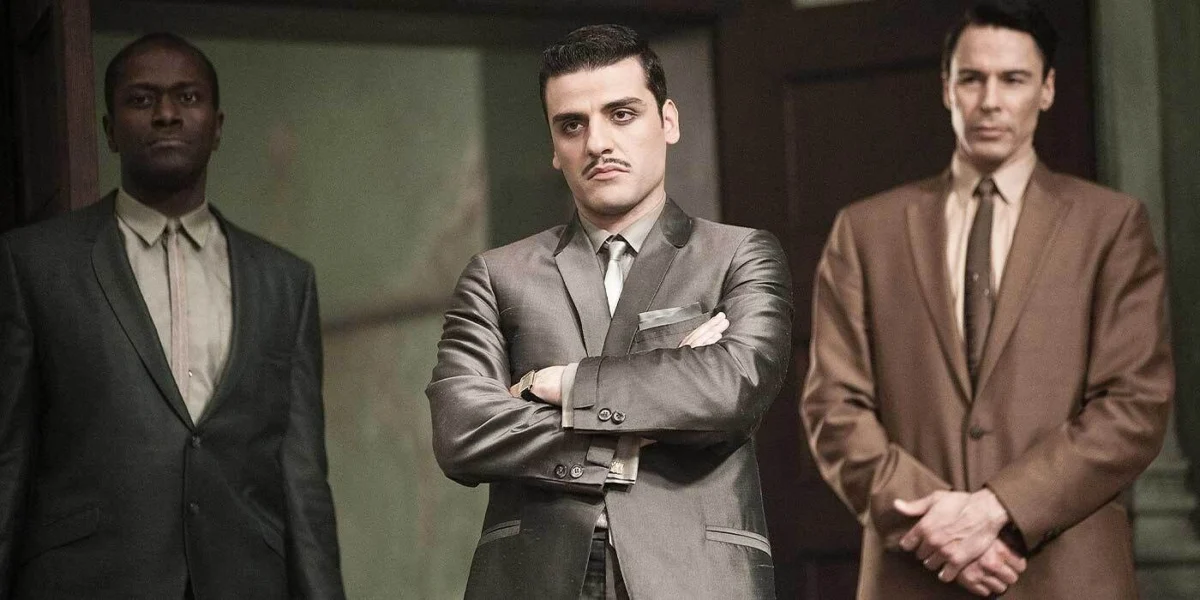
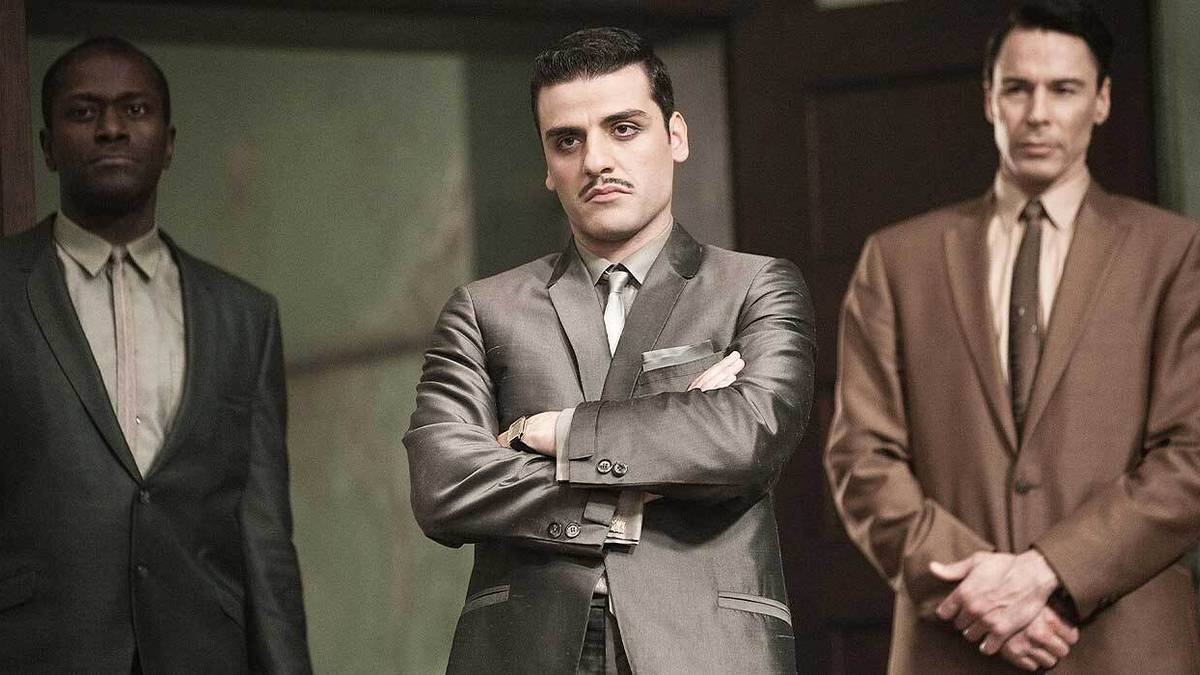
Despite these figures, the film’s cast list reads as an impressive ensemble of rising and established talent who have gone on to celebrated careers. Alongside leads Emily Browning, Jena Malone, Vanessa Hudgens, Jamie Chung, and Abbie Cornish, the film features powerhouse supporting turns from Carla Gugino, Oscar Isaac (in a memorable musical-number-heavy role as the asylum orderly/pimp Blue Jones), and Jon Hamm as the ruthless High Roller.
Official Responses and Creative Retrospectives
In the years following its release, Sucker Punch has been the subject of numerous retrospective interviews, with Zack Snyder frequently defending the film’s structural ambitions and thematic intent. Unlike many traditional blockbusters, Snyder has argued that the film was structured as a deliberate deconstruction of cinematic tropes regarding female agency, exploitation, and the male gaze.

In past interviews, Snyder noted that the theatrical cut of the film—which was famously trimmed down by studio executives concerned about its PG-13 versus R-rated boundaries—compromised his original artistic vision. Although an "Extended Cut" released on home media restored some missing narrative context, Snyder has occasionally expressed a desire to revisit the project to fully realize his director’s cut, much like he famously achieved with Zack Snyder’s Justice League (2021).
While Warner Bros. executives at the time quietly distanced themselves from the film’s commercial failure, the studio’s willingness to finance an expensive, non-IP-driven, female-led action fantasy stands in stark contrast to today’s risk-averse, intellectual-property-dominated Hollywood landscape.
Implications: The Re-evaluation of Box Office Underperformers in the Streaming Age
The imminent removal of Sucker Punch from Netflix UK highlights a broader structural shift in how modern audiences consume, rediscover, and rehabilitate maligned cinema. In the pre-streaming era, a film that bombed at the box office and was panned by critics typically faded into obscurity, relegated to bargain-bin DVD shelves or late-night cable rotation.
Streaming algorithms and subscription video-on-demand (SVOD) platforms have entirely rewritten this lifecycle. Today, a polarizing studio misfire can easily find a second wind, transforming into a cherished cult favorite as new generations of viewers encounter the film away from the hysterical media narratives of its initial theatrical window.
For Zack Snyder’s filmography, this phenomenon has been a double-edged sword. While it has allowed passion projects like his cut of Justice League to find vindication, it has also kept polarizing projects like Sucker Punch perpetually alive in public discourse. As UK fans scramble to stream the movie before its November 6 expiration date, Sucker Punch stands as a reminder of an era when major Hollywood studios were willing to hand visionary auteurs massive budgets to execute deeply idiosyncratic, risky, and chaotic original visions—for better or for worse.
